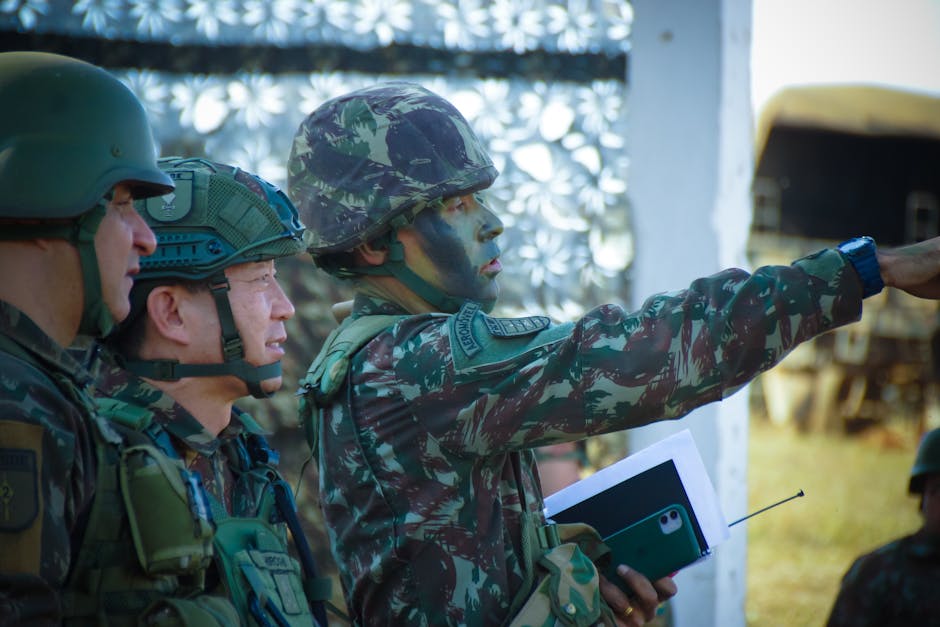
- Ukraine has liberated 590 square kilometers of territory from Russian control in 2023, marking a significant shift in battlefield momentum.
- Ukrainian advances have disrupted Russian supply lines, degraded morale, and forced Moscow to reassess its position in the war.
- International analysts suggest that Ukraine’s gains may be nudging Russia toward diplomatic engagement.
- Ukrainian forces have leveraged Western-supplied artillery, air defense systems, and intelligence sharing to execute precision offensives against Russian forces.
- Ukraine’s military capabilities and strategic coordination have undergone a transformation, enabling the country to reclaim territory from Russian control.
In a striking demonstration of resilience and tactical evolution, Ukraine has liberated 590 square kilometers of territory from Russian control in 2023, President Volodymyr Zelensky announced in a recent address. This hard-won ground, equivalent to more than twice the size of Luxembourg, underscores a significant shift in battlefield momentum. While the war remains deeply entrenched and far from over, these gains have disrupted Russian supply lines, degraded morale, and forced Moscow to reassess its position. International analysts note that sustained Ukrainian advances—particularly in the Bakhmut and Zaporizhzhia regions—are not only altering the military calculus but may also be nudging Russia toward diplomatic engagement, a prospect that seemed increasingly remote during the darkest months of 2022.
\n
Why Ukraine’s Gains Are Reshaping the War

\n
The liberation of nearly 600 square kilometers represents more than a symbolic victory; it reflects a broader transformation in Ukraine’s military capabilities and strategic coordination. Bolstered by Western-supplied artillery, air defense systems, and intelligence sharing, Ukrainian forces have executed precision offensives that exploit Russian logistical weaknesses and command fragmentation. The advances come after months of grueling trench warfare and attritional combat, particularly around Bakhmut, where Ukrainian troops employed mobile warfare tactics to outflank entrenched Russian units. With the reclamation of key settlements and transport hubs, Kyiv has not only improved its defensive posture but also positioned itself to threaten deeper Russian-held areas. This shift has reinvigorated debate over the feasibility of a negotiated settlement, with Western diplomats cautiously acknowledging that battlefield outcomes are now directly influencing diplomatic timelines.
\n
Key Players and Military Breakthroughs

\n
The territorial gains were achieved through coordinated operations led by Ukraine’s 3rd Assault Brigade, the 47th Mechanized Brigade, and specialized reconnaissance units operating under the Main Directorate of Intelligence (GUR). These forces executed targeted strikes on Russian command posts, ammunition depots, and pontoon bridges across the Dnipro River, severely hampering Moscow’s ability to reinforce frontline positions. Notably, the liberation of Robotyne in August 2023 served as a turning point, enabling Ukrainian troops to press toward Tokmak—a critical node in Russia’s supply network for the southern front. Western intelligence assessments, including reports from the Reuters and the Institute for the Study of War, confirm that Russian units in the Zaporizhzhia sector are now operating under increasing strain, with desertion rates rising and morale deteriorating. Russian Defense Ministry statements have downplayed the losses, but satellite imagery from BBC News corroborates Ukrainian claims of territorial recovery.
\n
Roots of the Shift: Strategy, Support, and Sacrifice

\n
The reversal in momentum stems from a confluence of factors: improved training of Ukrainian troops, timely delivery of Western military aid, and Russia’s overextension across a 1,000-kilometer front. While initial phases of the counteroffensive faced delays due to minefields and fortified defenses, Ukraine adapted by deploying smaller, agile units supported by drone warfare and electronic jamming. According to defense analysts at the Royal United Services Institute (RUSI), Kyiv’s strategy has shifted from broad frontal assaults to targeted penetration of weak points, maximizing impact while minimizing casualties. Furthermore, sustained F-16 training programs and the promise of long-range missiles like ATACMS are expected to further tilt the balance. Yet the human cost remains steep—Ukraine continues to face severe shortages in manpower and ammunition, with recent conscription drives highlighting the strain on its population. Still, the 590 km² gained this year represent a net positive in an otherwise exhausting war of attrition.
\n
Consequences for Civilians and Geopolitics

\n
The reclaimed territories bring both relief and daunting challenges. Thousands of civilians in liberated areas are returning to homes damaged or destroyed by occupation forces, with humanitarian organizations struggling to restore electricity, water, and medical services. Landmine contamination remains a critical threat, with the UN estimating that over 170,000 square kilometers of Ukraine may be contaminated—more than a quarter of the country. Politically, the gains strengthen Ukraine’s standing in international forums, reinforcing its argument for increased military and financial support. Meanwhile, divisions within the Kremlin are reportedly deepening, as hardliners clash with pragmatists advocating for a negotiated exit. For NATO and the G7, the momentum offers leverage: they can now condition further aid on reforms, while simultaneously signaling to Moscow that continued aggression will yield diminishing returns.
\n
Expert Perspectives
\n
Analysts remain divided on whether these gains will lead to meaningful diplomacy. Serhii Plokhy, director of the Harvard Ukrainian Research Institute, argues that “Ukraine’s battlefield successes are the only language Moscow understands—diplomacy will only follow sustained pressure.” Conversely, Maria Popova of McGill University cautions that “Russia has historically used negotiations to regroup, not to concede.” Western intelligence officials echo this duality: while Russia may engage in talks to alleviate sanctions or buy time, genuine compromise remains unlikely without greater internal instability. Still, the mere possibility of negotiations marks a shift from earlier predictions of Ukrainian collapse.
\n
Looking ahead, the coming months will test whether Ukraine can sustain its momentum. The ability to hold newly liberated areas, integrate advanced Western weapons, and maintain troop morale will be decisive. With winter approaching and global attention waning, Kyiv faces the dual challenge of consolidating gains and keeping international support robust. The 590 km² reclaimed in 2023 may not end the war, but they have altered its trajectory—suggesting that diplomacy, once unthinkable, is now a plausible, if fragile, path forward.
Source: Kyivindependent