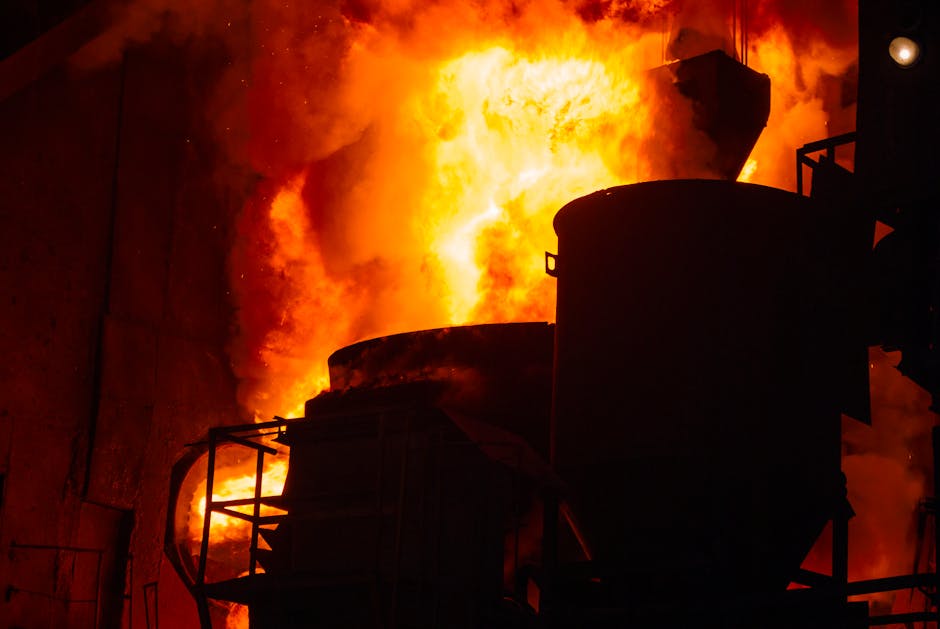
- Ukraine has launched four drone strikes on the Yaroslavl oil refinery in Russia within a month.
- The strikes have caused varying degrees of damage to storage tanks, distillation units, and power systems.
- The refinery processes over 270,000 barrels of crude oil daily, making it a vital energy node for Russia.
- Civilians in nearby neighborhoods have reported shattered windows and the acrid smell of burning fuel lingering after the strikes.
- Ukrainian President Volodymyr Zelensky has stated that every strike on Russian refineries is a strike on their ability to wage war.
Smoke curled into the gray morning sky above the Volga River, where the Yaroslavl oil refinery — a decades-old industrial complex nestled in central Russia — smoldered once again. Sirens wailed in the distance as emergency crews scrambled over twisted metal and scorched pipelines. This was not an accident. For the fourth time in less than a month, Ukrainian drones had pierced deep into Russian airspace, striking with precision at one of Moscow’s vital energy nodes. The facility, which processes over 270,000 barrels of crude daily, now bears the scars of a war expanding beyond battle lines. Civilians in nearby neighborhoods reported shattered windows and the acrid smell of burning fuel lingering for hours. In Kyiv, President Volodymyr Zelensky addressed the nation, his voice steady: “Every strike on their refineries is a strike on their ability to wage war.”
Escalation in Energy Warfare

Ukraine has officially acknowledged conducting four drone attacks on the Yaroslavl oil refinery within a 30-day period, a rare public confirmation of offensive operations inside Russian territory. According to satellite imagery analyzed by Reuters, each strike caused varying degrees of damage to storage tanks, distillation units, and power systems. The most recent assault, which occurred in the early hours of April 9, triggered a fire that burned for over 12 hours. Russia’s Ministry of Emergency Situations downplayed the impact, stating operations continued at reduced capacity. However, independent energy analysts suggest that cumulative damage could reduce refining output by up to 40% over the next quarter. These strikes are part of a broader campaign targeting at least seven major Russian refineries since early 2024, including facilities in Ryazan, Omsk, and Kstovo. Ukrainian military sources indicate that long-range drones, some modified for extended flight and explosive payloads, are being deployed in coordinated waves to overwhelm air defenses.
The Shift in Ukrainian Strategy

For much of the war, Ukraine focused its efforts on defensive operations and reclaiming occupied territories. But by mid-2023, evidence began mounting of Kyiv’s intent to strike deeper. The turning point came after Russia’s relentless attacks on Ukrainian energy infrastructure during the winter of 2022–2023, which left millions without power. In response, Ukraine began developing domestically produced jet-powered drones capable of flying 1,000 kilometers — far enough to reach key sites inside Russia. Western intelligence officials, speaking anonymously to BBC News, confirmed that the shift was both strategic and symbolic: degrading Russia’s ability to fund its war machine through oil exports while demonstrating that no target is beyond reach. The Yaroslavl refinery, operated by Gazprom Neft, contributes significantly to Russia’s domestic fuel supply and export revenue, making it a high-value target. Prior to these strikes, such operations were largely conducted by unclaimed partisan groups or shadowy units; now, Ukraine is openly claiming responsibility.
The Architects of the Campaign

The drone strikes are being orchestrated by Ukraine’s Main Directorate of Intelligence (HUR), under the leadership of Lieutenant General Kyrylo Budanov, who has emerged as one of the war’s most influential military strategists. Budanov, known for his unorthodox tactics and media-savvy approach, has long advocated targeting Russia’s economic infrastructure. “We are not attacking civilians,” he stated in a recent interview. “We are attacking the machines that fuel aggression.” Behind the scenes, a network of engineers, drone developers, and cyber operators — many recruited from Ukraine’s tech sector — have worked in secrecy to scale up production of unmanned systems. Some of these drones, like the “Alien” and “Palianytsia” models, are now being manufactured in undisclosed underground facilities. Volunteers from the “Army of Drones” initiative, a civilian-led effort supported by the state, have also played a crucial role in fundraising, testing, and deployment. Their motivation is clear: to level the battlefield by striking where Russia is most vulnerable — its energy and logistics backbone.
Consequences on the Ground and Beyond

The repeated strikes on Yaroslavl and other refineries are beginning to ripple through Russia’s economy and military supply chains. Aviation fuel production has reportedly dipped, affecting both civilian flight operations and military logistics. Regional fuel prices have spiked, particularly in Central Russia, where transportation networks depend on steady diesel supplies. More significantly, these attacks undermine Russia’s narrative of total security behind the front lines. For Ukrainian morale, each successful strike serves as a psychological counteroffensive, proving that Kyiv can project power deep into enemy territory. Internationally, the campaign raises complex questions about escalation. While Western nations have supplied Ukraine with defensive weapons, these drone operations rely largely on domestically produced systems, sidestepping direct NATO involvement. Still, some European officials have expressed concern that further attacks on critical infrastructure could provoke unpredictable retaliation.
The Bigger Picture
This new phase of the war reflects a fundamental transformation in modern conflict: the blurring of front lines and the rise of asymmetric, precision-enabled warfare. By targeting refineries, Ukraine is adopting a strategy reminiscent of Allied bombing campaigns in World War II — not to occupy, but to cripple the enemy’s industrial capacity. Yet unlike the past, these operations are being carried out with minimal manpower and cost, using drones that cost a fraction of traditional missiles. The implications extend beyond the battlefield, signaling that even a nation under siege can leverage innovation to challenge a larger adversary. As energy becomes a central theater of war, the Yaroslavl strikes may mark the beginning of a new doctrine: economic attrition through remote, sustained pressure.
What comes next remains uncertain. Russia is expected to bolster air defenses around critical infrastructure and may retaliate with intensified strikes on Ukrainian cities or energy sites. Ukraine, meanwhile, is likely to continue refining its drone capabilities, potentially extending their range and payload. Diplomatic efforts show no signs of breakthrough, and as both sides dig in, the war inches toward a grinding war of endurance. One thing is clear: the skies over central Russia are no longer a sanctuary, and the cost of invasion is being recalculated — one drone at a time.
Source: Kyivindependent