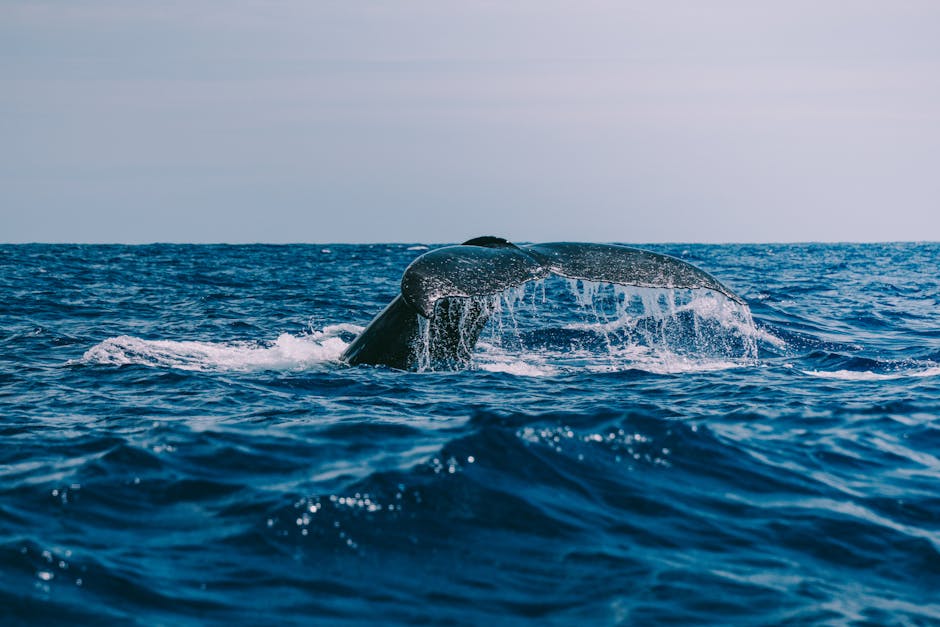
- A humpback whale has been recorded traveling over 15,000km, marking the longest recorded journey by a humpback whale.
- The journey sheds new light on the migratory patterns of humpback whales and their remarkable adaptability and resilience.
- Humpback whales have been tracked using visual observations, acoustic monitoring, and satellite tracking for decades.
- The whale’s ability to navigate across entire ocean basins is a testament to its impressive endurance and navigational skills.
- The discovery has sent shockwaves through the scientific community, hailing it as a significant finding in marine biology.
The sun was setting over the coastal waters of north-east Australia when a team of researchers made a groundbreaking discovery. A humpback whale, first photographed off the coast of Brazil in 2003, had been spotted in the area, marking a record-breaking journey of over 15,000km. The whale, identified by its unique fluke pattern, had traveled an unprecedented distance, shedding new light on the migratory patterns of these majestic creatures.
The Current State of Humpback Whale Migration

The discovery has sent shockwaves through the scientific community, with many hailing it as one of the most significant findings in the field of marine biology in recent years. According to Nature, the journey is not only the longest recorded for a humpback whale but also one of the most impressive feats of endurance in the animal kingdom. The whale’s ability to navigate across entire ocean basins, avoiding predators and finding food in unfamiliar waters, is a testament to its remarkable adaptability and resilience.
A Historical Perspective on Humpback Whale Migration

To understand the significance of this discovery, it’s essential to look at the historical context of humpback whale migration. For decades, scientists have been tracking the movements of these whales, using a combination of visual observations, acoustic monitoring, and satellite tracking. According to the National Oceanic and Atmospheric Administration (NOAA), humpback whales are known to migrate across entire ocean basins in search of food, shelter, and breeding grounds. However, the distances they travel have always been assumed to be relatively fixed, with most whales migrating between 1,000 to 5,000km per year.
The Key Players in Humpback Whale Research

So, who are the key players behind this groundbreaking discovery? The research team, led by a group of scientists from the Commonwealth Scientific and Industrial Research Organisation (CSIRO), has been studying humpback whale migration patterns for over a decade. Their work has been instrumental in shedding light on the complex social structures and behaviors of these whales, and has helped to inform conservation efforts aimed at protecting these magnificent creatures. The team’s dedication and perseverance have paid off, with this latest discovery marking a major breakthrough in our understanding of humpback whale biology.
The Consequences of this Discovery

So, what does this discovery mean for stakeholders? The implications are far-reaching, with significant consequences for conservation efforts, marine management, and our understanding of the ocean ecosystem as a whole. According to the International Union for Conservation of Nature (IUCN), the discovery highlights the need for more effective conservation measures to protect humpback whales and their habitats. It also underscores the importance of continued research and monitoring, to ensure that we can better understand and mitigate the impacts of human activities on these incredible animals.
The Bigger Picture
This discovery is not just about humpback whales; it’s about the health of our oceans and the planet as a whole. As we continue to face the challenges of climate change, overfishing, and pollution, it’s essential that we prioritize the conservation of our marine ecosystems. The story of this humpback whale’s epic journey serves as a powerful reminder of the importance of protecting our oceans and the incredible creatures that call them home.
As we look to the future, it’s clear that this discovery will have a lasting impact on our understanding of humpback whale biology and conservation. The research team will continue to monitor the whale’s movements, and their findings will help to inform management decisions aimed at protecting these incredible animals. For now, we can only marvel at the sheer magnitude of this whale’s journey, and the secrets it still holds about the wonders of the ocean.
Source: The Guardian