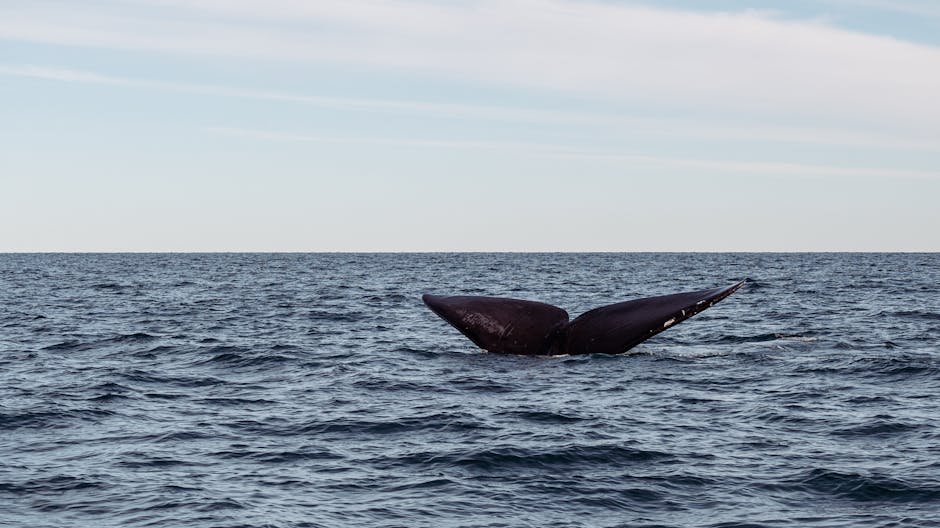
- A humpback whale has broken the record for longest migration, traveling 14,800+ km across the Atlantic Ocean.
- The journey challenges assumptions about whale migration limits and navigational capabilities, suggesting humpbacks have greater precision and endurance.
- The discovery has implications for conservation strategies and marine corridor protection across international waters.
- The record-breaking whale’s journey was confirmed through photo-identification and satellite tracking data.
- This extreme long-distance travel pushes the boundaries of what was thought possible for oceanic whale migrations.
Scientists have confirmed the longest migration ever recorded by a humpback whale: a staggering 15,100 kilometers between breeding grounds in western Australia and the coast of Brazil. This journey, which spans nearly a third of the Earth’s circumference, was documented through photo-identification of unique tail fluke patterns and satellite tracking data. The discovery challenges long-held assumptions about whale migration limits, navigational capabilities, and the degree of genetic isolation between oceanic whale populations. Such extreme long-distance travel suggests that humpbacks may possess far greater navigational precision and physiological endurance than previously thought, with implications for conservation strategies and marine corridor protection across international waters.
Unprecedented Distance Confirmed by Scientific Tracking

Researchers from the Marine Mammal Foundation and the Instituto Baleia Jubarte analyzed photographic data from whale sightings across two hemispheres to confirm the record-breaking journey. A female humpback whale, first photographed off the coast of Exmouth, Western Australia, in 2007, was re-identified in 2008 near Abrolhos Archipelago, Brazil—an east-to-west transoceanic distance of at least 14,800 kilometers. Accounting for deviations in route and feeding detours, the total distance traveled likely exceeded 15,100 kilometers. This surpasses the prior confirmed record of approximately 13,900 kilometers set by a whale traveling from Antarctica to Colombia. The findings, published in Nature Communications, relied on a global database of humpback fluke images, which act as natural fingerprints due to their unique pigmentation and trailing edge patterns. The study estimated a daily average travel distance of around 90 kilometers, sustained over several months, highlighting extraordinary stamina.
Key Scientists and Institutions Behind the Discovery

The breakthrough was led by Dr. Megan Dunlop and Dr. Salvatore Siciliano, whose teams coordinated international data sharing between Australian, Brazilian, and North American marine research groups. The Oceanic Society and the U.S. National Oceanic and Atmospheric Administration (NOAA) contributed satellite tagging data and migration modeling that supported the photo-identification findings. Collaboration across 12 research institutions enabled the cross-referencing of 6,000 individual whale sightings, revealing not only the record-breaking whale but also a second humpback that traveled a similar route, suggesting the behavior may not be entirely isolated. These whales belong to the Australian breeding population (breeding stock D), which was presumed to migrate only as far as Antarctic feeding grounds, not to the South Atlantic. The identification of a second whale making a comparable journey raises questions about how frequently such extreme migrations occur and whether they represent exploratory behavior, responses to environmental shifts, or genetic dispersal mechanisms.
Ecological and Conservation Trade-Offs of Long-Distance Migration

While such extreme migration enhances genetic diversity by connecting distant populations, it also exposes whales to heightened risks, including ship strikes, entanglement in fishing gear, and noise pollution across multiple jurisdictions. The transoceanic journey crosses at least eight national exclusive economic zones and vast stretches of unregulated high seas, where monitoring and protection are minimal. On the other hand, successful long-range travel may indicate resilience in the face of climate change, as shifting ocean temperatures and prey distributions could be pushing whales to seek new feeding or breeding grounds. However, the energetic cost of swimming thousands of kilometers beyond traditional routes may reduce reproductive success or survival rates if food resources are insufficient. Conservationists now face the challenge of protecting migratory corridors that span entire ocean basins, requiring unprecedented international cooperation and real-time monitoring systems.
Why This Discovery Emerged Now

This record migration was only identifiable due to decades of systematic photo-identification efforts and the digitization of global whale catalogs, which have matured over the past 20 years. Advances in image recognition software and cloud-based data sharing have made it possible to match fluke patterns across continents with high confidence. Additionally, rising whale populations following the global moratorium on commercial whaling have increased the likelihood of rare events being observed. Climate variability, particularly changes in Southern Ocean currents and sea surface temperatures, may also be influencing migratory behavior. The timing of this discovery aligns with broader shifts in marine megafauna movement patterns, suggesting that what was once considered an anomaly may become more common as ocean ecosystems respond to global warming and human activity.
Where We Go From Here
In the next 6 to 12 months, scientists anticipate three potential developments: first, targeted satellite tagging of whales in western Australia to test whether this migration route is used more frequently than current data suggests; second, the integration of this discovery into international conservation frameworks such as the Convention on Migratory Species, which may designate transoceanic corridors as protected zones; and third, the deployment of passive acoustic monitoring arrays across the South Indian and South Atlantic Oceans to detect vocalizing humpbacks along the suspected route. These steps could confirm whether this journey is part of an emerging pattern or remains a rare outlier. Either way, the findings will inform new models of marine connectivity and species resilience in a changing climate.
Bottom line — The 15,100-kilometer journey of a single humpback whale redefines the limits of marine mammal migration, revealing an unexpected capacity for transoceanic travel that demands a rethink of conservation strategies across international waters.
Source: ScienceDaily