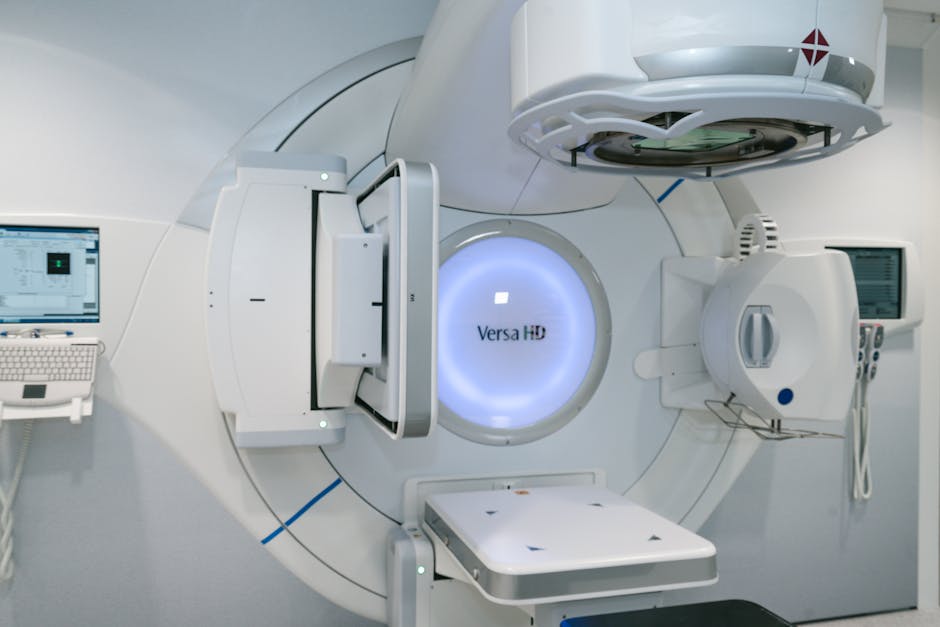
- A landmark trial revealed irradiating specific lymph nodes reduces breast cancer mortality by 12% over two decades.
- The benefit doesn’t translate to improved overall survival, challenging assumptions in adjuvant breast cancer therapy.
- Long-term follow-up is crucial in evaluating cancer treatments, especially for patients with favorable prognoses.
- The trial enrolled 4,004 women with early-stage breast cancer and followed them for 23.6 years.
- Non-breast cancer causes of death offset the gains in overall survival.
Final results from a landmark randomized trial by the European Organisation for Research and Treatment of Cancer (EORTC) demonstrate that irradiating the internal mammary and medial supraclavicular lymph nodes reduces breast cancer-specific mortality by 12% over two decades. However, this benefit does not translate into improved overall survival, a finding that challenges long-standing assumptions in adjuvant breast cancer therapy. The results underscore the critical importance of very long-term follow-up in evaluating cancer treatments, particularly for patients with favorable prognoses who may live decades after diagnosis and are vulnerable to late effects of therapy.
Two Decades of Data Show Targeted Benefits

The EORTC 22922/10925 trial enrolled 4,004 women with early-stage breast cancer between 1996 and 2004, randomly assigning them to receive standard locoregional radiotherapy with or without additional irradiation of the internal mammary and medial supraclavicular lymph nodes. After a median follow-up of 23.6 years, researchers found a statistically significant 12% reduction in breast cancer mortality in the extended-field group—54.5% versus 59.4% in the control arm. Distant metastases were also reduced, dropping from 46.3% to 42.9%. However, overall survival remained unchanged at 55.5% in both groups, suggesting that non-breast cancer causes of death offset the gains. These data, published in The Lancet, represent one of the longest follow-ups of a radiotherapy trial in oncology, offering unparalleled insight into the delayed effects of treatment.
Key Players: EORTC, Clinicians, and International Guidelines

The EORTC, a pan-European network of cancer researchers, designed and executed the trial across multiple countries, setting a benchmark for collaborative oncology research. Their findings have already influenced clinical practice, with major guidelines—such as those from the European Society for Radiotherapy and Oncology (ESTRO) and the National Comprehensive Cancer Network (NCCN)—now recommending extended-field radiation for patients with centrally or medially located tumors or positive axillary nodes. Radiation oncologists are increasingly using advanced imaging and dosimetry to minimize exposure to the heart and lungs, addressing historical concerns about toxicity. Meanwhile, the trial’s long-term data have prompted renewed discussion within the oncology community about the balance between locoregional control and systemic risk, particularly as newer systemic therapies like CDK4/6 inhibitors and immunotherapies alter the disease landscape.
Trade-Offs Between Survival Gains and Long-Term Risks

While the reduction in breast cancer mortality is clinically meaningful, the absence of an overall survival benefit raises important questions about the trade-offs of extended-field radiation. Historically, concerns about cardiac toxicity—particularly from older radiation techniques—have limited the adoption of internal mammary chain irradiation. Modern techniques such as deep inspiration breath-hold and intensity-modulated radiation therapy (IMRT) have reduced heart dose, but long-term cardiovascular risks remain. Additionally, the trial’s data suggest that as patients live longer, non-cancer deaths—especially from cardiovascular disease and second malignancies—become more prominent. This shifts the focus toward personalized risk assessment, where the potential benefit of radiation must be weighed against individual patient factors such as age, tumor biology, and baseline cardiovascular health.
Why Now? The Era of Precision Survivorship

The emergence of these long-term findings now—over two decades after trial initiation—reflects a broader shift in oncology from acute treatment to lifelong survivorship care. As breast cancer survival rates exceed 90% for early-stage disease, the focus has expanded beyond tumor control to quality of life and late effects. This trial’s extended follow-up captures outcomes in an era when patients may outlive the initial threat of recurrence only to face new health challenges. Moreover, advances in systemic therapy have likely altered the relative impact of locoregional interventions, making historical assumptions about radiation benefits less applicable. The results arrive at a time when precision medicine tools—such as genomic risk scores and PET-based nodal staging—are enabling more tailored treatment decisions, reducing the need for one-size-fits-all approaches.
Where We Go From Here
In the next 6 to 12 months, oncologists may increasingly stratify patients for extended lymph node irradiation based on genomic profiles and imaging findings rather than tumor location alone. Clinical trials could begin integrating long-term survivorship endpoints as primary outcomes, reflecting the evolving standard of care. Alternatively, if new data confirm that modern systemic therapies further reduce distant recurrence, the relative value of aggressive locoregional treatment may diminish, leading to de-escalation strategies. A third scenario involves the development of predictive models combining clinical, genomic, and dosimetric data to identify patients most likely to benefit from extended radiation without incurring excess toxicity—ushering in a new era of personalized radiotherapy planning.
Bottom line — while internal mammary and supraclavicular lymph node irradiation reduces breast cancer deaths, its failure to improve overall survival demands a nuanced, patient-specific approach to adjuvant radiotherapy in early-stage disease.
Source: MedicalXpress