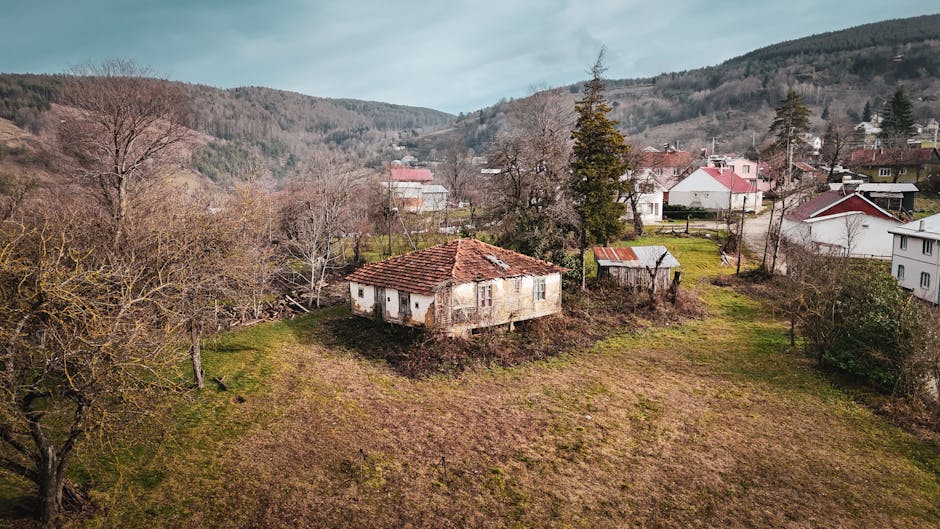
- Rural Britain is facing a hidden hunger crisis, with families in affluent regions relying on convenience store crisps due to limited access to fresh vegetables.
- The closure of village shops and erosion of public transport have turned vast stretches of rural Britain into de facto food deserts.
- Low-income households, especially the elderly, disabled, and those without vehicles, are trapped in rural areas with limited access to affordable, nutritious food.
- Over half of households in poorer rural areas live more than a mile from the nearest grocery outlet, exacerbating the crisis.
- Rural communities are being forced to rely on online deliveries or costly taxi rides for food, often unaffordable or unavailable.
In the rolling hills of the Cotswolds, where stone cottages and manicured gardens paint a picture of pastoral charm, a quiet crisis is unfolding behind the postcard-perfect façade. Here, in one of England’s most affluent and scenic regions, families are skipping meals, relying on convenience store crisps and sugary drinks, or making 20-mile round trips by bus just to buy fresh vegetables. The closure of village shops, the erosion of public transport, and the rising cost of car ownership have turned vast stretches of rural Britain into de facto food deserts—areas where access to affordable, nutritious food is severely limited. For low-income households, especially the elderly, disabled, and those without vehicles, the countryside is no longer a retreat but a trap.
Rising Isolation in the Countryside

Rural communities across England are facing an escalating crisis in food access, with over half of households in poorer rural areas now living more than a mile from the nearest grocery outlet, according to a 2026 report by the University of Exeter and the Food Foundation. In some regions, including parts of Cumbria, Cornwall, and the Cotswolds, the nearest supermarket is over 10 miles away, with infrequent or nonexistent public transport. The study found that 38% of rural villages have lost their only shop in the past decade, leaving residents dependent on online deliveries—often unaffordable or unavailable—or costly taxi rides. Unlike urban food deserts, where corner stores at least offer some basic provisions, many rural areas now offer nothing at all, forcing families to choose between nutrition and financial strain. This isolation hits hardest during winter months or fuel price spikes, when even those with cars struggle to justify the trip.
How Rural Britain Was Left Behind

The roots of this crisis stretch back decades, rooted in the slow erosion of rural infrastructure. The 1980s and 1990s saw a wave of supermarket consolidation, with large chains favoring out-of-town retail parks accessible by car, accelerating the decline of small village grocers. Between 2001 and 2021, more than 5,000 rural shops closed across England and Wales, according to the Association of Convenience Stores. At the same time, bus services—vital lifelines for non-drivers—were slashed due to funding cuts and low ridership, creating a vicious cycle. As populations aged and younger residents moved to cities, local economies shrank, making it harder for remaining shops to survive. The pandemic worsened the trend, with delivery services prioritizing urban areas and online grocery algorithms often excluding remote postcodes. What was once a network of self-sufficient villages has become a patchwork of dependency, where geography and income now dictate dietary health.
The People Shaping the Crisis and the Response

Behind the statistics are individuals fighting to sustain their communities. In Gloucestershire, volunteers run a ‘shop on wheels’—a repurposed minibus stocked with essentials that tours isolated hamlets twice a week. In Cumbria, parish councils have converted old phone booths into mini-marts stocked with tinned goods and milk. Meanwhile, researchers like Dr. Helen Pemberton at the University of Exeter are urging policymakers to recognize rural food insecurity as a public health emergency, not just a logistical issue. At the same time, supermarket executives defend their models, citing profitability and consumer trends. But for low-income families, especially single parents and pensioners, these efforts feel like Band-Aids on a systemic wound. Their daily reality is shaped by impossible choices: buy expensive, pre-packaged meals from petrol stations or go without. Their voices, long overlooked in national food policy, are now demanding to be heard.
Consequences for Health and Society

The consequences of rural food deserts extend far beyond hunger. Public Health England data shows rising rates of diet-related illnesses in rural areas, including type 2 diabetes and heart disease, despite the perception of healthier country living. Children in food-insecure rural households are more likely to experience developmental delays and poor school performance. Mental health is also impacted, with isolation and shame compounding the stress of food insecurity. Local economies suffer too, as remaining businesses lose foot traffic and communities lose cohesion. Without intervention, experts warn of a widening health equity gap between urban and rural populations—one that contradicts the myth of the countryside as a place of abundance and well-being.
The Bigger Picture
This crisis challenges the romanticized image of rural Britain as a land of plenty. Food deserts are not just an urban phenomenon; they reflect deeper failures in infrastructure, economic planning, and social equity. As climate change and fuel costs make car dependency unsustainable, the need for localized, resilient food systems grows more urgent. The situation in rural England mirrors broader global trends, from Appalachia to rural Australia, where geography and poverty intersect to limit basic needs. Addressing it requires rethinking how services are delivered—not just food, but transport, healthcare, and broadband.
What comes next may depend on whether policymakers see rural food access as a matter of dignity, not just convenience. Pilot programs in Scotland and Wales are testing mobile markets and subsidized delivery schemes, while advocacy groups push for a national rural food strategy. But without sustained investment and political will, the quiet hunger of the countryside will continue to grow—hidden, but no less real.
Source: The Guardian