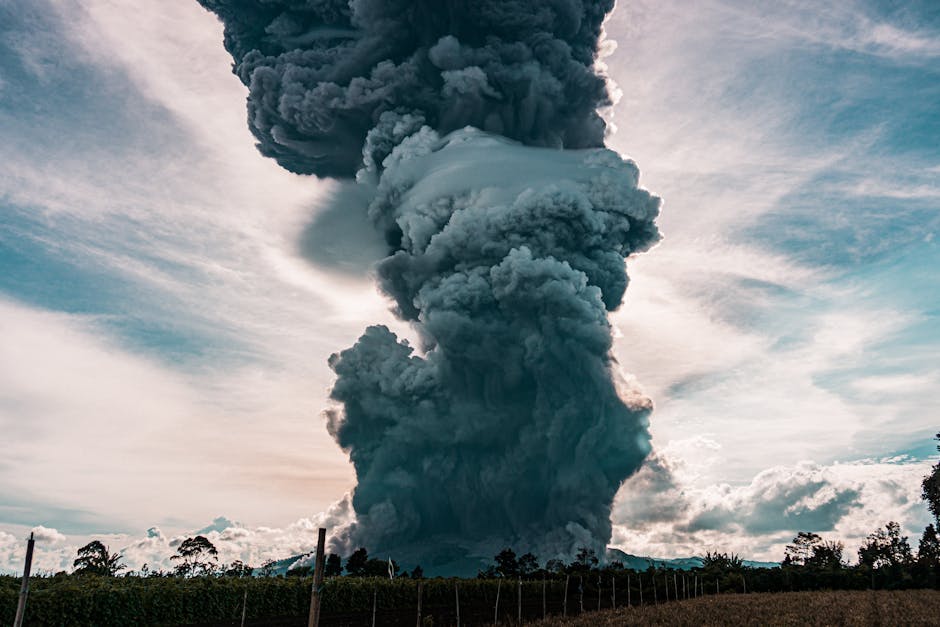
- A massive body of magma rose beneath São Jorge Island in Portugal’s Azores archipelago, triggering a 30,000-strong earthquake swarm.
- The magma originated from over 20 kilometers deep in the Earth’s crust and was equivalent to 12 cubic kilometers in volume.
- The event was a significant volcanic unrest episode in the region’s recorded history, despite no eruption occurring.
- The intrusion of magma was detected through sensitive seismic and GPS monitoring networks.
- Researchers are working to understand the ‘stealth’ intrusion and its implications for future eruption risks in populated volcanic zones.
What happens when a volcano prepares to erupt—but doesn’t? In early 2022, residents of São Jorge Island in Portugal’s Azores archipelago began feeling the ground tremble almost constantly. Over several weeks, more than 30,000 earthquakes—many strong enough to be felt—shook the narrow island, sending shockwaves through communities and sparking urgent scientific investigation. Beneath the surface, something colossal was unfolding: a massive body of magma, originating from more than 20 kilometers deep in the Earth’s crust, was ascending at an extraordinary pace. Though no eruption occurred, the event marked one of the most significant volcanic unrest episodes in the region’s recorded history. Now, researchers are piecing together what happened during this ‘stealth’ intrusion—and what it means for future eruption risks in populated volcanic zones.
What triggered the earthquake swarm on São Jorge?

The seismic flurry on São Jorge was caused by a large-scale intrusion of magma pushing upward from the upper mantle through the island’s crust, a process known as a dike intrusion. Unlike typical volcanic activity that may be preceded by clear surface signals, this event unfolded with surprising stealth, detected only through sensitive seismic and GPS monitoring networks. Researchers estimate that the volume of magma involved was equivalent to 12 cubic kilometers—enough to fill approximately 32,000 Olympic-sized swimming pools. The molten rock ascended rapidly, traveling at rates of several hundred meters per day, and ultimately stalled just 1.6 kilometers beneath the surface. This near-surface stoppage, detailed in a 2023 study published in Nature Geoscience, defines what scientists call a ‘failed eruption’—a scenario where magmatic pressure builds intensely but does not breach the surface.
What evidence confirms the scale of the magma movement?

Multiple geophysical datasets confirm the magnitude and trajectory of the magma surge. Seismic networks recorded the location and frequency of thousands of microquakes, which traced a vertical path of fracturing rock as the magma forced its way upward. Simultaneously, GPS stations across São Jorge detected ground deformation, showing the island’s surface swelling by up to 15 centimeters in certain areas—an unmistakable sign of subsurface pressure. Satellite-based radar measurements (InSAR) further mapped this deformation with high precision, revealing a pattern consistent with a vertical sheet-like intrusion, or dike, extending over 15 kilometers in depth. Researchers from the University of Lisbon and the Azores Volcano Observatory concluded that the event released energy equivalent to a magnitude 5.0 earthquake, though spread over weeks rather than seconds. According to Joana Ferreira, a geophysicist involved in the analysis, ‘This was not just an isolated tremor—it was a wholesale reorganization of stress in the crust.’
Could the magma have erupted, or was it always destined to stall?

While the intrusion came alarmingly close to the surface, some experts argue that an eruption was never truly inevitable. Volcanologists note that magma often stalls when it encounters structural barriers in the crust, such as dense rock layers or zones of lower pressure. In this case, the magma may have lost momentum as it spread laterally rather than continuing vertically. Additionally, the composition of the magma—likely basaltic but with moderate viscosity—could have contributed to its inability to fracture the remaining overlying rock. Some models suggest that only a small additional push—perhaps from gas buildup or tectonic stress—might have tipped the balance toward eruption. However, others caution against assuming the event was a ‘near miss.’ As research from the University of Bristol highlights, many magma intrusions fail naturally without ever reaching eruption conditions, serving instead as pressure-release valves for deeper systems. This raises the possibility that São Jorge’s unrest was part of a cyclical, non-eruptive process.
What are the real-world implications for island communities?

The São Jorge episode has already reshaped emergency planning in the Azores. Though no eruption occurred, the persistent earthquakes caused structural damage to older buildings and prompted temporary evacuations in the most affected parishes. The psychological toll was significant, with many residents reporting anxiety and sleep disruption during the peak of seismic activity. Beyond immediate impacts, the event underscores the vulnerability of island populations to cryptic volcanic threats—hazards that may not include lava fountains or ash clouds but still pose risks through ground instability, gas emissions, or secondary landslides. It also highlights the importance of robust monitoring systems in regions with dormant but active volcanic systems. The Azores government has since invested in additional seismic stations and public education campaigns, aiming to improve both detection and community resilience.
What This Means For You
If you live near a volcanic or tectonically active region, the São Jorge event is a reminder that danger can arise without visible warning. Modern monitoring can detect subsurface changes before they reach the surface, but only if infrastructure and communication systems are in place. For scientists, this ‘failed eruption’ offers a rare natural laboratory to study how magma moves and why some intrusions lead to eruptions while others do not. For the public, it underscores the need for awareness, preparedness, and trust in scientific monitoring during periods of uncertainty.
One lingering question remains: How many similar magma intrusions have gone undetected in other volcanic regions around the world? With many remote or under-monitored volcanoes, especially across the Global South, it’s possible that stealth intrusions like São Jorge’s are more common than current records suggest. As monitoring technology improves and global networks expand, scientists hope to build a more complete picture of Earth’s restless interior—and better predict which pulses of magma will fade quietly, and which might one day explode into view.
Source: ScienceDaily