- Scientists and conservationists are using locally sourced wool to stabilize eroding peat in Northern Ireland’s peatlands.
- Wool may hold the key to reversing decades of environmental decline in the region without the carbon cost of plastic-based solutions.
- Traditional restoration methods often rely on plastic mesh or imported coconut fiber matting, which comes with environmental trade-offs.
- Wool has remarkable water retention and soil-binding properties, making it an effective natural solution for peatland restoration.
- A pilot project is underway in Northern Ireland to test the effectiveness of using wool in peatland restoration.
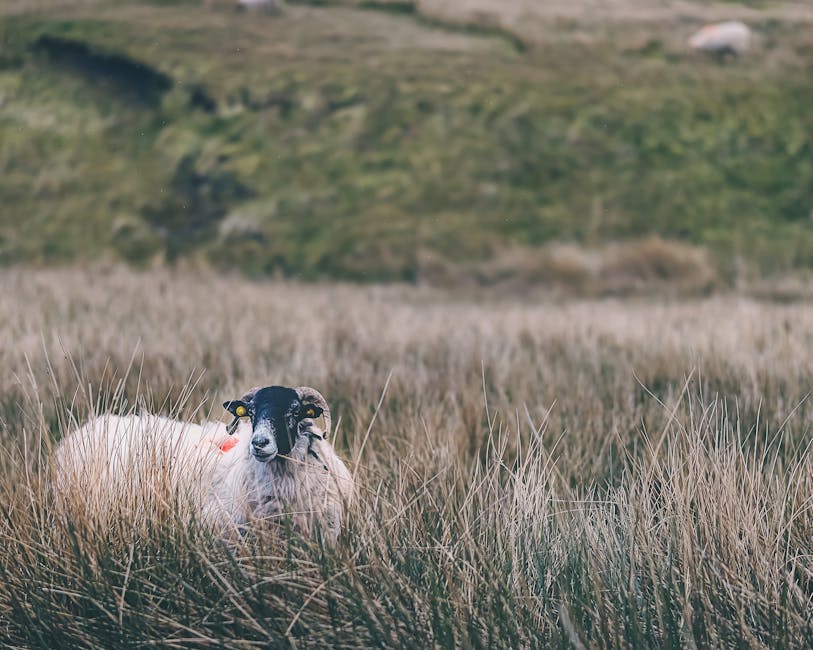
In the misty uplands of County Antrim, where rain-slicked hills roll into the Irish Sea, a quiet experiment unfolds beneath the grazing sheep. Here, on once-degraded peat bogs, tufts of coarse wool cling to the damp earth, knitting into the soil like nature’s own bandage. These aren’t lost scraps from a shearing shed—they’re a calculated intervention. Scientists, farmers, and conservationists are laying down bales of locally sourced wool to stabilize eroding peat, retain moisture, and kickstart ecological recovery. In a region where nearly 80% of native peatlands are damaged, this humble fiber may hold the key to reversing decades of environmental decline—and doing so without the carbon cost of plastic-based solutions.
Restoring the Bog, One Bale at a Time

In Northern Ireland’s blanket bogs, erosion gullies snake through the landscape, draining water and releasing stored carbon into the atmosphere. Traditional restoration methods often rely on plastic mesh or imported coconut fiber matting to stabilize soil and encourage vegetation regrowth. But these materials come with environmental trade-offs: plastic degrades slowly and can fragment into microplastics, while coconut coir is shipped thousands of miles from tropical Asia, racking up a significant carbon footprint. Enter wool—a biodegradable, locally abundant material with remarkable water retention and soil-binding properties. The pilot project, led by the Northern Ireland Environment Agency in partnership with Queen’s University Belfast and local wool producers, has deployed over 15 tons of wool across 12 test sites. Early results show a 40% improvement in moisture retention and a 60% reduction in surface erosion compared to untreated areas. Unlike synthetic alternatives, wool decomposes over 12 to 18 months, enriching the soil with nitrogen and supporting moss regrowth—a critical step in peatland recovery.
From Farm Waste to Climate Solution

For decades, wool in Northern Ireland has been a byproduct in decline. With global demand for coarse wool dropping and processing facilities closing, many farmers have treated it as waste—burned, buried, or discarded. Yet, wool’s natural resilience and hygroscopic qualities made it a staple in historical land management long before synthetic materials existed. The current initiative revives this knowledge with modern science. Researchers at Queen’s University began testing wool’s efficacy in laboratory mesocosms in 2020, simulating peatland conditions and measuring erosion control and microbial activity. Their findings, published in a 2022 study on sustainable land restoration, confirmed that wool outperformed coir in moisture retention and supported greater biodiversity in early-stage bog recovery. The project gained momentum when the Department of Agriculture recognized wool as a potential circular economy product, offering subsidies to farmers who collect and bale wool for conservation use—a shift from waste disposal to environmental service.
The People Behind the Wool Revolution

At the heart of this effort are Northern Ireland’s sheep farmers, whose livelihoods intersect with the fate of the uplands. Take Margaret O’Neill, a third-generation farmer in the Sperrin Mountains, who now collects wool not for sale but for restoration. “We used to pay to have it taken away,” she says. “Now, we’re told it’s helping the planet—that feels like a win.” Her bales are processed through a new community-run facility in Omagh, where wool is cleaned, compressed, and distributed to conservation teams. Scientists like Dr. Elinor McGrath, a peatland ecologist at Queen’s, see the project as a model of community-driven climate action. “This isn’t just about carbon,” she explains. “It’s about reconnecting rural economies with ecological stewardship, using what’s already at hand.” Support has also come from NGOs like the Royal Society for the Protection of Birds (RSPB), which manages key peatland reserves and sees wool as a way to scale restoration without compromising sustainability goals.
Implications for Land and Climate

If successful, the wool-based approach could transform peatland restoration across the UK and beyond. Peatlands store twice as much carbon as all the world’s forests combined, yet their degradation contributes nearly 5% of global greenhouse gas emissions. In Northern Ireland, restoring just 50,000 hectares of damaged bog could offset 2 million tons of CO₂ annually—equivalent to taking nearly half a million cars off the road. Beyond carbon, healthier bogs improve water quality, reduce flood risk, and support rare species like the curlew and bog rosemary. Economically, the model creates rural jobs in wool collection and processing, offering a new revenue stream for struggling hill farmers. Even fashion designers are watching closely, as the project highlights wool’s versatility beyond textiles—potentially reshoring demand for local fleece in an era of sustainable materials.
The Bigger Picture
This initiative reflects a broader shift in environmental science: the recognition that climate solutions don’t always require high-tech fixes. Sometimes, the answer lies in revaluing what we’ve discarded. Across Europe, similar experiments are emerging—beavers reintroduced to rewild rivers, woodchip mulch from urban trimmings used in reforestation. Northern Ireland’s wool project exemplifies a growing ethos: sustainability rooted in place, using local resources to solve local problems. It also challenges the assumption that rural areas are passive recipients of climate policy, instead positioning them as innovators. As global peatland restoration gains urgency under the UN Decade on Ecosystem Restoration, such grassroots models may offer scalable, low-carbon pathways forward.
What comes next is a test of will as much as science. Scaling the wool initiative requires investment in processing infrastructure, long-term monitoring, and policy support to integrate wool into national restoration standards. But if Northern Ireland can turn sheep waste into a climate asset, it may inspire a woolly revolution far beyond its damp, windswept hills.
Source: BBC