- Researchers at the University of Pennsylvania stiffened cancer cells using compounds that reinforce the cytoskeleton.
- This mechanical intervention makes cancer cells more vulnerable to destruction by CAR T-cells.
- Stiffening cancer cells improves CAR T-cell therapy efficacy by up to 40% in leukemia and lymphoma patients.
- The increased rigidity of cancer cells enhances immune recognition, allowing T-cells to exert more physical force.
- This biomechanical approach redefines how scientists think about immunotherapy and cancer treatment.
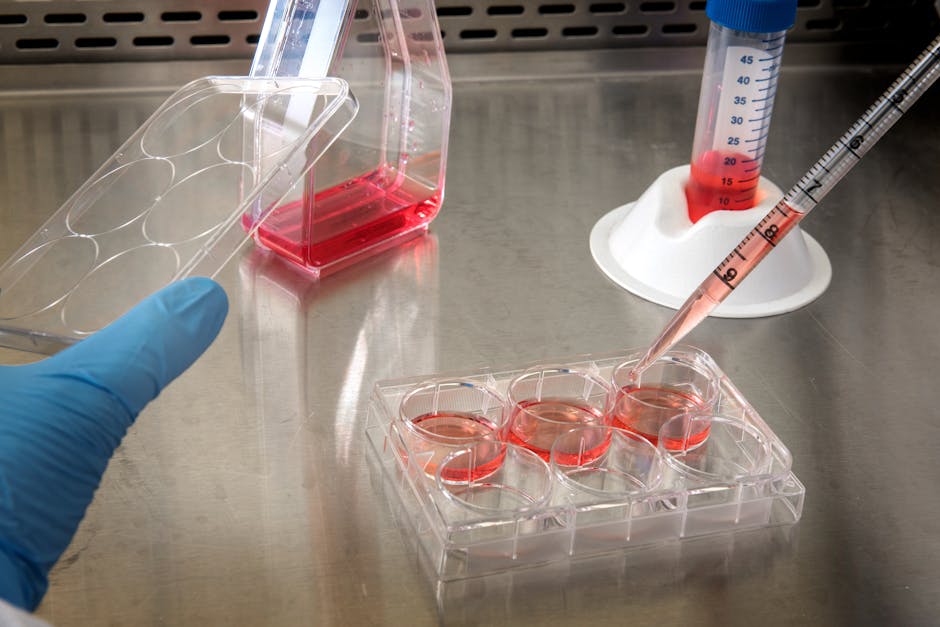
In a dimly lit laboratory at the University of Pennsylvania, a petri dish hums with quiet drama. Under the microscope, immune cells dart and latch onto cancerous targets like guided missiles—except these T-cells have been genetically reprogrammed, trained to hunt tumors. Yet, in some cases, they falter. The cancer cells, soft and pliable, slip away like ghosts. Now, researchers are flipping the script: instead of only engineering the immune system, they’re reshaping the enemy. By stiffening the physical structure of cancer cells, they’ve found a way to make them more vulnerable to destruction. This unexpected mechanical intervention is redefining how scientists think about immunotherapy, proving that sometimes, the key to defeating cancer isn’t just biological—but biomechanical.
Cancer’s Soft Shell No Longer a Shield

Recent experiments have demonstrated that modifying the rigidity of tumor cells dramatically enhances the efficacy of CAR T-cell therapy. In studies published in Nature Materials, researchers treated leukemia and lymphoma cells with compounds that reinforce the cytoskeleton, making the cells stiffer. When exposed to CAR T-cells, these reinforced cancer cells were eliminated up to 40% more efficiently than their softer counterparts. The reason lies in the mechanics of immune recognition: T-cells exert physical force when engaging targets, and a stiffer cell provides better resistance, allowing the immune synapse to form more stably. This improved contact enables sustained signaling and more effective killing. The approach doesn’t alter the genetic programming of T-cells but instead changes the battlefield, giving engineered immunity a crucial physical advantage.
From Genetic Engineering to Mechanical Manipulation

CAR T-cell therapy, which involves extracting a patient’s T-cells, reprogramming them to target cancer-specific antigens, and reinfusing them, has been a milestone in oncology since its FDA approval in 2017. Initially transformative for blood cancers like B-cell lymphomas and acute lymphoblastic leukemia, its success has been limited in solid tumors—partly due to the complex tumor microenvironment and immune evasion tactics. Scientists long focused on molecular solutions: enhancing receptor affinity, overcoming immunosuppression, or blocking checkpoint inhibitors. But the new research marks a paradigm shift—targeting not just biochemical signals but physical traits. The idea that mechanical properties influence immune function emerged from biophysics labs studying cell adhesion and migration. Now, that niche field is converging with immunotherapy, suggesting that cancer’s malleability, long seen as a biological adaptation, might be its mechanical Achilles’ heel.
The Engineers Behind the Immune Edge

Leading this cross-disciplinary push are teams like those at Penn’s Institute for Regenerative Medicine and MIT’s Koch Institute, where bioengineers and immunologists collaborate closely. Dr. Michelle Chen, a mechanobiologist at MIT, explains: “We used to think immunity was all about receptors and ligands. Now we see force matters—how hard a cell pushes back changes everything.” Her lab developed a hydrogel-based system to test T-cell responses across varying cell stiffnesses, revealing a clear mechanical threshold for effective killing. Meanwhile, clinicians like Dr. Rajiv Patel at the Abramson Cancer Center are exploring safe, transient cytoskeletal modulators that could be administered before CAR T infusion. Their goal isn’t permanent alteration but a temporary “priming” of tumor cells to increase susceptibility. This blend of engineering insight and clinical pragmatism is accelerating translation from bench to bedside.
Implications for Patients and Therapies

For patients with relapsed or refractory cancers, this approach could mean higher remission rates and longer survival without increasing the toxicity of CAR T-cells themselves. Because the stiffening agents are designed to act briefly and locally, systemic side effects appear minimal in preclinical models. Moreover, the strategy could extend CAR T-cell therapy to solid tumors—such as pancreatic or ovarian cancers—where it has struggled due to poor T-cell infiltration and target variability. If clinical trials confirm the lab results, oncologists may soon combine mechanical priming with existing immunotherapies, creating a dual-pronged attack. Pharmaceutical companies are already exploring small-molecule cytoskeletal stabilizers, while biotech startups focus on delivery systems that target tumor sites specifically, minimizing impact on healthy tissues.
The Bigger Picture
This research underscores a growing truth in medicine: diseases cannot be understood through biology alone. Physical forces—stiffness, tension, fluid pressure—play decisive roles in cellular behavior and treatment response. Just as cancer stiffens surrounding tissue in some cases (a diagnostic clue in mammography), now scientists are using stiffness as a weapon against it. The convergence of immunology, materials science, and mechanobiology is birthing a new frontier in precision medicine, where therapies are designed not just to target molecules but to manipulate microenvironments. As our understanding of cellular mechanics deepens, we may find that the body’s defenses are not only smart but also exquisitely sensitive to touch.
What comes next is cautious optimism. Human trials are in early planning stages, with safety and delivery being top priorities. But if the mechanical priming strategy holds, it could become a standard prelude to CAR T therapy within the decade. More than a technical tweak, it represents a philosophical shift—proving that sometimes, to defeat cancer, we must first change how it feels.
Source: New Scientist