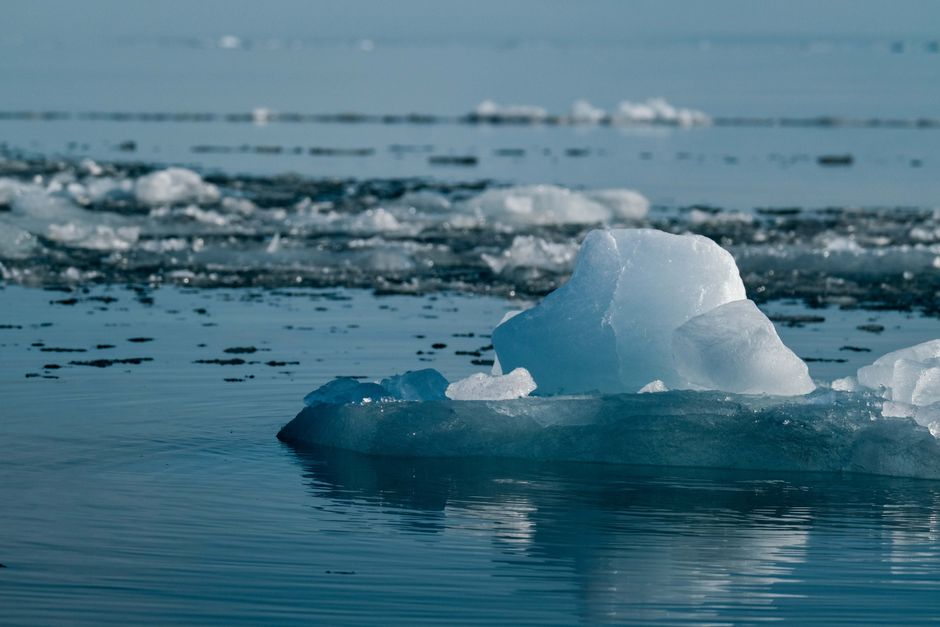
- The Arctic Ocean’s tipping point has triggered a catastrophic imbalance in the marine food chain, with far-reaching consequences for marine life.
- Phytoplankton growth has depleted a crucial nutrient, silicon, which is vital for the growth and development of many marine species.
- The disappearance of sea ice has allowed more sunlight to enter the ocean, boosting phytoplankton growth and exacerbating nutrient depletion.
- Nutrient depletion has the potential to severely affect animals higher up the food chain, from zooplankton to fish and even polar bears.
- A cascading effect throughout the food chain is possible due to the depletion of silicon, a vital nutrient for many marine species.
The Arctic Ocean has reached a critical tipping point, with far-reaching consequences for marine life. The disappearance of sea ice has allowed more sunlight to enter the ocean, boosting the growth of phytoplankton, the primary producers of the marine food chain. However, this increase in phytoplankton has depleted a crucial nutrient, potentially severely affecting animals higher up the food chain, from zooplankton to fish and even polar bears.
The Evidence of Nutrient Depletion

Studies have shown that the depletion of this essential nutrient, silicon, has significant implications for the entire marine ecosystem. According to New Scientist, the increased growth of phytoplankton has consumed large amounts of silicon, leaving limited amounts for other organisms. This nutrient is vital for the growth and development of many marine species, and its depletion could have a cascading effect throughout the food chain. Data from the National Aeronautics and Space Administration (NASA) supports this finding, highlighting the rapid decline of sea ice and its impact on ocean chemistry.
The Key Players in the Arctic Ecosystem

The Arctic Ocean’s ecosystem is complex, with many key players that rely on the delicate balance of nutrients. Phytoplankton, zooplankton, fish, and marine mammals all play crucial roles in the food chain. The disappearance of sea ice has disrupted this balance, with phytoplankton thriving in the increased sunlight, while other species struggle to adapt. The World Wildlife Fund (WWF) has warned about the consequences of this disruption, highlighting the need for urgent action to protect the Arctic ecosystem.
The Trade-Offs of a Warming Arctic

The warming of the Arctic Ocean has both positive and negative consequences. On the one hand, the increased growth of phytoplankton could lead to a more productive ecosystem, with potential benefits for fisheries and the economy. On the other hand, the depletion of essential nutrients and the disruption of the food chain could have devastating consequences for marine life. The Intergovernmental Panel on Climate Change (IPCC) has highlighted the need for a balanced approach, considering both the benefits and risks of a warming Arctic.
The Timing of the Tipping Point

The Arctic Ocean’s tipping point has been reached due to the rapid decline of sea ice, which has been accelerated by climate change. The past decade has seen a significant increase in Arctic temperatures, with 2020 being one of the warmest years on record. This rapid warming has disrupted the delicate balance of the ecosystem, leading to the depletion of essential nutrients and the potential collapse of the food chain. The National Oceanic and Atmospheric Administration (NOAA) has warned about the consequences of this rapid warming, highlighting the need for urgent action to reduce greenhouse gas emissions.
Where We Go From Here
Over the next 6-12 months, three scenarios are possible. Firstly, the Arctic ecosystem could continue to decline, with the depletion of essential nutrients leading to a collapse of the food chain. Secondly, the ecosystem could adapt to the new conditions, with phytoplankton and other species finding alternative sources of nutrients. Thirdly, urgent action could be taken to reduce greenhouse gas emissions, slowing the rate of warming and giving the ecosystem a chance to recover. The United Nations Environment Programme (UNEP) has highlighted the need for international cooperation to address the climate crisis and protect the Arctic ecosystem.
In conclusion, the Arctic Ocean’s tipping point has significant implications for marine life, and urgent action is needed to address the climate crisis and protect the ecosystem. The depletion of essential nutrients and the disruption of the food chain could have devastating consequences, and it is essential that we take a balanced approach, considering both the benefits and risks of a warming Arctic.
Source: New Scientist