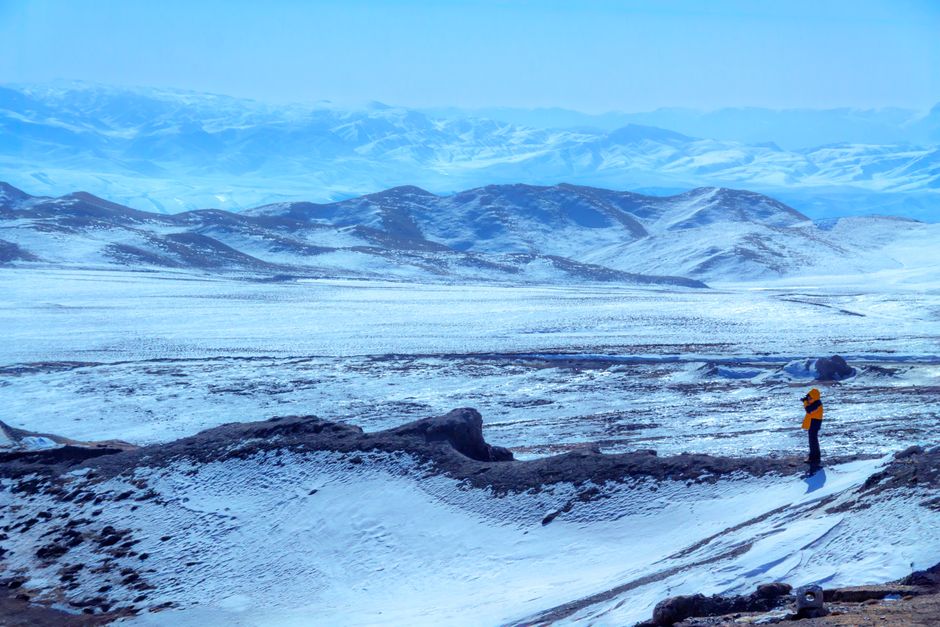
- Permafrost thaw on the Qinghai-Tibet Plateau increases rock-weathering rates, consuming CO2 from the atmosphere.
- The process reduces river CO2 emissions by up to 20% in the region.
- Rock weathering rates increased by up to 30% in areas where permafrost had thawed.
- The study suggests that geological carbon fluxes may eventually outpace thaw-driven emissions.
- This unexpected finding has significant implications for understanding permafrost thaw and carbon emissions.
Permafrost thaw on the Qinghai–Tibet Plateau is having an unexpected impact on the environment, as it increases rock-weathering rates while reducing river CO2 emissions, according to a recent study published in Nature. This suggests that geological carbon fluxes may eventually outpace thaw-driven emissions, providing a potential counterbalance to the effects of climate change. The findings have significant implications for our understanding of the complex relationships between permafrost thaw, rock weathering, and carbon emissions.
Evidence from the Qinghai-Tibet Plateau

The study found that permafrost thaw on the Qinghai-Tibet Plateau leads to increased rock weathering rates, resulting in the consumption of CO2 from the atmosphere. This process, in turn, reduces the amount of CO2 emitted by rivers in the region. The researchers used a combination of field measurements and laboratory experiments to quantify the rates of rock weathering and CO2 fluxes, providing hard data to support their findings. For example, they found that the rate of rock weathering increased by up to 30% in areas where permafrost had thawed, resulting in a corresponding decrease in river CO2 emissions.
Key Players in the Carbon Cycle

The key actors in this process are the rocks and minerals that make up the Qinghai-Tibet Plateau, as well as the microorganisms that play a crucial role in rock weathering. The researchers found that the increased availability of nutrients and water in thawed permafrost areas supports the growth of these microorganisms, which in turn accelerates the rate of rock weathering. Additionally, the study highlights the importance of considering the role of geological processes in the carbon cycle, rather than focusing solely on biological and atmospheric processes. The National Aeronautics and Space Administration (NASA) and other organizations have also emphasized the need to study the complex interactions between the Earth’s systems.
Trade-Offs and Implications

While the study’s findings suggest that rock weathering may counteract river CO2 emissions induced by permafrost thaw, there are also potential trade-offs and implications to consider. For example, the increased rate of rock weathering may lead to changes in soil chemistry and fertility, potentially impacting local ecosystems and plant growth. Furthermore, the study’s results highlight the need for a more nuanced understanding of the carbon cycle, taking into account the complex interactions between geological, biological, and atmospheric processes. The Intergovernmental Panel on Climate Change (IPCC) has also emphasized the importance of considering these interactions in climate change mitigation and adaptation strategies.
Timing and Context

The study’s findings are particularly relevant in the context of current climate change trends and the increasing rate of permafrost thaw. As global temperatures continue to rise, the extent and severity of permafrost thaw are likely to increase, leading to significant changes in the carbon cycle. The study’s results suggest that rock weathering may play a crucial role in mitigating the effects of permafrost thaw on the carbon cycle, but further research is needed to fully understand the implications of this process. The United Nations Environment Programme (UNEP) has also highlighted the need for urgent action to address the impacts of climate change on permafrost regions.
Where We Go From Here
Looking ahead to the next 6-12 months, there are several potential scenarios that could play out. One possible scenario is that rock weathering continues to counteract river CO2 emissions induced by permafrost thaw, providing a natural buffer against the effects of climate change. Another scenario is that the rate of permafrost thaw accelerates, leading to significant changes in the carbon cycle and potentially overwhelming the capacity of rock weathering to mitigate these effects. A third scenario is that further research reveals new insights into the complex interactions between geological, biological, and atmospheric processes, allowing for the development of more effective strategies to address the impacts of climate change. The World Health Organization (WHO) has also emphasized the need for continued research and monitoring to address the health impacts of climate change.
In conclusion, the study’s findings highlight the complex and multifaceted nature of the carbon cycle, and the need for a more nuanced understanding of the interactions between geological, biological, and atmospheric processes. As the world continues to grapple with the challenges of climate change, it is essential to consider the potential role of rock weathering in mitigating the effects of permafrost thaw, and to support further research into this critical area of study.
Source: Nature