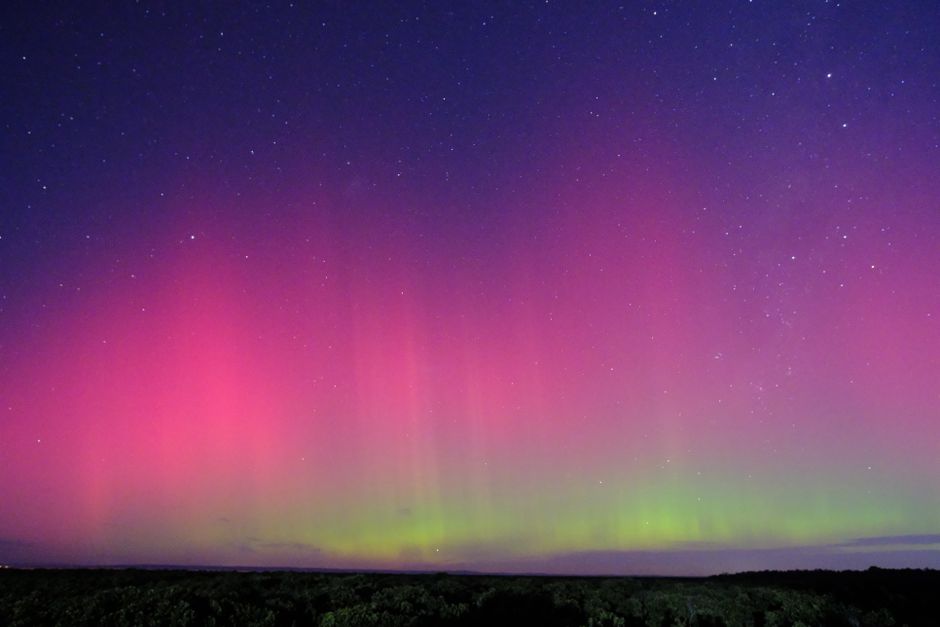
- The Southern Lights, or aurora australis, occur in the Southern Hemisphere due to charged particles from the sun interacting with the Earth’s magnetic field.
- The colors of the aurora can vary depending on the energy of the particles and the altitude at which they collide with the Earth’s atmosphere.
- The Southern Lights are less commonly seen than the Northern Lights due to the remote location of the Southern Hemisphere and the lack of landmasses at high latitudes.
- NASA has been studying the aurora australis for years, using satellites and spacecraft to capture images and data on this phenomenon.
- Aurora australis can be a reminder of the awe-inspiring beauty of our planet and the importance of continued space exploration.
What happens when the aurora australis, or Southern Lights, are filmed from space? NASA astronaut Jessica Meir recently captured a breathtaking timelapse of this rare phenomenon from the International Space Station, giving us a unique glimpse into the Earth’s atmosphere. The Southern Lights are a natural wonder that occurs when charged particles from the sun interact with the Earth’s magnetic field, resulting in a spectacular display of colored lights in the sky. This occurrence is a reminder of the awe-inspiring beauty of our planet and the importance of continued space exploration.
What are the Southern Lights?

The Southern Lights, also known as aurora australis, are a natural phenomenon that occurs in the Southern Hemisphere. They are caused by charged particles from the sun interacting with the Earth’s magnetic field, resulting in a spectacular display of colored lights in the sky. The colors of the aurora can vary depending on the energy of the particles and the altitude at which they collide with the Earth’s atmosphere. The Southern Lights are less commonly seen than the Northern Lights, or aurora borealis, due to the remote location of the Southern Hemisphere and the lack of landmasses at high latitudes.
Supporting Evidence from NASA

NASA has been studying the aurora australis for years, using satellites and spacecraft to capture images and data on this phenomenon. The recent timelapse filmed by Jessica Meir is a stunning example of the beauty and complexity of the Southern Lights. According to NASA, the aurora australis is a complex phenomenon that involves the interaction of the solar wind, the Earth’s magnetic field, and the atmosphere. By studying the aurora, scientists can gain insights into the Earth’s magnetic field and the solar wind, which can help us better understand the Earth’s climate and weather patterns.
Counter-Perspectives and Challenges

While the Southern Lights are a breathtaking sight, they can also be challenging to study and predict. The remote location of the Southern Hemisphere and the lack of landmasses at high latitudes make it difficult for scientists to collect data on the aurora australis. Additionally, the aurora is a dynamic and variable phenomenon, making it challenging to predict when and where it will occur. Some scientists argue that the aurora australis is not as well-studied as the Northern Lights, and that more research is needed to fully understand this phenomenon. Despite these challenges, the recent timelapse filmed by Jessica Meir is a significant contribution to our understanding of the Southern Lights.
Real-World Impact of the Southern Lights

The Southern Lights have a significant impact on the Earth’s atmosphere and climate. The aurora australis can cause disturbances in the Earth’s magnetic field, which can affect communication and navigation systems. Additionally, the aurora can also affect the Earth’s upper atmosphere, causing changes in temperature and density. The Southern Lights can also have an impact on the Earth’s climate, as they can influence the formation of clouds and the distribution of heat around the globe. The study of the aurora australis can provide insights into these processes and help us better understand the Earth’s climate and weather patterns.
What This Means For You
The recent timelapse of the Southern Lights filmed by Jessica Meir is a reminder of the beauty and complexity of our planet. The study of the aurora australis can provide insights into the Earth’s magnetic field, atmosphere, and climate, which can help us better understand the Earth’s weather patterns and climate. As we continue to explore and study the Earth’s atmosphere, we can gain a deeper appreciation for the beauty and complexity of our planet and the importance of continued space exploration.
What other secrets will the Southern Lights reveal to us as we continue to study and explore this phenomenon? The recent timelapse filmed by Jessica Meir is just the beginning of a new era of exploration and discovery, and we can expect to learn more about the aurora australis and its role in the Earth’s atmosphere and climate in the years to come. For more information on the Southern Lights and NASA’s research, visit the BBC’s website or NASA’s website.
Source: BBC