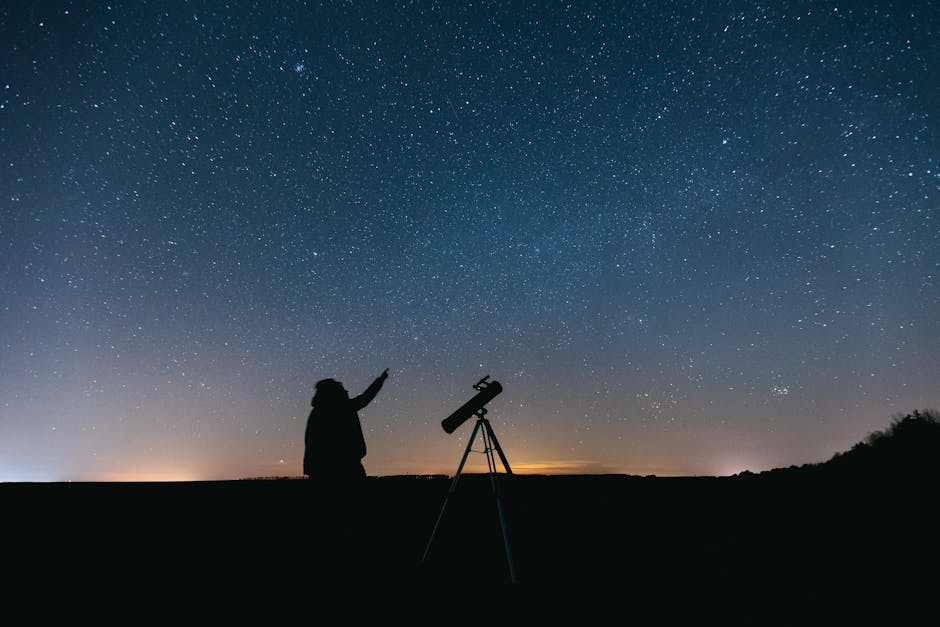
- New discoveries suggest that distant Kuiper Belt objects are moving in a more stable and predictable manner than expected, challenging the Planet Nine theory.
- Recent findings indicate that the orbits of Kuiper Belt objects may be more influenced by their own characteristics than by an unseen giant planet.
- The Planet Nine theory, which suggests a massive, undiscovered planet is influencing the orbits of Kuiper Belt objects, is being re-examined by astronomers.
- The new research on Planet Nine suggests that the hypothetical planet may be much farther away than initially thought.
- The discovery challenges the idea of a hidden giant planet and forces astronomers to re-evaluate their assumptions about its existence and location.
Astronomers have spent years searching for a possible hidden giant planet, dubbed Planet Nine, far beyond Neptune, but recent discoveries are challenging the theory by showing more stable motion than expected among distant Kuiper Belt objects. The Planet Nine theory, which suggests a massive, undiscovered planet is influencing the orbits of these objects, has been a topic of debate in the scientific community. If Planet Nine exists, it may be much farther away than originally thought, according to new research published on Science Daily.
Current State of the Planet Nine Theory

The current situation surrounding the Planet Nine theory is one of uncertainty and debate. Unusual orbits among distant Kuiper Belt objects have long fueled the theory, but recent discoveries are casting doubt on its validity. The new findings suggest that these objects are moving in a more stable and predictable manner than expected, which challenges the idea of a massive, undiscovered planet exerting influence over them. As a result, astronomers are being forced to re-examine their assumptions about the potential giant planet and its possible location.
Historical Context of the Planet Nine Theory

The story behind the Planet Nine theory began several years ago, when astronomers first noticed unusual orbits among distant Kuiper Belt objects. These objects, which are small, icy bodies beyond Neptune, were found to be moving in a way that suggested they were being influenced by a massive, undiscovered planet. The theory gained traction, and astronomers began searching for evidence of the potential giant planet. However, as new discoveries have been made, the theory has faced increasing challenges, and the search for Planet Nine has become more complex and nuanced.
Key Players in the Planet Nine Debate

The debate surrounding the Planet Nine theory is being shaped by a number of key players, including astronomers and researchers from around the world. These individuals are motivated by a desire to understand the mysteries of the universe and to uncover new knowledge about the solar system. They are using a range of techniques, including observations and simulations, to study the Kuiper Belt objects and to search for evidence of the potential giant planet. As the debate continues, these key players will play an important role in shaping our understanding of the Planet Nine theory and its implications.
Consequences of the New Discoveries

The new discoveries challenging the Planet Nine theory have significant consequences for our understanding of the solar system and the search for new planets. If the theory is proven to be incorrect, it will require astronomers to re-examine their assumptions about the formation and evolution of the solar system. On the other hand, if the theory is proven to be correct, it will have major implications for our understanding of the universe and the potential for life beyond Earth. Either way, the new discoveries are an important reminder of the complexity and nuance of the universe, and the need for ongoing research and exploration.
The Bigger Picture
The debate surrounding the Planet Nine theory is part of a larger conversation about the nature of the universe and our place within it. The search for new planets and the study of the solar system are essential to our understanding of the cosmos and the potential for life beyond Earth. As we continue to explore and discover new things about the universe, we are reminded of the awe-inspiring complexity and beauty of the cosmos, and the importance of ongoing research and exploration. The Planet Nine theory, and the debate surrounding it, are an important part of this larger conversation, and will continue to shape our understanding of the universe in the years to come.
In conclusion, the mystery of Planet Nine remains a topic of debate and speculation in the scientific community. As new discoveries are made, our understanding of the potential giant planet and its possible location will continue to evolve. For now, the search for Planet Nine remains an intriguing and complex puzzle, with many pieces still to be found. As astronomers continue to study the Kuiper Belt objects and to search for evidence of the potential giant planet, we can expect to learn more about the universe and its many mysteries, and to be reminded of the importance of ongoing research and exploration.
Source: ScienceDaily