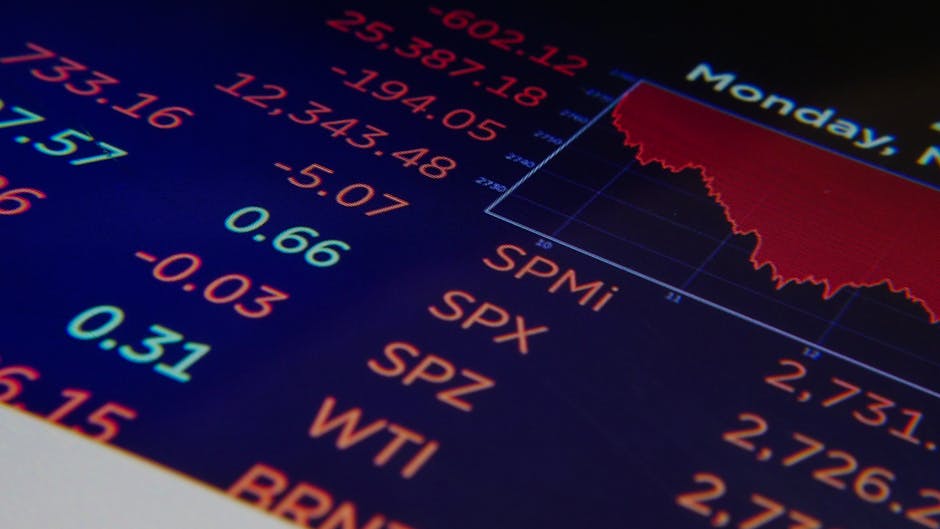
- Wall Street’s ‘fear gauge’ surged 15%, indicating increased market uncertainty and investor caution.
- The CBOE Volatility Index (VIX) measures expected volatility of the S&P 500 Index over 30 days.
- A rising VIX suggests investors are becoming more risk-averse and seeking protection against potential losses.
- The recent chip stock reversal sparked concerns about the overall health of the tech sector.
- The unusual trend in chip stocks has left investors wondering about market implications.
What happens when Wall Street’s ‘fear gauge’ surges as the ‘crash up’ in chip stocks finally reverses? The answer lies in the recent market volatility, which has left investors wondering about the implications of this unusual trend. The CBOE Volatility Index, also known as the VIX, has been rising, indicating increased market uncertainty. This shift is particularly notable in the chip stock sector, where an unexpected surge has been followed by a reversal, sparking concerns about the overall health of the market.
Understanding the ‘Fear Gauge’

The VIX is a benchmark index that measures the expected volatility of the S&P 500 Index over the next 30 days. It is often referred to as the ‘fear gauge’ because it tends to rise when investors are anxious about the market’s future performance. A rising VIX can indicate that investors are becoming more risk-averse, leading to increased demand for options that protect against potential losses. In the context of the recent chip stock reversal, a surging VIX suggests that investors are growing increasingly cautious about the tech sector’s prospects.
Evidence of Market Volatility

According to a report by CNBC, the chip stock sector’s unusual surge was followed by a sharp reversal, with some stocks losing up to 20% of their value. This sudden shift has been attributed to various factors, including concerns about overvaluation and the potential for a market correction. As Reuters notes, market volatility can have far-reaching consequences, including reduced investor confidence and decreased economic growth.
Counter-Perspectives and Skepticism

Not all analysts agree that the surge in the VIX is a cause for concern. Some argue that the increase in market volatility is a natural response to the uncertainty surrounding the global economy. Others point out that the chip stock sector’s reversal may be an isolated incident, rather than a broader market trend. However, as The New York Times reports, even skeptics acknowledge that the recent market volatility warrants close attention, particularly in light of the ongoing economic recovery.
Real-World Impact and Consequences

The surge in the VIX and the reversal of the chip stock sector’s surge have significant implications for investors and the broader economy. As market volatility increases, investors may become more risk-averse, leading to reduced investment in the tech sector and potentially slowing economic growth. Furthermore, as BBC News notes, the impact of market volatility can be felt beyond the financial sector, with potential consequences for employment, consumer spending, and overall economic stability.
What This Means For You
So, what can investors and readers take away from the recent surge in the VIX and the reversal of the chip stock sector’s surge? The key takeaway is that market volatility is increasing, and investors should be cautious when making investment decisions. As the market continues to evolve, it is essential to stay informed about the latest developments and to diversify investments to minimize risk.
As the market continues to navigate this period of uncertainty, one question remains: what will be the long-term impact of the surge in the VIX and the reversal of the chip stock sector’s surge? Will this mark a turning point in the market’s trajectory, or is it simply a minor correction? Only time will tell, but one thing is certain – investors and readers will be watching closely as the situation unfolds.
Source: Reddit