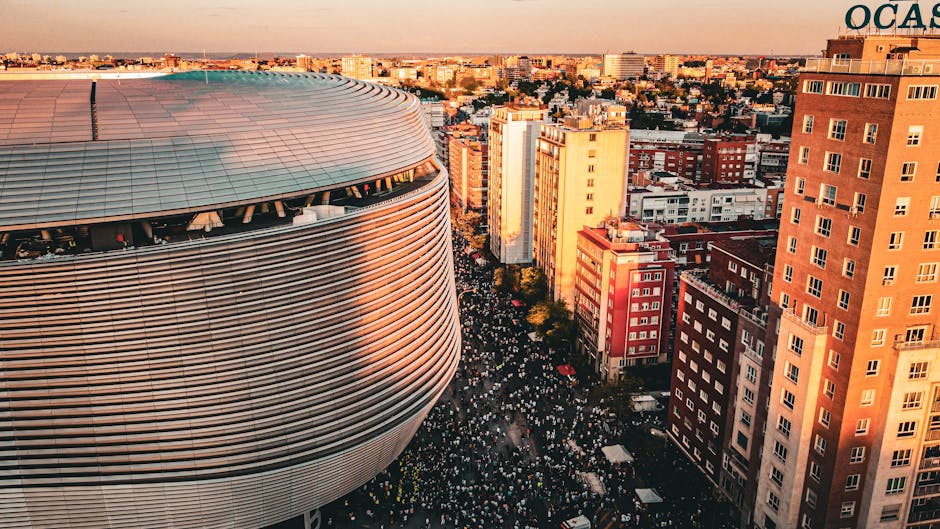
- Pope Leo attended a public mass in Madrid, Spain, drawing a crowd of approximately 1.2 million people.
- The pontiff’s message of unity and acceptance resonated with the sea of worshippers, praising Madrid as a beacon of inclusion.
- The event highlighted the enduring power of faith in the region, with people from all walks of life in attendance.
- The Pope’s visit was seen as a major success, with many hailing his words as a beacon of hope for a more unified society.
- The event addressed issues of immigration and social cohesion, which have been at the forefront of public debate in Spain.
Pope Leo greeted a crowd of approximately 1.2 million people at a public mass in Madrid, Spain, on Sunday, praising the city as a beacon of inclusion. The massive gathering marked a significant moment for the Catholic Church, as the pontiff’s message of unity and acceptance resonated with the sea of worshippers. The event was held in the Spanish capital, a city known for its rich history and cultural diversity, and was seen as a testament to the enduring power of faith in the region.
Current State of the Pontiff’s Visit

The public mass, which was held in a large outdoor space, was attended by people from all walks of life, including locals, tourists, and dignitaries. The atmosphere was one of joy and celebration, with many in attendance waving flags and banners bearing the Pope’s image. The pontiff’s message of inclusion was particularly significant, given the current social and economic climate in Spain, where issues of immigration and social cohesion have been at the forefront of public debate. According to reports from the BBC, the event was seen as a major success, with many hailing the Pope’s words as a beacon of hope for a more unified and compassionate society.
Historical Context of the Pope’s Visit

The story behind the Pope’s visit to Madrid is one of longstanding tradition and cultural significance. The Catholic Church has a deep history in Spain, dating back to the earliest days of Christianity, and the country has been a major center of Catholic worship and learning for centuries. The Pope’s visit was seen as a way of reaffirming this bond, and of strengthening ties between the Church and the people of Spain. The choice of Madrid as the location for the public mass was also significant, as the city has a long history of tolerance and acceptance, and has been a melting pot for people from all over the world.
Key Figures and Motivations

The key figure behind the Pope’s visit was, of course, the pontiff himself, who has been a vocal advocate for social justice and compassion throughout his tenure. However, other figures also played important roles in shaping the event, including Spanish government officials and Catholic Church leaders. The motivations behind the visit were multifaceted, but ultimately centered on a desire to promote unity and understanding, and to reaffirm the importance of faith in modern society. As noted by Al Jazeera, the event was seen as a major opportunity for the Pope to connect with a diverse and vibrant community, and to share his message of hope and inclusivity with a wider audience.
Consequences and Implications

The consequences of the Pope’s visit to Madrid are likely to be far-reaching, both for the Catholic Church and for the wider community. The event has already been hailed as a major success, and is likely to have a lasting impact on the social and cultural landscape of Spain. The Pope’s message of inclusion and acceptance is also likely to resonate with people around the world, and to inspire a new wave of activism and advocacy for social justice. However, the visit has also been criticized by some, who argue that the Catholic Church has not done enough to address issues of inequality and injustice within its own ranks.
The Bigger Picture
The Pope’s visit to Madrid is part of a larger story about the role of faith in modern society, and the ways in which religious leaders can promote unity and understanding. In a world that is increasingly divided and fragmented, the Pope’s message of inclusion and acceptance is a powerful reminder of the importance of compassion and empathy. As the world continues to grapple with issues of social justice and inequality, the Catholic Church and its leaders have a critical role to play in promoting a more just and equitable society.
The question of what comes next is a complex one, but it is clear that the Pope’s visit to Madrid has marked an important moment in the ongoing conversation about faith and social justice. As the Catholic Church continues to evolve and adapt to the changing needs of the world, it is likely that we will see more events and initiatives like this one, which bring people together and promote a sense of community and shared purpose. For now, the focus will be on building on the momentum generated by the Pope’s visit, and on finding ways to translate the message of inclusion and acceptance into concrete action and positive change.
Source: Al Jazeera