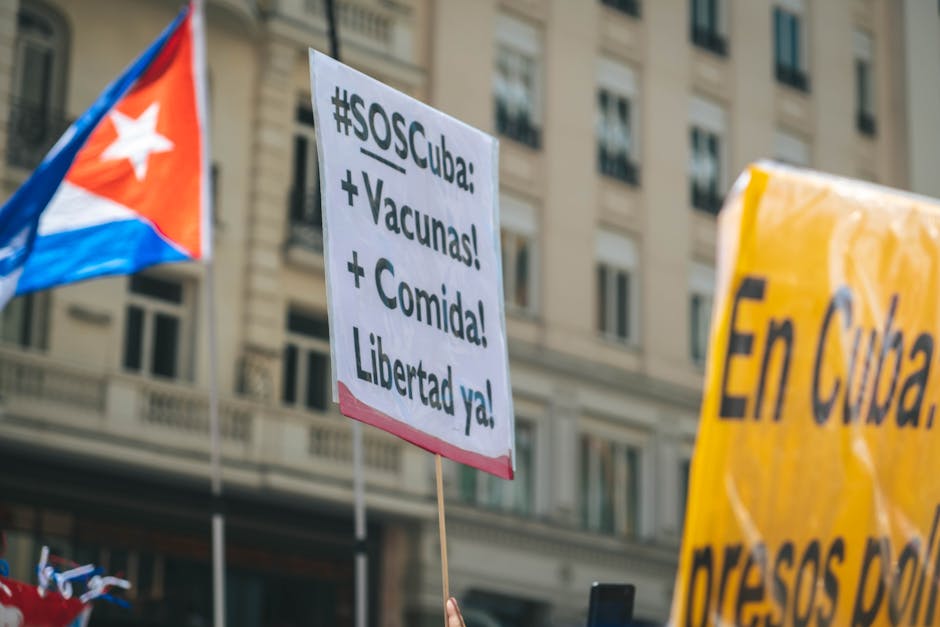
- Raul Castro’s public appearance defies US charges, signaling Cuba’s stance on sovereignty.
- US indictment of Castro escalates tensions, with Cuba viewing it as an attack on its autonomy.
- Cuba rejects US claims of human rights abuses and accuses the US of interfering in its affairs.
- Sanctions and historical conflicts continue to complicate relations between the US and Cuba.
- Castro’s defiant act watches for potential diplomatic shifts in US-Cuba relations.
Former Cuban president Raul Castro made his first public appearance in Havana since being indicted by the United States, marking a significant development in the ongoing tensions between the two nations. Castro’s appearance comes as a surprise to many, given the US charges against him, and signals Cuba’s unwavering stance on its sovereignty. The move is likely to escalate tensions between the US and Cuba, with many watching to see how the situation unfolds. Castro’s public appearance is a clear message to the US that Cuba will not be intimidated by the charges.
Current Tensions Between the US and Cuba

The current situation between the US and Cuba is complex, with the US charges against Raul Castro being the latest in a series of escalating tensions. The US has long been critical of Cuba’s human rights record and has imposed strict sanctions on the island nation. Cuba, on the other hand, has accused the US of interfering in its internal affairs and has refused to bow to US pressure. The indictment of Raul Castro has further strained relations, with Cuba viewing it as an attack on its sovereignty. The US has stated that the charges against Castro are related to his alleged involvement in human rights abuses, but Cuba has denied these claims.
Historical Context of US-Cuba Relations

The story behind the current tensions between the US and Cuba is long and complex, dating back to the Cold War era. The US has historically been opposed to Cuba’s communist government, and the two nations have had limited diplomatic relations since the 1950s. In recent years, there have been efforts to improve relations, including the reopening of the US embassy in Havana in 2015. However, the election of Donald Trump as US president in 2016 marked a significant shift in US policy towards Cuba, with the US reimposing strict sanctions and travel restrictions. The current tensions between the US and Cuba are a culmination of these historical events, with the indictment of Raul Castro being the latest development.
Key Players in the US-Cuba Conflict

Raul Castro is a key figure in the current conflict between the US and Cuba, and his public appearance is a significant development. Castro has been a dominant figure in Cuban politics for decades and has played a crucial role in shaping the nation’s relations with the US. The US government, on the other hand, has been critical of Castro’s human rights record and has imposed strict sanctions on Cuba. Other key players in the conflict include Cuban president Miguel Diaz-Canel, who has been a strong supporter of Castro, and US president Joe Biden, who has continued the strict sanctions on Cuba imposed by his predecessor. The motivations of these key players are complex, with Castro and Diaz-Canel seeking to protect Cuba’s sovereignty and the US seeking to promote human rights and democracy in the region.
Consequences of the US-Cuba Conflict

The consequences of the US-Cuba conflict are far-reaching, with significant implications for the people of Cuba and the region as a whole. The strict sanctions imposed by the US have had a devastating impact on Cuba’s economy, with many Cubans struggling to access basic necessities like food and medicine. The conflict has also had a significant impact on US businesses, with many companies unable to operate in Cuba due to the sanctions. The indictment of Raul Castro has further escalated tensions, with many fearing that the situation could deteriorate into a full-blown crisis. The consequences of the conflict are not limited to Cuba and the US, with the region as a whole being impacted by the tensions.
The Bigger Picture
The US-Cuba conflict is part of a larger struggle for influence in the region, with the US seeking to promote its interests and Cuba seeking to maintain its sovereignty. The conflict has significant implications for the region, with many countries watching to see how the situation unfolds. The US-Cuba conflict is also a reflection of the broader global tensions between the US and other nations, with the US seeking to assert its dominance and other nations seeking to challenge its influence. The situation in Cuba is being closely watched by regional leaders and international organizations, with many calling for a peaceful resolution to the conflict.
The situation in Cuba is likely to continue to escalate, with many watching to see how the US and Cuba will respond to the current tensions. The US-Cuba conflict is a complex and multifaceted issue, with no easy solutions. However, it is clear that a peaceful resolution to the conflict is essential, not just for the people of Cuba but for the region as a whole. As the situation continues to unfold, it is likely that we will see further developments, including potential diplomatic efforts to resolve the conflict. For now, the people of Cuba and the region as a whole can only watch and wait to see what the future holds.
Source: Al Jazeera