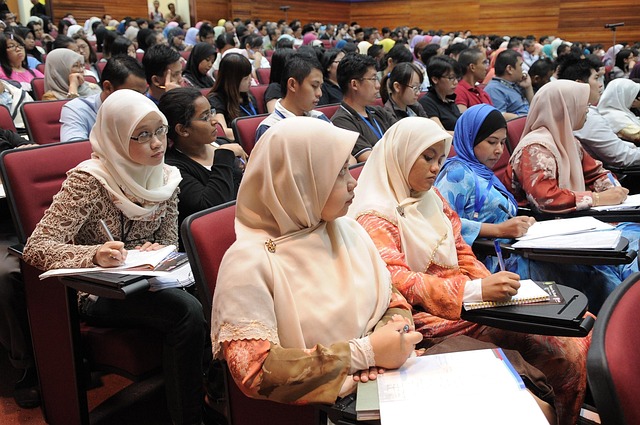
- China’s focus on investing in science teachers and education is key to its successful innovation system.
- Prioritizing science education is crucial for developing a strong innovation system, as supported by a recent study in Nature.
- China’s science education system emphasizes hands-on learning, experimentation, and critical thinking, resulting in high-performing students.
- The country’s significant investments in science education have led to improved curricula, teacher training, and facilities.
- China’s approach to science education is being recognized globally, with many countries seeking to learn from its experiences.
China is leading the way in science education, with a strong focus on investing in science teachers and education. According to a recent study published in Nature, countries that want to develop successful innovation systems must prioritize science education and support for science teachers. This approach has enabled China to surge ahead in innovation, with significant implications for its economy and global competitiveness. As other countries seek to replicate China’s success, they must examine their own science education systems and consider how they can better support teachers and students.
Current State of Science Education in China

China’s science education system is highly regarded, with a strong emphasis on hands-on learning, experimentation, and critical thinking. The country has made significant investments in science education, including the development of new curricula, teacher training programs, and state-of-the-art facilities. As a result, Chinese students are consistently performing well in international science competitions and assessments, such as the Programme for International Student Assessment (PISA). China’s approach to science education is also being recognized globally, with many countries seeking to learn from its experiences and adapt its approaches to their own contexts.
History of China’s Science Education System

China’s science education system has a long history, dating back to the 1950s. However, it was not until the 1980s that the country began to prioritize science and technology as key drivers of economic growth. Since then, China has made significant investments in science education, including the establishment of new universities and research institutes. The country has also implemented a range of policies to support science teachers, including training programs, mentoring schemes, and incentives for teachers to pursue advanced degrees. These efforts have helped to create a highly skilled and motivated workforce, which is driving China’s innovation and economic growth.
Key Players in China’s Science Education System

China’s science education system is shaped by a range of key players, including government policymakers, educators, and industry leaders. The government has played a crucial role in driving the development of science education, through policies and investments that support teacher training, curriculum development, and infrastructure. Educators, including teachers and university professors, are also critical to the success of China’s science education system, as they are responsible for delivering high-quality instruction and mentoring students. Industry leaders are also increasingly involved in China’s science education system, through partnerships with schools and universities, and the provision of internships and job opportunities for graduates.
Consequences of China’s Approach to Science Education

The consequences of China’s approach to science education are far-reaching, with significant implications for the country’s economy, society, and global competitiveness. By prioritizing science education and supporting science teachers, China has created a highly skilled and motivated workforce, which is driving innovation and economic growth. The country’s strong science education system has also enabled it to develop cutting-edge technologies, including artificial intelligence, renewable energy, and biotechnology. As other countries seek to replicate China’s success, they must consider the potential consequences of their own approaches to science education, including the impact on their economies, societies, and global competitiveness.
The Bigger Picture
China’s approach to science education has significant implications for the global community, as it highlights the importance of investing in education and supporting teachers. As the world faces a range of complex challenges, including climate change, poverty, and inequality, it is clear that science education will play a critical role in developing solutions. By prioritizing science education and supporting science teachers, countries can create highly skilled and motivated workforces, which are essential for driving innovation and economic growth. For more information on the importance of science education, visit the Nature website or the UNESCO website.
In conclusion, China’s approach to science education offers valuable lessons for other countries, highlighting the importance of investing in education and supporting teachers. As the world seeks to develop innovative solutions to complex challenges, it is clear that science education will play a critical role. By examining China’s approach and adapting its strategies to their own contexts, countries can create highly skilled and motivated workforces, driving innovation and economic growth. The future of science education is exciting and full of possibilities, and it will be important to watch how countries around the world respond to the challenges and opportunities that lie ahead.
Source: Nature