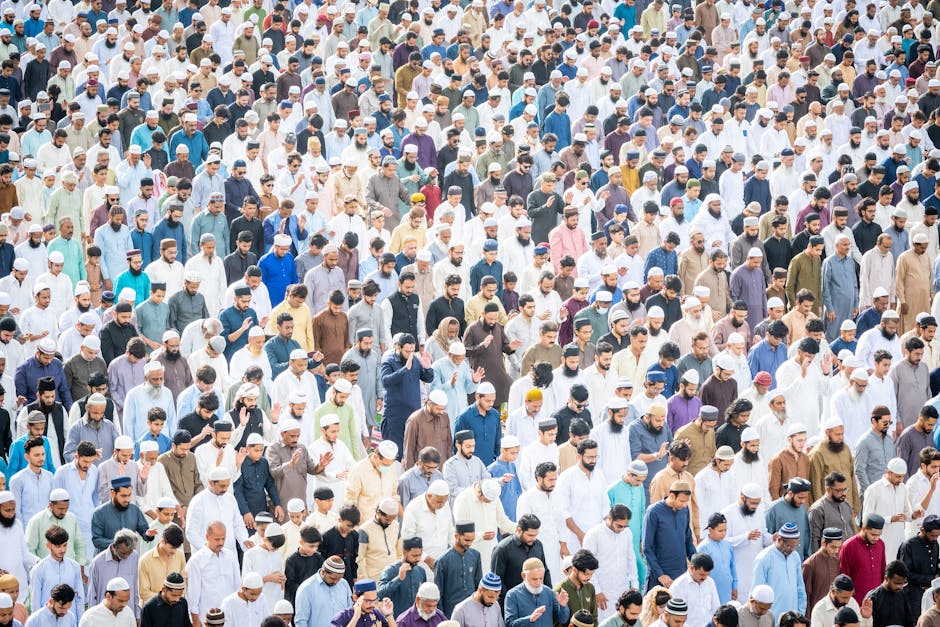
- India’s Muslims are facing denial of access to public spaces for Eid al-Fitr prayers in multiple cities.
- Municipal authorities are enforcing strict limits on congregations outside mosques, citing traffic disruption and security concerns.
- Critics argue these measures are part of a broader pattern of restricting Muslim visibility in public life.
- The restrictions have sparked urgent questions about the state of religious freedom for India’s 200 million Muslims.
- Eid celebrations in India have become a flashpoint in the country’s ongoing struggle over pluralism and civil rights.
India’s Muslims are being systematically denied access to public spaces for Eid al-Fitr prayers in 2026, with municipal authorities across multiple cities enforcing strict limits on congregations outside mosques. In places like Lucknow, Hyderabad, and Ahmedabad, worshippers have been told to pray ‘in shifts’ or confined within mosque walls, effectively banning the traditional overflow into streets that has long defined communal Eid celebrations. This marks a significant shift from prior years and raises urgent questions about the state of religious freedom for India’s 200 million Muslims. With the government citing traffic disruption and security concerns, critics argue these measures are part of a broader pattern of restricting Muslim visibility in public life—making this year’s Eid not just a religious moment, but a flashpoint in India’s ongoing struggle over pluralism and civil rights.
Why Are Public Spaces Being Denied for Eid Prayers?

Local authorities in several Indian cities have justified restrictions on Eid prayers in public areas by citing urban congestion, public safety, and adherence to municipal bylaws. In Lucknow, Uttar Pradesh—the country’s most populous state—the district administration issued orders limiting mosque capacities and banning street use for prayers, directing Muslims to conduct Eid namaz in staggered batches. Similar directives were enforced in Ahmedabad, Gujarat, and parts of Telangana. Officials claim these measures are neutral and applied equally to all religious gatherings. However, evidence suggests otherwise: Hindu festivals like Ram Navami and Durga Puja continue to receive permissions for street processions and public loudspeakers, often with police escorts. Muslim leaders argue that the restrictions are not about traffic or safety, but about suppressing the visibility of Muslim worship. With no official nationwide ban, the inconsistent enforcement across regions points to political influence, particularly in states governed by the ruling Bharatiya Janata Party (BJP), where tensions between religious communities have escalated in recent years.
What Evidence Supports Claims of Targeted Restrictions?

Multiple eyewitness accounts and reports from civil society groups confirm that Muslims are being disproportionately affected. In Aljazeera’s May 2026 investigation, mosque committees in seven cities reported receiving formal notices weeks before Eid, instructing them to avoid ‘spillage’ into public roads. In one case, the Jama Masjid committee in Ahmedabad was told to limit attendance to 300 people despite routinely hosting over 10,000 during Eid. Social media footage from Hyderabad showed police barricading streets leading to major mosques, redirecting worshippers through checkpoints. Meanwhile, a comparative analysis by BBC News found that over 40 Hindu processions were permitted in the same period without similar restrictions. Legal experts note that while Indian law allows authorities to regulate public gatherings, the selective application undermines constitutional guarantees of religious equality under Article 25. The absence of judicial intervention so far has further deepened concerns about institutional tolerance for religious discrimination.
Are There Alternative Perspectives on the Restrictions?

Some urban planners and local officials maintain that the restrictions are pragmatic and not rooted in religious bias. They argue that large-scale religious gatherings, regardless of faith, strain city infrastructure and pose logistical challenges. In fast-growing Indian cities, narrow roads and rising vehicle traffic make unregulated street use during peak hours a genuine concern. A municipal engineer in Indore explained that Eid prayers often last two to three hours, blocking critical junctions during morning commutes. From this perspective, staggered prayers or designated prayer zones could be seen as necessary urban management tools. Additionally, a minority of Muslim residents in densely populated neighborhoods have expressed relief, citing noise and sanitation issues during past Eid events. However, these views do not negate the broader pattern: when similar disruptions occur during Hindu festivals, authorities typically respond with traffic diversions rather than outright bans. This double standard, critics say, reveals that administrative decisions are shaped more by political climate than neutral policy.
What Is the Real-World Impact on Muslim Communities?

The restrictions have tangible and symbolic consequences. Practically, limiting prayer spaces forces elderly and disabled worshippers—often excluded from overcrowded mosques—to pray at home, cutting them off from communal joy. Families report children missing the festive atmosphere of open-air prayers, where elders distribute sweets and neighbors greet one another. Symbolically, the denial of public space sends a message of exclusion. “We feel naturally scared,” one Hyderabad resident told Aljazeera, echoing the phrase that became a refrain in community testimonials. For many, Eid is not just a religious obligation but an assertion of belonging. When that celebration is pushed indoors, it reinforces a sense of second-class citizenship. Community leaders warn this could deepen alienation, especially among youth. In a country where public religion is deeply woven into national identity, being told your worship doesn’t belong on the streets can feel like a quiet erasure.
What This Means For You
If you live in or care about democratic pluralism, these developments matter. The treatment of religious minorities in large, diverse nations like India often signals broader trends in civil liberties. When one group’s public expression is quietly curtailed under administrative pretexts, it sets a precedent that can extend to others. These restrictions may seem minor—shifts in prayer times, barricaded streets—but they accumulate into a climate of exclusion. For global observers, this is a moment to pay attention not just to official policies, but to how they’re selectively enforced.
What remains unclear is whether this pattern will prompt legal or political corrective action. Will India’s judiciary intervene to uphold equal religious rights? And can civil society build coalitions across faith lines to defend shared public space? The answers may shape the future of religious coexistence not just in India, but in multicultural democracies worldwide.
Source: Al Jazeera