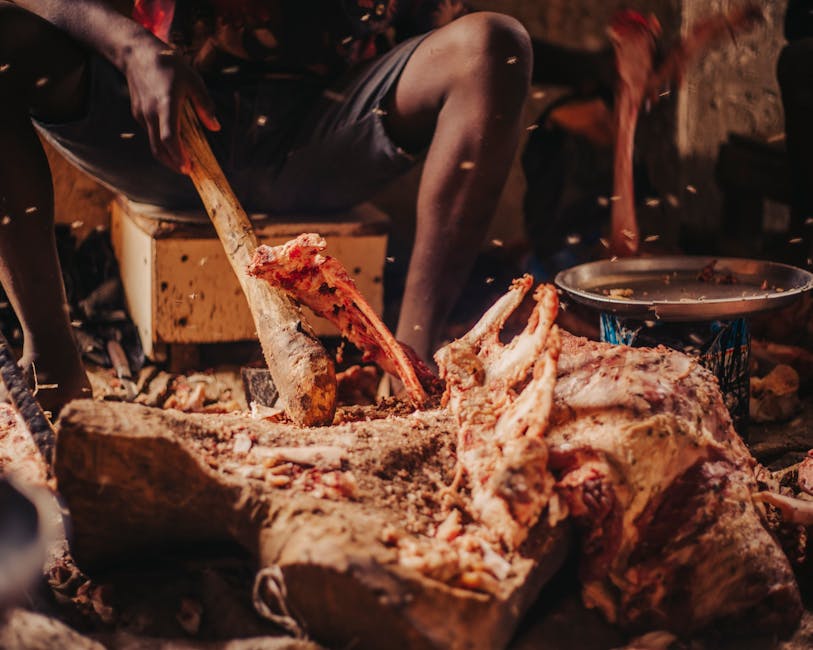
- For the third consecutive year, Palestinians in Gaza observe Eid al-Adha amidst war and severe livestock shortages.
- Israel’s ongoing military operations and blockade restrict imports, disrupting Islam’s important religious observance.
- The absence of sacrificial animals highlights the collapse of normal life and deepening humanitarian crisis in Gaza.
- Livestock imports from Egypt, Israel, and Jordan are halted due to border closures and security restrictions.
- Only minimal humanitarian supplies, excluding commercial livestock, enter Gaza through the Rafah and Kerem Shalom crossings.
For the third consecutive year, Palestinians in Gaza are preparing to observe Eid al-Adha under the shadow of war, with severe shortages of livestock making the traditional animal sacrifice nearly impossible. Despite Israel’s ongoing military operations and the blockade restricting imports, residents are adapting religious practices to fit extreme conditions. This year’s Eid highlights not only the resilience of Gaza’s people but also the deepening humanitarian crisis that has disrupted one of Islam’s most important religious observances. The absence of sacrificial animals — central to Eid al-Adha — symbolizes the broader collapse of normal life, making this celebration a somber reflection on survival, faith, and loss.
Why Is Livestock Unavailable for Eid in Gaza?

The inability to perform the traditional qurbani, or animal sacrifice, stems directly from the Israeli blockade and intensified warfare that have devastated Gaza’s infrastructure and supply chains. Normally, tens of thousands of sheep, goats, and cows are imported from Egypt, Israel, and Jordan ahead of Eid, but border closures and security restrictions have halted nearly all such trade. According to the United Nations Office for the Coordination of Humanitarian Affairs (OCHA), only minimal humanitarian supplies have entered Gaza through the Rafah and Kerem Shalom crossings, with no allowance for commercial livestock imports. As a result, local markets are empty, and the few animals remaining are prohibitively expensive due to scarcity. With over 85% of the population displaced and food insecurity rampant, the ritual sacrifice — meant to commemorate Prophet Ibrahim’s devotion — has become a logistical and moral dilemma for many families.
What Evidence Shows the Scale of Disruption?

Data from the Palestinian Central Bureau of Statistics and field reports by Al Jazeera confirm that no large-scale livestock shipments have reached Gaza in 2026, breaking a decades-long tradition. Religious leaders in Gaza City and Khan Younis report that mosques are not organizing communal sacrifices, and charity groups like the Red Crescent have suspended animal distribution programs. Instead, some families are symbolically drawing images of sheep or sharing whatever food they have. The Islamic Council of Gaza issued a rare fatwa allowing substitutions for the sacrifice, citing Quranic principles of easing hardship. Meanwhile, the World Food Programme has increased rations temporarily, but aid remains inconsistent. Satellite imagery from BBC News shows that former grazing areas and animal markets have been reduced to rubble, further illustrating the physical erasure of traditional practices.
Are There Alternative Views on Adapting Religious Practices?

While many religious scholars and community leaders support adapting Eid rituals under duress, some conservative voices argue that the sacrifice is a non-negotiable pillar of the faith. A minority of clerics in the West Bank have criticized the Gaza Islamic Council’s fatwa, saying it risks normalizing deprivation. Others counter that Islamic jurisprudence has long permitted exceptions during times of war, famine, or forced displacement. Dr. Laila Al-Zoughbi, a theologian at Al-Azhar University-Gaza, emphasized that “the essence of Eid is not the blood but the intention and submission to God.” Humanitarian workers also warn against romanticizing resilience, noting that framing adaptation as spiritual strength can obscure the preventable nature of the crisis. Aid agencies stress that the livestock shortage is not natural but the result of policy decisions, urging the international community to pressure for restored trade and movement.
What Are the Real-World Consequences of This Eid?

The inability to perform the sacrifice has ripple effects beyond religious observance. Economically, the absence of the Eid livestock trade — which typically injects millions of dollars into Gaza’s informal economy — deepens poverty and unemployment. Psychologically, the loss of a cherished tradition adds to collective trauma, particularly for children who have never experienced a peaceful Eid. Socially, the sharing of meat with neighbors, the poor, and extended family — a core aspect of the holiday — is nearly impossible, weakening community bonds. In refugee camps like Jabalia and Nuseirat, families are instead holding memorial prayers for those killed in the conflict, turning what should be a joyous occasion into one of mourning and remembrance. The emotional weight of this Eid underscores how war reshapes even the most personal and sacred moments.
What This Means For You
For global observers, this year’s Eid in Gaza is a stark reminder that conflict erodes not just infrastructure but cultural and spiritual life. The adaptations made by Palestinians reflect both profound faith and the urgent need for humanitarian intervention. It challenges us to see religious traditions not as abstract rituals but as vital expressions of identity and dignity under siege. Supporting reputable aid organizations and advocating for open borders and ceasefire agreements can help restore not just survival but also the possibility of celebration.
As Gaza endures yet another Eid defined by absence, the question remains: how many more religious and cultural milestones must be sacrificed before the world demands sustainable peace? And what role should international religious and humanitarian institutions play in protecting ritual life during prolonged conflicts?
Source: Al Jazeera