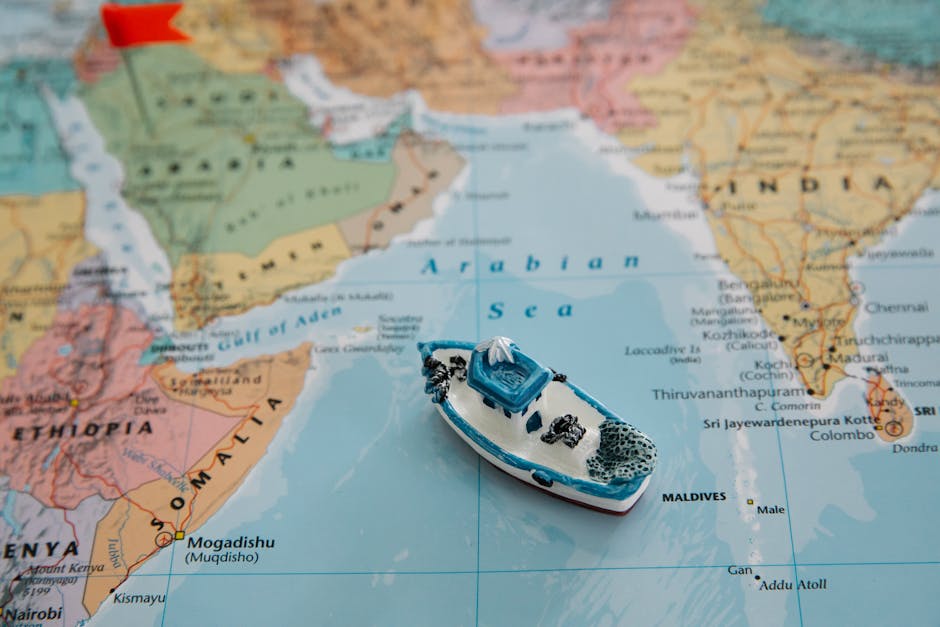
- The US has conditioned re-engaging in nuclear talks with Iran on the full reopening of the Strait of Hormuz to international shipping.
- The Strait of Hormuz, through which 20% of the world’s oil passes, has been intermittently restricted due to regional hostilities.
- US Secretary of State Marco Rubio’s announcement marks a significant pivot in US diplomatic posture regarding Iran.
- The move directly ties nuclear diplomacy to regional security commitments, a departure from past negotiations.
- The US seeks to stabilize the volatile Persian Gulf region by linking nonproliferation to maritime security.
U.S. Secretary of State Marco Rubio announced on May 24, 2026, that Washington is prepared to re-engage in nuclear negotiations with Iran, but only if Tehran ensures the full and verifiable reopening of the Strait of Hormuz to international shipping. The strategic waterway, through which about 20% of the world’s oil passes, has been intermittently restricted during escalating regional hostilities. Rubio’s statement marks a significant pivot in U.S. diplomatic posture, directly tying nuclear diplomacy to regional security commitments. With Middle East tensions at a peak due to ongoing conflict dynamics, the conditional offer could either catalyze de-escalation or deepen diplomatic gridlock, making it a pivotal development in U.S.-Iran relations and global energy security.
A Calculated Diplomatic Gambit

The timing of Secretary Rubio’s announcement reflects mounting pressure on the Biden administration to stabilize the volatile Persian Gulf region, where attacks on commercial vessels and naval standoffs have raised fears of broader conflict. By linking the resumption of nuclear talks to the opening of the Strait of Hormuz, the U.S. is reframing nonproliferation as inseparable from maritime security. This approach departs from past negotiations, such as the 2015 Joint Comprehensive Plan of Action (JCPOA), which treated Iran’s nuclear program as a standalone issue. Analysts suggest this shift acknowledges Iran’s use of strategic chokepoints as leverage, a tactic long observed by regional experts. The administration appears to be betting that coupling these issues will incentivize Iranian cooperation while strengthening U.S. alliances with Gulf states and global shipping partners who rely on uninterrupted passage.
What the Proposal Entails

Rubio’s conditions involve a phased diplomatic process: first, Iran must allow unrestricted access to the Strait of Hormuz under international monitoring, potentially involving naval observers from neutral countries or the International Maritime Organization. Only after verification would the U.S. initiate formal negotiations on curbing Iran’s uranium enrichment and other nuclear activities. The Iranian government has not issued an official response, but state media have previously denounced such linkage as “coercive diplomacy.” Key players include the P5+1 nations (the U.S., UK, France, Russia, China, and Germany), the International Atomic Energy Agency (IAEA), and regional powers like Saudi Arabia and Israel, all of whom have a vested interest in preventing nuclear proliferation and ensuring energy flow stability. The proposal also raises questions about enforcement mechanisms should Iran renege on its commitments.
Strategic Context and Regional Implications

The Strait of Hormuz has long been a flashpoint in Middle East geopolitics, with Iran threatening to close it during periods of heightened tension, most notably in 2019 and 2021. According to Reuters, up to 17 million barrels of oil pass through the strait daily. Any sustained disruption risks spiking global energy prices and triggering economic instability, particularly in Asia and Europe. Rubio’s move underscores a broader U.S. strategy to deter asymmetric threats by making concessions conditional on verifiable actions. However, critics warn that this approach risks entrenching a quid pro quo framework that could prolong stalemates. Historical precedents, including failed negotiations under the Trump administration, suggest that without mutual trust and third-party verification, such deals may falter.
Who Stands to Gain or Lose

If successful, this diplomatic track could benefit global markets, Gulf Cooperation Council (GCC) states, and U.S. allies reliant on stable oil supplies. Iran, too, could gain relief from sanctions that have crippled its economy, provided it complies. However, hardliners in Tehran may resist what they perceive as foreign pressure on sovereign waters, potentially undermining moderate factions advocating for engagement. Israel and certain Gulf monarchies might view any nuclear concessions skeptically, fearing a repeat of perceived loopholes in the original JCPOA. Meanwhile, non-state actors in the region, such as Houthi forces in Yemen, could exploit any diplomatic vacuum to escalate attacks on shipping, complicating enforcement. The outcome will likely hinge on whether international monitors can establish credible oversight and whether Iran sees tangible economic benefits outweighing strategic costs.
Expert Perspectives
Analysts are divided on the viability of Rubio’s approach. Dr. Dina Esfandiari, a Middle East security fellow at the International Institute for Strategic Studies, argues that “linking maritime access to nuclear talks reflects a more realistic understanding of Iran’s hybrid warfare tactics.” In contrast, Trita Parsi of the Quincy Institute cautions that “conditionality risks making diplomacy transactional rather than transformative, reducing the chance of lasting peace.” Others note that Russia and China, both with growing influence in the region, could play mediating roles—or obstruct U.S.-led efforts depending on their strategic interests. The IAEA’s ability to verify compliance independently will also be critical in building multilateral confidence.
Looking ahead, the world will be watching for Iran’s formal response and any movements of Iranian naval forces near the strait. The U.S. may seek to rally support through NATO or the UN Security Council to legitimize monitoring efforts. A breakthrough could set the stage for a broader regional security dialogue, while failure might lead to increased military posturing. As energy markets react to even speculative progress, the coming weeks will test whether this new diplomatic formula can break a decade-long cycle of confrontation.
Source: The New York Times