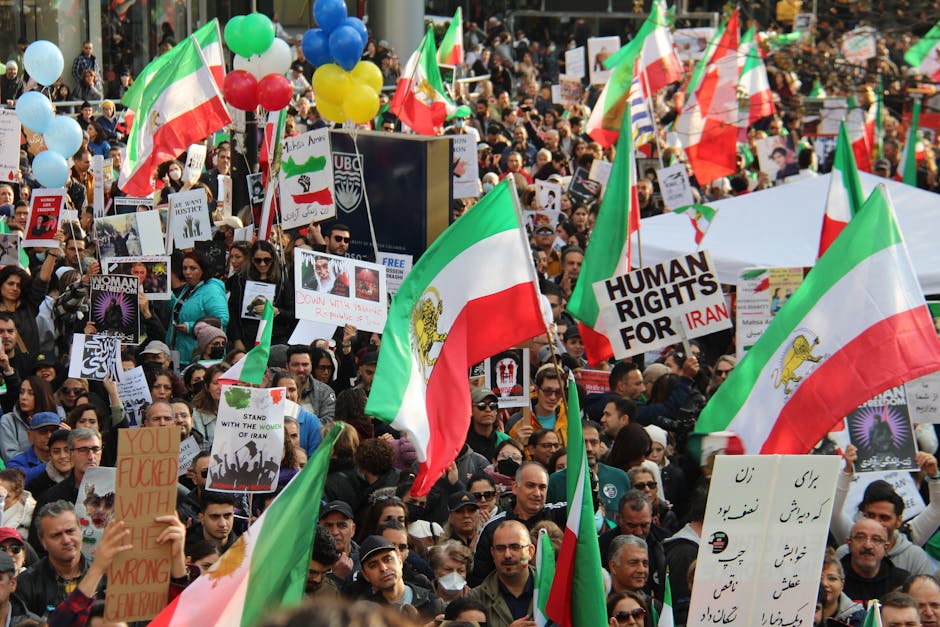
- Escalating tensions between the US and Iran have brought the two nations to the brink of direct military confrontation in the Gulf.
- The US has deployed over 5,000 additional troops to Qatar and Bahrain in response to Iran’s missile tests and suspected drone strike.
- The conflict is rooted in years of nuclear disputes and regional proxy warfare between the US and Iran.
- A wider war involving Israel, Saudi Arabia, and US allies could disrupt global oil supplies and trigger humanitarian crises across the region.
- A miscalculation by either side could trigger a wider war, highlighting the need for diplomatic efforts to stabilize the situation.
In early 2026, escalating tensions between the United States and Iran have brought the two nations to the brink of direct military confrontation, marked by a U.S. troop surge in the Gulf, Iranian missile tests, and a suspected drone strike near Isfahan. The conflict, rooted in years of nuclear disputes and regional proxy warfare, intensified after the Trump administration reinstated hardline sanctions and approved covert operations targeting Iranian military infrastructure. With over 5,000 additional U.S. troops deployed to Qatar and Bahrain, and Iran conducting ballistic missile launches in apparent retaliation, the situation threatens to destabilize the entire Middle East. This escalation matters now because any miscalculation could trigger a wider war involving Israel, Saudi Arabia, and U.S. allies, disrupting global oil supplies and triggering humanitarian crises across the region.
What Triggered the 2026 Iran-U.S. Crisis?

The immediate catalyst for the 2026 crisis was a suspected American drone strike on an Islamic Revolutionary Guard Corps (IRGC) facility near Isfahan, Iran, in late April. While the U.S. has not officially claimed responsibility, intelligence sources cited by The New York Times confirm that the strike was part of a broader campaign to disrupt Iran’s advanced missile development program. Iran responded with a series of short-range ballistic missile tests into the Persian Gulf, some landing near commercial shipping lanes. These actions followed months of heightened rhetoric from the Trump administration, which resumed maximum-pressure sanctions after Iran exceeded uranium enrichment limits set by the 2015 nuclear deal. The breakdown of diplomatic channels and the absence of European mediators have left little room for de-escalation, turning long-simmering hostilities into an open crisis.
What Evidence Supports the Risk of Full-Scale Conflict?

Military and intelligence indicators point to a serious risk of broader war. U.S. Central Command confirmed the deployment of two aircraft carrier groups to the Arabian Sea and increased surveillance flights over the Strait of Hormuz. Satellite imagery analyzed by the Center for Strategic and International Studies shows Iranian forces mobilizing along the Gulf coast, with anti-ship missile batteries repositioned and naval exercises conducted near critical oil transit zones. Meanwhile, Houthi forces in Yemen—long backed by Iran—have launched dozens of drones toward Saudi Arabia, many intercepted by U.S.-supported missile defenses. In Iraq, U.S. bases hosting coalition troops have reported increased rocket attacks attributed to Iran-linked militias. These developments mirror patterns seen before the 2020 assassination of Qasem Soleimani, suggesting a dangerous cycle of action and retaliation that could spiral out of control without diplomatic intervention.
Are There Alternative Perspectives on the Escalation?

Some analysts argue that the crisis is more performative than existential, with both sides using brinkmanship to achieve strategic goals without crossing into direct war. Iranian state media, for instance, has framed missile tests as routine defense drills rather than acts of aggression, emphasizing Tehran’s commitment to ‘deterrence, not provocation.’ Similarly, former U.S. diplomats suggest the troop buildup is primarily symbolic—a show of force meant to reassure Gulf allies rather than initiate combat. Skeptics also note that Iran’s economy, battered by years of sanctions, cannot sustain a prolonged conflict, making full-scale war unlikely. From this perspective, the current posturing reflects internal political calculations: hardliners in Tehran consolidating power ahead of elections, while the Trump administration seeks to project strength ahead of the 2026 midterms. However, even if war is not desired, the risk of accidental escalation remains high due to miscommunication or rogue actors.
What Are the Real-World Consequences of This Tension?

The immediate impact is already being felt across global markets and regional stability. Oil prices have surged over 15% since April, with Brent crude exceeding $100 per barrel amid fears of supply disruptions through the Strait of Hormuz, through which nearly 20% of the world’s oil passes. Shipping insurers have raised premiums for Gulf transit, and several major carriers have rerouted vessels around Africa to avoid risk. In the region, civilians bear the brunt: Yemeni hospitals report shortages as supply lines falter, and Iraqi civilians face displacement due to militia activity near population centers. U.S. military families in Bahrain and Kuwait have been advised to prepare for emergency evacuation. Beyond the Middle East, the crisis has strained NATO unity, with European allies urging restraint while privately expressing concern over unilateral U.S. actions that could drag the alliance into conflict.
What This Means For You
For global citizens, the U.S.-Iran standoff is not a distant conflict—it directly affects energy prices, international travel, and geopolitical stability. If hostilities worsen, consumers may face higher fuel and transportation costs, while governments could impose new security measures. The situation also underscores how regional conflicts can rapidly evolve into global crises in an interconnected world. Staying informed through reliable sources and understanding the historical context of U.S.-Iran relations can help individuals make sense of evolving developments.
As tensions hover at a critical threshold, the central question remains: Can diplomatic channels be reopened before a single incident triggers irreversible escalation? With trust between Washington and Tehran at historic lows and few neutral mediators left, the path to de-escalation is uncertain. The international community must now watch not just for military movements, but for any signal—public or backchannel—that talks might resume.
Source: The New York Times