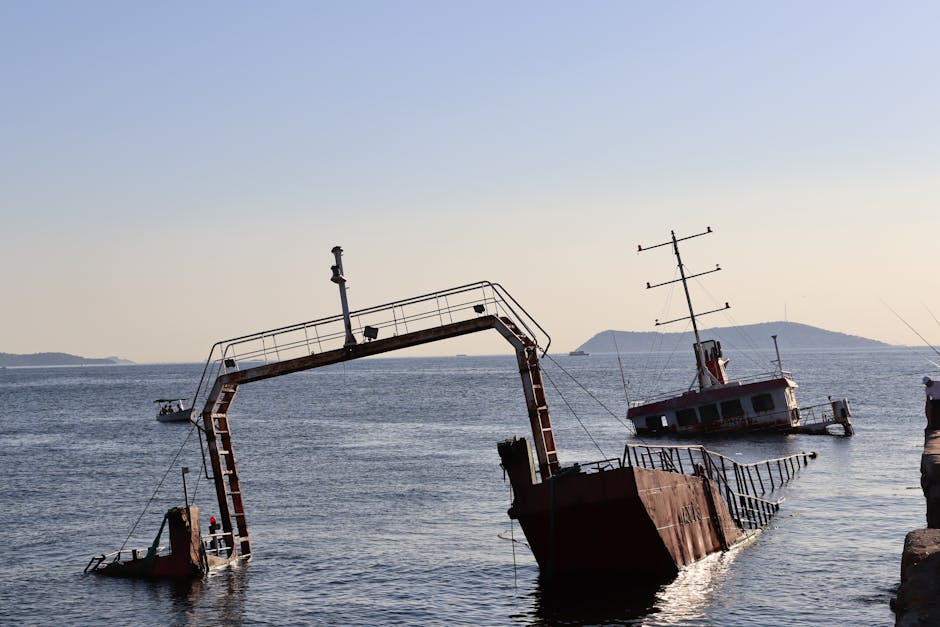
- The US military launched coordinated strikes against Iranian naval vessels in the Persian Gulf on May 25, 2026, destroying 11 fast attack craft.
- The operation targeted Iranian Revolutionary Guard Corps Navy (IRGCN) bases along the southern coast, focusing on anti-ship missiles and radar-guided weaponry.
- The strikes represent the most direct US military action against Iranian forces since 2020, signaling a shift toward preemptive defense of regional stability.
- The operation was executed using F/A-18 Super Hornets and supported by MQ-9 Reaper drones, demonstrating advanced US military capabilities.
- The US destroyed three coastal missile batteries, disrupting Iran’s ability to launch attacks on commercial shipping lanes.
The United States military launched coordinated strikes against Iranian naval vessels and missile launch sites in the Persian Gulf on May 25, 2026, destroying 11 fast attack craft and three coastal missile batteries, according to U.S. Central Command (CENTCOM). The operation, conducted in international waters, follows weeks of escalating confrontations, including Iranian drone surveillance and aggressive maneuvers near commercial shipping lanes. The strikes represent the most direct U.S. military action against Iranian forces since 2020 and signal a shift toward preemptive defense of regional stability and freedom of navigation, with significant implications for U.S.-Iran relations and Gulf security.
Strike Details and Military Evidence

According to CENTCOM’s official statement, the operation was executed using F/A-18 Super Hornets from the USS Abraham Lincoln carrier strike group and supported by MQ-9 Reaper drones. The strikes targeted three Iranian Revolutionary Guard Corps Navy (IRGCN) bases along the southern coast, focusing on fast attack craft equipped with anti-ship missiles and radar-guided weaponry. Satellite imagery analyzed by Reuters shows extensive damage to docks and launching ramps at the Sirri Island and Larak Island facilities. U.S. defense officials reported that the boats destroyed were part of a coordinated swarm-tactic drill that had approached within 300 meters of the guided-missile destroyer USS Ross, prompting defensive action under established rules of engagement. The Pentagon confirmed no American casualties and stated that all munitions used were precision-guided to minimize collateral damage.
Key Players and Strategic Roles

The primary actors in this escalation are the U.S. Central Command, the Iranian Revolutionary Guard Corps Navy (IRGCN), and Iran’s Ministry of Defense. CENTCOM, responsible for U.S. military operations across the Middle East, authorized the strikes after determining the Iranian vessels posed an imminent threat to U.S. forces. The IRGCN, which operates independently from Iran’s regular navy and reports directly to Supreme Leader Ayatollah Ali Khamenei, has long used asymmetric tactics, including swarm attacks and drone surveillance, to challenge U.S. naval dominance. On the American side, the Biden administration has maintained a policy of calibrated deterrence, but this strike suggests a threshold has been crossed. Iran’s foreign ministry issued a condemnation calling the attack “a flagrant violation of international law,” while President Masoud Pezeshkian convened an emergency session of the Supreme National Security Council to assess response options.
Strategic Trade-Offs and Regional Risks

While the U.S. action may deter immediate Iranian aggression and reinforce maritime security in one of the world’s most critical oil transit zones, it carries substantial risks. On one hand, the destruction of 11 attack boats degrades Iran’s short-term ability to conduct swarm attacks, which have previously endangered commercial shipping, as seen during the 2019 Strait of Hormuz incidents. On the other hand, the strike could provoke retaliatory actions through proxy forces in Iraq, Syria, or Yemen, where Iran exerts considerable influence. There is also concern among Gulf allies about unintended escalation, particularly if Iran responds by enriching uranium beyond current limits or launching cyberattacks on energy infrastructure. Economically, oil prices rose 3.4% in early trading on the New York Mercantile Exchange following the news, reflecting market anxiety over supply disruptions. The U.S. must now balance demonstrating resolve with avoiding a wider conflict that could destabilize the region.
Why the Escalation Happened Now

This strike follows a series of provocations that U.S. officials say pushed Washington past its threshold for inaction. In the preceding week, Iranian drones shadowed U.S. warships for over 12 hours, and IRGCN vessels conducted high-speed intercept simulations near the USS Ross. A declassified U.S. Navy video released by CENTCOM shows one Iranian boat deploying what appears to be a radar-guided missile targeting system. Under Department of Defense rules of engagement, such actions qualify as hostile and justify defensive force. Additionally, intelligence reports from the Defense Intelligence Agency (DIA) indicate Iran had been preparing for a larger-scale naval exercise involving over 30 vessels, raising fears of a coordinated challenge to U.S. presence. The timing also coincides with increased Houthi attacks in the Red Sea, suggesting Iran may be testing the limits of U.S. tolerance across multiple fronts. The decision to strike now reflects a strategic recalibration: from containment to active neutralization of perceived threats.
Where We Go From Here
In the next six to twelve months, three scenarios are plausible. First, Iran may respond asymmetrically by directing proxies to attack U.S. bases in Iraq or increase drone and missile strikes on Israel, triggering broader regional flare-ups. Second, diplomatic channels—possibly through Oman or Qatar—could reopen, leading to backchannel negotiations aimed at de-escalating naval tensions, especially if European powers intervene. Third, the U.S. and its Gulf allies may formalize a standing maritime coalition with enhanced surveillance and rapid-response protocols, effectively institutionalizing a more assertive posture in the Gulf. Each path hinges on Iran’s next move and whether the Biden administration opts for continued deterrence or seeks a diplomatic off-ramp. What is certain is that the buffer between show-of-force and open conflict has significantly narrowed.
The U.S. strike against Iranian naval assets marks a pivotal moment in Gulf security, demonstrating resolve but also raising the stakes of miscalculation in an already volatile region.
Source: Reuters