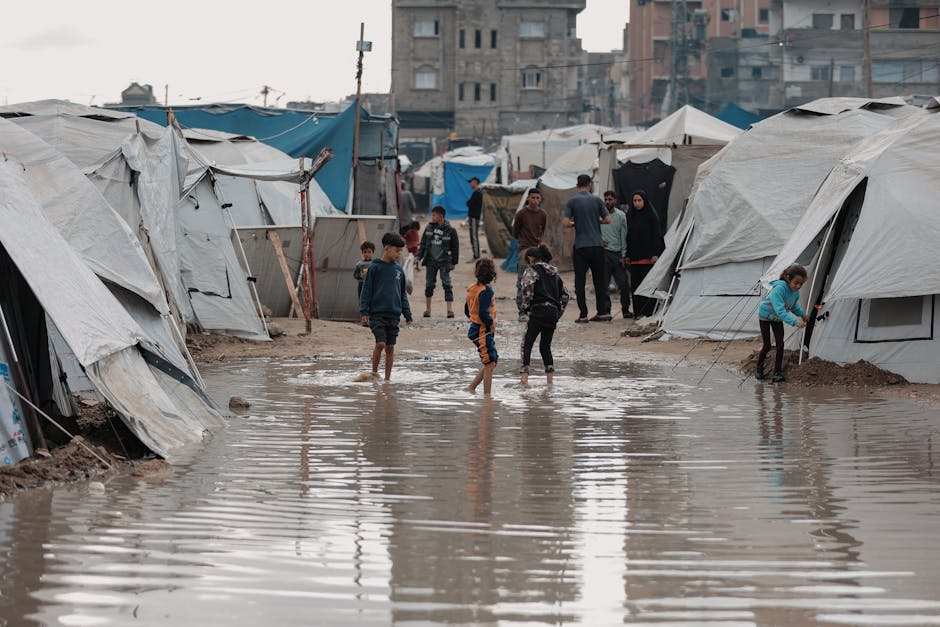
- The Gaza Strip is facing an unprecedented crisis, with thousands of displaced families struggling to make ends meet due to war, shortages, and soaring prices.
- Displaced families in Gaza are unable to buy sacrificial animals or properly observe Eid al-Adha, one of Islam’s most important religious celebrations.
- The current situation in Gaza is a stark reminder of the human cost of the ongoing conflict, with families forced to choose between basic necessities and traditional celebrations.
- Years of conflict have led to a severe shortage of essential goods in Gaza, including food, water, and medicine.
- The recent surge in prices has made it even more difficult for displaced families in Gaza to access basic necessities.
As Eid al-Adha approaches, displaced families in the Gaza Strip are bracing for a bleak celebration, with war, shortages, and soaring prices leaving many unable to buy sacrificial animals or properly observe one of Islam’s most important religious celebrations. The Gaza Strip, a region already plagued by poverty and conflict, is now facing an unprecedented crisis, with thousands of displaced families struggling to make ends meet. The current situation is a stark reminder of the human cost of the ongoing conflict, with many families forced to choose between basic necessities and traditional Eid al-Adha celebrations.
Current Crisis in Gaza

The current crisis in Gaza is a result of years of conflict, which has led to a severe shortage of essential goods, including food, water, and medicine. The recent surge in prices has made it even more difficult for displaced families to access basic necessities, let alone afford the traditional sacrificial animals that are a hallmark of Eid al-Adha celebrations. With many families forced to rely on aid and handouts, the prospect of a joyful Eid al-Adha celebration seems like a distant dream. The situation is further complicated by the lack of access to basic services, including healthcare and education, which has left many families feeling desperate and hopeless.
Historical Context of the Conflict

The conflict in Gaza has a long and complex history, with roots dating back to the early 20th century. The region has been plagued by periodic outbreaks of violence, with the most recent escalation resulting in the displacement of thousands of families. The conflict has been fueled by a range of factors, including territorial disputes, political tensions, and socio-economic grievances. Despite numerous attempts at a ceasefire, the conflict shows no signs of abating, leaving families in Gaza to face an uncertain and precarious future. The historical context of the conflict is essential to understanding the current crisis, which is a result of decades of neglect, mismanagement, and political instability.
Key Players in the Conflict

The conflict in Gaza involves a range of key players, including the Israeli government, the Palestinian Authority, and various militant groups. Each of these actors has its own motivations and agendas, which have contributed to the current crisis. The Israeli government has imposed a blockade on the Gaza Strip, which has severely restricted the flow of goods and people in and out of the region. The Palestinian Authority, on the other hand, has been accused of mismanaging funds and failing to provide adequate support to displaced families. Militant groups, such as Hamas, have also played a role in the conflict, with their actions often prompting a severe response from the Israeli military. Understanding the motivations and actions of these key players is essential to grasping the complexity of the conflict and the challenges faced by displaced families in Gaza.
Consequences of the Conflict

The consequences of the conflict in Gaza are far-reaching and devastating, with displaced families facing a range of challenges, from poverty and hunger to lack of access to basic services. The conflict has also had a profound impact on the mental health and well-being of those affected, with many families experiencing trauma, anxiety, and depression. The lack of access to education and healthcare has also had a long-term impact on the development and prosperity of the region, with many families struggling to break the cycle of poverty. As the conflict continues, the consequences for displaced families in Gaza will only worsen, making it essential to find a lasting solution to the crisis.
The Bigger Picture
The conflict in Gaza is not an isolated incident, but rather part of a broader pattern of violence and instability in the region. The crisis in Gaza has implications for the entire Middle East, with the potential to destabilize neighboring countries and exacerbate existing tensions. The international community has a critical role to play in resolving the conflict, with a lasting solution requiring a comprehensive and inclusive approach that addresses the root causes of the crisis. By understanding the bigger picture, it is possible to develop a more nuanced and effective response to the conflict, one that prioritizes the needs and dignity of displaced families in Gaza. For more information on the conflict in Gaza, visit BBC News or Al Jazeera.
As the people of Gaza prepare to observe Eid al-Adha in the midst of war and hardship, it is essential to remember the human cost of the conflict and the need for a lasting solution. The international community must come together to support displaced families in Gaza, providing them with the aid and assistance they need to rebuild their lives and communities. Only through a collective effort can we hope to bring peace and prosperity to the region, and ensure that future generations can celebrate Eid al-Adha with joy and dignity. For updates on the situation in Gaza, follow Reuters or AP News.
Source: Euronews