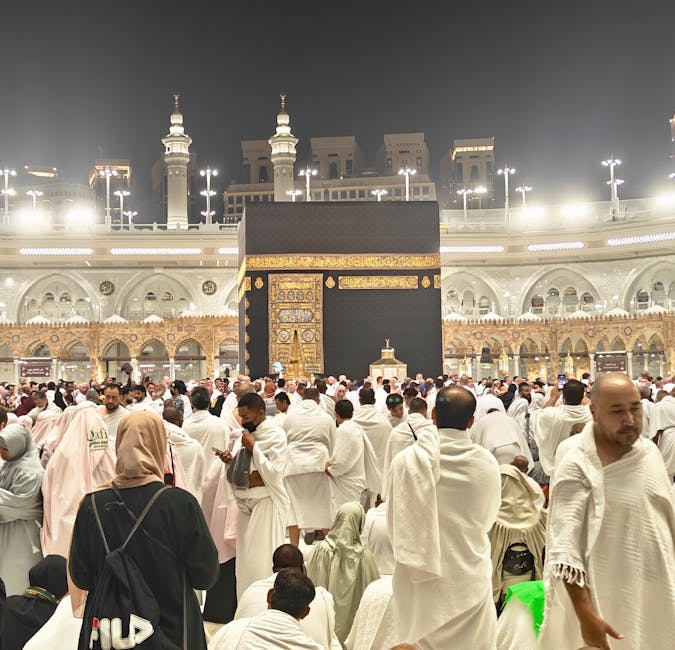
- Saudi Arabia has seen a record number of foreign pilgrims for the Hajj pilgrimage, exceeding 1.5 million in 2024.
- The influx of international pilgrims marks a significant test of the kingdom’s logistical and religious infrastructure.
- Despite heightened regional tensions with Iran, the Hajj has seen no major incidents in its initial phases.
- Saudi officials reported efficient processing at airports and enhanced digital visa systems for the pilgrimage.
- The record foreign participation underscores the kingdom’s capacity to manage mass gatherings under complex security conditions.
More than 1.5 million foreign Muslims have arrived in Saudi Arabia to perform the annual Hajj pilgrimage in 2024, an increase of 11,000 from the previous year, according to Saudi authorities. The influx marks a significant moment for the kingdom’s religious and logistical infrastructure, occurring amid heightened regional tensions with Iran, which has raised concerns about potential disruptions. Held in Mecca and surrounding holy sites, the Hajj is one of the Five Pillars of Islam and must be undertaken at least once by every able Muslim. This year’s pilgrimage underscores Saudi Arabia’s capacity to manage mass gatherings under complex security conditions, while also testing diplomatic efforts to prevent religious events from becoming entangled in geopolitical rivalries.
Hajj 2024 Sees Record Foreign Participation

Saudi officials confirmed that the number of international pilgrims surpasses 1.5 million, representing over 180 countries and reflecting a full recovery and slight expansion of travel access since the pandemic-era restrictions were lifted. The Ministry of Hajj and Umrah reported efficient processing at airports, enhanced digital visa systems, and expanded transport and housing capacity in Mecca and Mina. Despite the scale, no major incidents have been reported during the initial phases of the pilgrimage. Security has been visibly heightened, with drones, surveillance systems, and thousands of deployed personnel monitoring movement around the Grand Mosque and key ritual sites. The successful mobilization is seen as a testament to Saudi Arabia’s growing expertise in managing one of the world’s largest annual religious gatherings, even as external threats loom.
Years of Tensions Between Saudi Arabia and Iran

The backdrop of Iran-Saudi tensions adds a layer of urgency to this year’s Hajj. Historically, the pilgrimage has occasionally become a flashpoint between the two regional powers, both of which claim leadership in the Muslim world. In 2015, a stampede killed over 2,400 pilgrims, many of them Iranian, sparking diplomatic fallout. Iran boycotted Hajj in 2016 amid strained relations, only resuming participation in 2019 after a temporary rapprochement brokered by Iraq. Tensions resurged in 2023 when Iran supported Houthi attacks on Saudi territory, and in early 2024, Iranian officials issued veiled warnings about protecting their pilgrims. Despite this, Tehran confirmed that approximately 60,000 Iranian pilgrims would attend Hajj 2024, signaling a fragile but functional diplomatic channel. The continued participation highlights the delicate balance between religious obligation and political posturing.
Leaders and Religious Authorities Shape the Pilgrimage

The Hajj is overseen by Saudi Arabia’s Ministry of Hajj and the Grand Mufti, who work in tandem with international Islamic bodies to ensure religious compliance and safety. King Salman and Crown Prince Mohammed bin Salman have made the pilgrimage a cornerstone of their Vision 2030 initiative, aiming to position Saudi Arabia as a global Islamic hub. Meanwhile, Iran’s Supreme Leader Ayatollah Ali Khamenei maintains a symbolic role in guiding Iranian pilgrims, often using the occasion to emphasize resistance against Western influence. Religious scholars from both nations stress the spiritual neutrality of Hajj, urging followers to separate faith from politics. Yet clerics in Iran have also issued guidance on how pilgrims should respond if tensions escalate, revealing the underlying anxiety beneath the surface of religious unity.
Implications for Pilgrims and Regional Stability

The peaceful execution of Hajj 2024 carries significant implications for millions of Muslims worldwide, particularly in South Asia, Southeast Asia, and Africa, where many pilgrims originate. For Saudi Arabia, successful management enhances its legitimacy as custodian of Islam’s holiest sites. Any incident involving Iranian pilgrims could reignite sectarian narratives and destabilize fragile regional diplomacy. Moreover, the pilgrimage serves as a soft power tool, with Saudi investments in infrastructure—like the $18 billion Mina Railway and AI-driven crowd monitoring—showcasing technological and administrative prowess. For participating nations, ensuring citizen safety during Hajj has become a diplomatic priority, with countries like Indonesia and Pakistan coordinating closely with Riyadh on consular and emergency protocols.
The Bigger Picture
Beyond religious significance, the Hajj reflects the intersection of faith, politics, and global mobility in the 21st century. As climate change brings extreme heat to the Arabian Peninsula, future pilgrimages may face environmental challenges, with temperatures regularly exceeding 45°C (113°F) during the ritual period. Saudi Arabia’s expansion of air-conditioned tent complexes and underground transport systems indicates long-term planning, but sustainability remains a concern. Additionally, the digital transformation of Hajj logistics—through apps, biometric tracking, and e-visas—sets a precedent for managing mass gatherings worldwide, from festivals to political summits. The event also underscores the resilience of religious practice in the face of geopolitical uncertainty, offering a rare moment of global Muslim unity.
As Hajj 2024 progresses, all eyes will remain on Mecca and the surrounding holy sites, not just for spiritual outcomes but for signs of broader regional stability. The absence of major incidents so far suggests that diplomatic and security measures are holding. However, the final days of Hajj, particularly the symbolic stoning of the devil ritual at Mina, remain high-risk periods due to crowd density. Going forward, Saudi Arabia’s ability to maintain safety while navigating complex international relationships will continue to define its role in the Islamic world. The world may watch for conflict, but for millions of pilgrims, the focus remains on faith, forgiveness, and the hope of a safe journey home.
Source: BBC