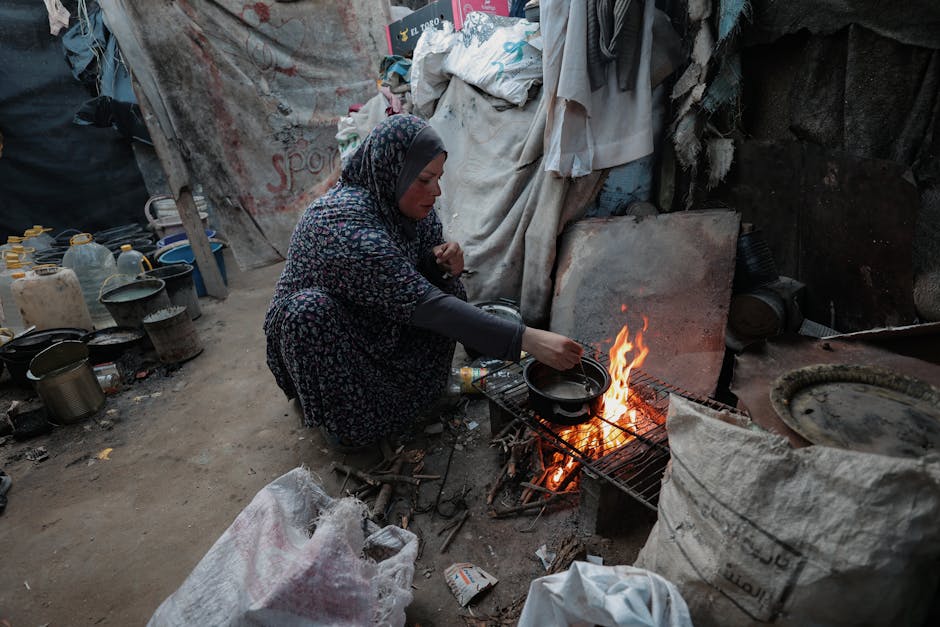
- 80% of Cuban households lack access to cooking gas due to US oil import restrictions.
- Nationwide energy crisis leads to daily power outages averaging 12 to 18 hours in some areas.
- Cubans are turning to traditional cooking methods, such as charcoal and firewood, to prepare meals.
- Energy shortages disrupt daily life, affecting refrigeration, sanitation, and medical services.
- Cuba’s energy infrastructure and food security systems face long-term vulnerability due to tightened sanctions and declining foreign oil support.
In Santiago de Cuba, the cradle of the Cuban Revolution, a growing number of families are cooking meals over open flames fueled by charcoal and firewood due to a nationwide energy crisis triggered by U.S. oil import restrictions. Millions across the island lack access to propane and natural gas, with blackouts lasting up to 18 hours a day in some areas. This regression to traditional cooking methods reflects a deepening humanitarian challenge, as Cuba struggles to maintain basic energy supplies amid tightened sanctions and declining foreign oil support. The crisis not only disrupts daily life but also underscores the long-term vulnerability of Cuba’s energy infrastructure and food security systems.
Energy Shortages and Daily Life Disrupted

Recent data from Cuba’s Ministry of Energy and International Relations, cited by The New York Times, indicates that over 80% of Cuban households face irregular or nonexistent access to cooking gas, with Santiago de Cuba among the hardest-hit regions. Power outages now average 12 to 18 hours daily, crippling refrigeration, sanitation, and medical services. In apartment complexes where gas lines once supplied stoves, residents have resorted to makeshift grills on balconies and stairwells, using charcoal or scavenged wood. A May 2026 survey by the Cuban Observatory of Human Rights recorded that 73% of urban families in Santiago cook at least twice daily over open flames, a stark reversal from the island’s mid-20th century electrification gains. The lack of reliable fuel has also led to a 40% increase in respiratory illnesses linked to indoor smoke exposure, according to Havana-based health monitors.
Key Players: Government, U.S. Sanctions, and Energy Allies

The crisis stems from a complex interplay between U.S. sanctions, Venezuela’s declining oil exports, and Cuba’s limited refining capacity. The U.S. embargo, intensified under the Trump administration and maintained by Biden, restricts oil shipments and financial transactions vital to Cuba’s energy imports. While Venezuela historically supplied up to 50,000 barrels per day, recent economic turmoil in Caracas has reduced deliveries by over 60%, leaving Cuba with less than 20,000 barrels daily—barely enough for essential services. The Cuban government, led by President Miguel Díaz-Canel, has prioritized electricity for hospitals and water systems, but residential fuel allocation remains minimal. Meanwhile, international aid groups like the UN Development Programme have proposed emergency fuel assistance, but U.S. sanctions complicate delivery mechanisms. Cuban state media blame Washington’s “blockade” for the crisis, while U.S. officials cite human rights violations and lack of democratic reforms as justification for maintaining pressure.
Trade-Offs: Health, Environment, and Social Stability

The shift to biomass cooking presents significant trade-offs. While charcoal and firewood offer immediate access to heat, they pose long-term health and environmental risks. Indoor air pollution from open fires increases the likelihood of chronic bronchitis, pneumonia, and cardiovascular disease, particularly among women and children who spend more time near cooking areas. The World Health Organization estimates that household air pollution causes over 4 million premature deaths annually globally, a risk now rising in Cuban homes. Environmentally, increased demand for firewood accelerates deforestation, especially in rural outskirts of Santiago where illegal logging has surged. Socially, the crisis exacerbates inequality—wealthier families can afford black-market propane at inflated prices, while low-income households rely on dangerous, inefficient alternatives. Protests over energy shortages in March 2026 in Holguín and Guantánamo signal growing unrest, suggesting a potential erosion of social stability.
Why the Crisis Is Peaking Now

The energy crisis has reached a critical point in 2026 due to converging factors: the cumulative impact of prolonged sanctions, Venezuela’s deepening economic collapse, and Cuba’s failure to diversify its energy matrix. Unlike past shortages, today’s crisis occurs amid global inflation and supply chain disruptions, making fuel imports more expensive and harder to finance. Cuba’s aging power plants, many built in the 1970s and 1980s, operate at less than 40% capacity due to lack of maintenance and spare parts. The government’s limited success in scaling solar and wind energy—renewables account for just 8% of national generation—has left the island dependent on volatile external supplies. Additionally, the U.S. Treasury Department’s 2025 reinforcement of Title III of the Helms-Burton Act has deterred third-party suppliers from shipping oil to Cuba, fearing litigation. These dynamics have transformed what was once a cyclical energy shortfall into a structural crisis.
Where We Go From Here
Over the next 12 months, three scenarios could unfold. First, a diplomatic breakthrough between the U.S. and Cuba—possibly tied to migration negotiations or drug interdiction cooperation—could lead to temporary sanctions relief, allowing emergency fuel shipments. Second, increased regional support from countries like Mexico or Argentina may fund renewable microgrids in hard-hit areas like Santiago, offering localized resilience. Third, without external intervention, the crisis could worsen, triggering larger protests and prompting mass migration, reminiscent of the 1994 balsero crisis. The Cuban government may also accelerate rationing reforms or expand urban charcoal production programs, though these would only address symptoms, not root causes. International observers will watch closely for signs of systemic collapse or unexpected political shifts.
Bottom line — Cuba’s return to wood and charcoal cooking is not merely a logistical setback but a symbol of deepening isolation and systemic failure, driven by geopolitical pressure and energy dependency.
Source: The New York Times