- Spain’s tennis success is rooted in its ‘school of suffering’ ethos, which emphasizes physical and mental resilience.
- The country’s decentralized network of regional clubs and federations fosters a collaborative approach to player development.
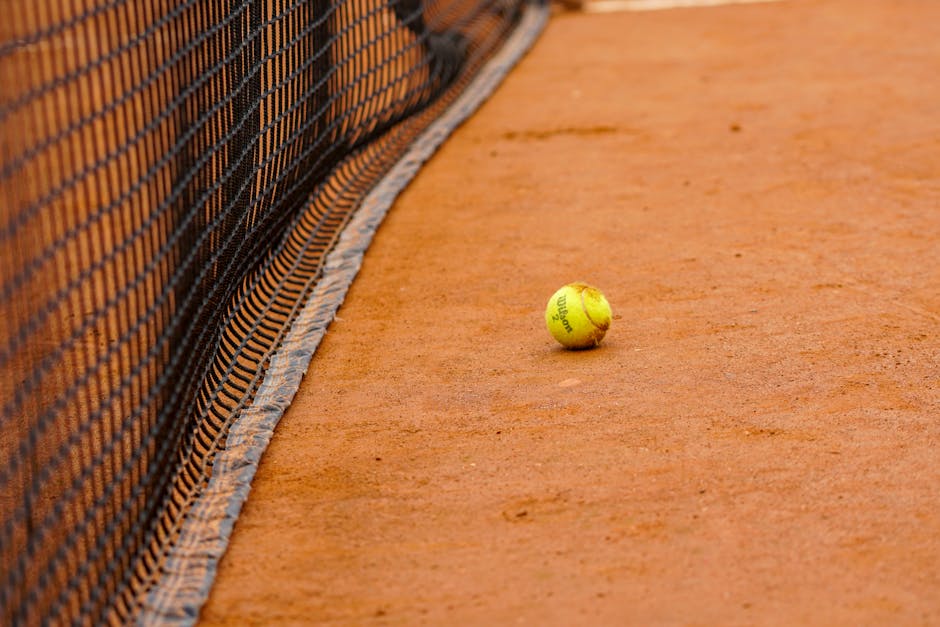
- Early development on clay courts is prioritized in Spain, rewarding patience and footwork in a slower-paced game.
- Tennis in Spain is deeply ingrained in the culture, with a strong emphasis on hard work and dedication.
- Players like Rafael Nadal and Rafael Jodar embody the Spanish tennis identity, showcasing the country’s dominance on clay courts.
Spain, a nation of just over 47 million people, has produced four of the last ten French Open men’s champions—a staggering output for a country with no deep-rooted Anglo-Saxon tennis tradition. Rafael Nadal, Carlos Alcaraz, and now Rafael Jodar, the 19-year-old phenom from Madrid, represent a relentless pipeline of talent forged not just through technical mastery, but through a uniquely Spanish philosophy: the school of suffering. This ethos—where players are trained to endure physical strain, mental fatigue, and emotional pressure—has become the backbone of Spain’s dominance in men’s tennis, particularly on clay. Jodar, now ranked inside the ATP top 150 and seeded in junior Grand Slam events, is the latest embodiment of a system that values resilience as much as racquet speed.
The Rise of Spain’s Tennis Identity

For decades, Spanish tennis was synonymous with clay-court specialists—players who thrived in long rallies, suffocating defense, and physical attrition. But since Nadal’s breakthrough at Roland Garros in 2005, Spain has systematized excellence. Unlike nations that rely on individual academies or private funding, Spain’s success stems from a decentralized yet cohesive network of regional clubs, federations, and a cultural reverence for hard work. The Spanish Tennis Federation (RFET) has long emphasized early development on clay, which slows the game and rewards patience and footwork. But beyond infrastructure, it’s the mental framework—what coaches call “sufrir” (to suffer)—that sets Spanish players apart. This mindset, deeply embedded in youth training, teaches players not to avoid pain or pressure but to embrace it as a path to growth. Now, with Carlos Alcaraz winning Grand Slams and Jodar emerging on the ATP Challenger circuit, the model is proving scalable across generations.
Jodar’s Unconventional Path to Pro Tennis

Rafael Jodar’s journey diverges from the typical Spanish prodigy trajectory. While Alcaraz trained full-time at the Juan Carlos Ferrero Academy from age 12, Jodar pursued a collegiate route, enrolling at the University of Virginia in 2023. Ranked around No. 700 globally at the time, he balanced academics with high-level competition in the NCAA—a rarity for elite European talents aiming for the pro tour. His decision reflected both pragmatism and ambition: American college tennis offers structured competition, coaching, and injury prevention, but rarely produces Grand Slam contenders. Yet Jodar excelled, winning multiple ITA titles and drawing attention for his Nadal-esque movement and single-handed backhand. In early 2024, after capturing two ATP Challenger titles during summer breaks, he made the bold choice to turn professional, forgoing his final three years of eligibility. His first ATP main-draw win came at the 2024 Australian Open, where he stunned a top-100 player in five grueling sets—proof that the collegiate grind had not dulled his edge.
Training Philosophy Behind the Spanish Surge

What separates Spanish development from other nations is its emphasis on discomfort as a training tool. Coaches across Spain’s regional academies, from Barcelona to Valencia, incorporate drills designed to push players beyond fatigue—extended points with reduced rest, matches played in extreme heat, and mental conditioning exercises that simulate match pressure. As former Davis Cup captain Albert Costa once said, “We don’t train to win easy matches. We train to survive the ones that break most men.” This philosophy is evident in Jodar’s game: his ability to reset after errors, his relentless court coverage, and his tendency to raise his level in adversity mirror Nadal’s blueprint. Data from the ATP shows that Spanish players, on average, engage in 30% more rallies exceeding nine shots than their peers—an indicator of superior endurance and mental resilience. According to a 2023 study published in Sports Performance Analysis Quarterly, Spanish juniors also report higher pain tolerance and lower quit rates during high-stress training scenarios.
Implications for the Future of Men’s Tennis

Jodar’s emergence signals a deeper trend: Spain’s ability to evolve its player development model while preserving its core values. Where once the path was linear—local club to national academy to pro tour—now players like Jodar are exploring hybrid routes, blending international education with elite training. This flexibility could attract more Spanish talent to consider non-traditional paths without sacrificing competitiveness. Moreover, as the ATP Tour becomes faster and more power-oriented, Spain’s clay-rooted system is adapting. Jodar, for instance, has worked extensively on his serve and net play, addressing traditional weaknesses of Spanish players. His presence in the top 100 within the next 18 months could inspire a new generation to view the “suffering” model not as outdated, but as a versatile foundation for modern tennis success.
Expert Perspectives
“The Spanish model isn’t about producing clones of Nadal,” says Javier Martínez, a sports psychologist who has worked with the RFET. “It’s about instilling a mindset where effort is non-negotiable.” However, not all analysts agree on its long-term sustainability. Writing in The Guardian, tennis correspondent Ben Rothenberg cautions that overemphasizing endurance could lead to burnout or injury, especially as the tour grows more physically demanding. “Other nations are catching up in mental toughness,” he notes. “Spain’s edge may narrow unless innovation keeps pace with tradition.”
As the 2024 French Open approaches, all eyes will be on whether Jodar can translate his junior success into consistent ATP-level results. His performance on clay will be a litmus test for Spain’s evolving player development strategy. With Nadal’s retirement on the horizon and Alcaraz ascending as world No. 1, the question isn’t whether Spain can sustain its dominance—it’s how many more champions the school of suffering will produce in the next decade.
Source: The Guardian