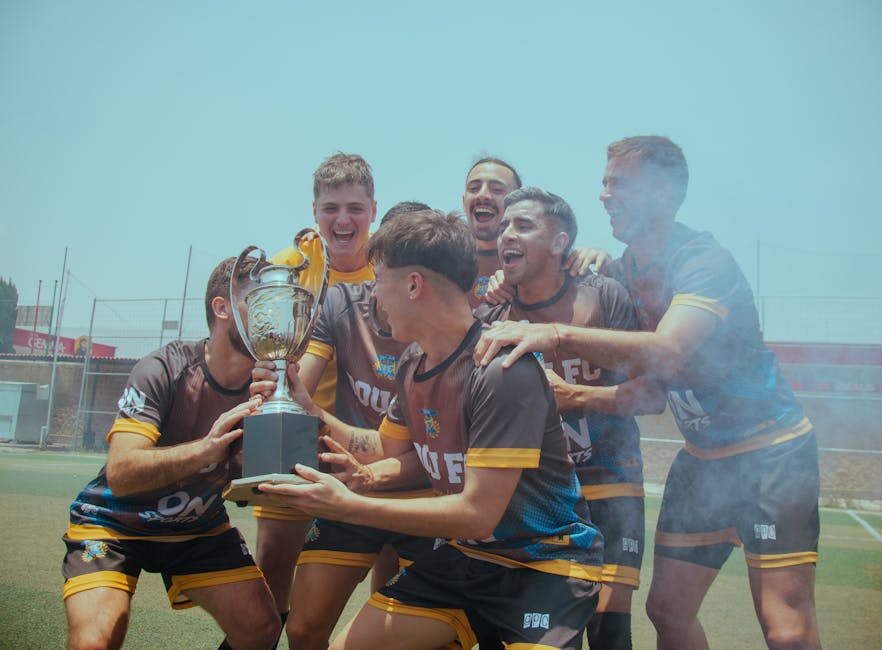
- Celtic secured a domestic double, winning the Scottish Premiership and Scottish Cup under manager Martin O’Neill.
- O’Neill transformed the team’s fortunes, winning 21 of 28 league matches and scoring 68 goals.
- The unexpected turnaround marked one of the most surprising turnarounds in modern Scottish football.
- Celtic’s double has raised questions about O’Neill’s future with the club, as his contract expires in weeks.
- The team’s revival has sparked debate about O’Neill’s role in Celtic’s success, beyond his initial short-term appointment.
On a rain-slicked pitch at Hampden Park, under a bruised Scottish sky, the roar that erupted from the Celtic faithful was not just one of triumph but of disbelief. The final whistle confirmed a 3-1 victory in the Scottish Cup final, sealing a domestic double — a feat few predicted when Martin O’Neill arrived in Glasgow just months earlier. The players, drenched and delirious, lifted the trophy as fireworks burst overhead. But amid the celebration, a quiet tension simmered: the man who orchestrated this revival, the Englishman with the steely gaze and tactical precision, was only meant to be passing through. His contract expires in weeks. And now, with silverware secured, the question echoing through the terraces and boardrooms alike is not what O’Neill has done — but whether he will stay to build on it.
The Unexpected Triumph

Celtic’s double — clinching both the Scottish Premiership and the Scottish Cup — marks one of the most surprising turnarounds in modern Scottish football. When O’Neill took charge in October, the team was in disarray: languishing in third place, burdened by inconsistent performances and low morale. The club had parted ways with their previous manager following a string of disappointing European exits and domestic stumbles. O’Neill, initially hired on a short-term basis through the end of the season, was seen as a stabilizing force, not a savior. Yet under his leadership, Celtic won 21 of their 28 league matches, scoring 68 goals and conceding just 17. Their cup run included a dramatic extra-time victory over Rangers in the semi-final, a match that underscored the renewed intensity and discipline O’Neill instilled. The final against Hearts was a masterclass in controlled aggression, a fitting capstone to a campaign few saw coming.
From Interim to Icon

O’Neill’s appointment followed a familiar pattern in football: a club in crisis turns to an experienced hand to steady the ship. His résumé — including league titles with Leicester City and a UEFA Cup final with Aston Villa — made him a logical candidate, though many doubted he’d want the role long-term at 68 years old. The original plan was for an interim solution while Celtic scouted younger, more modern tacticians. But O’Neill’s impact was immediate. He simplified the formation, shifting to a compact 4-2-3-1 that maximized midfield control and exploited wingers’ pace. He restored confidence in key players like Kyogo Furuhashi and Callum McGregor, while integrating young academy prospects into high-pressure matches. The board, initially hesitant, watched as attendances climbed and media sentiment shifted. What began as a stopgap evolved into something more — a bridge between Celtic’s storied past and a potential renaissance.
The Man Behind the Tactics

Martin O’Neill is no stranger to high-stakes football, but his motivation for returning to management after years of punditry and ambassadorial roles has been the subject of speculation. In interviews, he’s spoken of a desire to “finish a career where it began” — O’Neill played for Dunfermline and Northern Ireland with grit and intelligence, qualities mirrored in his managerial style. His staff, including assistant Chris Davies and fitness guru Andrea Bertolini, describe him as meticulous, often reviewing match footage late into the night. Yet he’s also earned praise for his man-management, striking a balance between discipline and empathy. For Celtic’s young squad, many of whom doubted their place in the first team, O’Neill became a mentor as much as a coach. His relationship with club chairman Ian Bankier appears strong, though sources suggest disagreements over transfer budgets and long-term strategy could complicate contract talks.
What the Future Holds

The decision to retain O’Neill carries implications far beyond the dugout. For fans, his continuation represents stability and a rare connection to football’s traditional values. For the club’s hierarchy, it poses a strategic dilemma: commit to a veteran leader in his final years or pivot toward a younger manager aligned with data-driven, high-pressing philosophies now dominant in Europe. European competition looms larger than ever, and Celtic’s recent performances in the Champions League qualifiers have been underwhelming. O’Neill has expressed ambition to lead the club back to the group stages, but achieving that may require squad overhauls and deeper investment. Meanwhile, rivals like Rangers and Aberdeen are recalibrating their own plans, knowing that a prolonged O’Neill era could shift the balance of power in Scottish football for years.
The Bigger Picture
O’Neill’s story at Celtic resonates beyond Scotland. In an era where managers are often judged by quarterly results and social media optics, his success challenges the notion that only the young and trendy can revive struggling teams. As clubs across Europe grapple with identity and sustainability, Celtic’s experience offers a counter-narrative: that experience, structure, and emotional intelligence can still triumph over chaos. The club’s blend of veteran leadership and youth development, under O’Neill’s guidance, has drawn quiet admiration from figures like Pep Guardiola and Jurgen Klopp, who’ve praised its coherence. Whether O’Neill stays or not, his brief tenure may influence how clubs define ‘success’ in an age of perpetual reinvention.
As the celebrations fade and the summer transfer window opens, the silence from Celtic Park’s executive suite grows louder. O’Neill has not publicly stated his intentions, but sources close to him suggest he’s open to a one-year extension with greater control over recruitment. The club must decide quickly — top assistants are already being approached by other teams, and momentum is fragile. Whether this double marks the beginning of a new era or the final flourish of a storied career, one truth is clear: Celtic won more than silverware this season. They won a moment of possibility — and now must decide whether to seize it.
Source: BBC