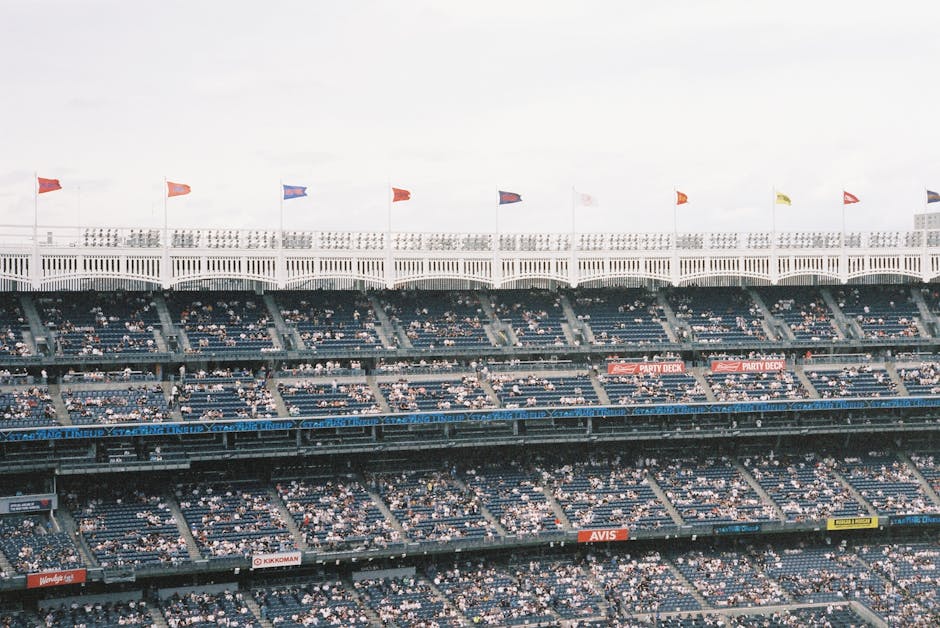
- New York State Assembly Member Zohran Mamdani secured $50 World Cup tickets for low-income New Yorkers through negotiations with FIFA President Gianni Infantino.
- The agreement provides affordable access to 10,000 group-stage matches at MetLife Stadium during the 2026 FIFA World Cup.
- Tickets will be distributed through a lottery system prioritizing low-income families and youth soccer players.
- The subsidized tickets are a significant concession from the original $275 minimum price, making global events more accessible to a wider audience.
- The deal highlights the power of community organizing and advocacy in securing tangible benefits for marginalized communities.
On a crisp March morning outside the United Nations Plaza in Midtown Manhattan, a crowd of New Yorkers gathered not for a protest, but for a promise kept. Children in faded jerseys stood beside transit workers still in uniform, all waving signs that read \’We Belong at the World Cup\’ and \’FIFA: Let Us In.\’ At the center of it stood Zohran Mamdani, New York State Assembly Member and former rideshare driver, flanked by community organizers and city officials. With a broad smile, he held up a laminated ticket stub — not for himself, but as a symbol. \’This,\’ he declared, \’is what democracy looks like in action.\’ Just days earlier, FIFA President Gianni Infantino had agreed to a groundbreaking concession: 10,000 tickets priced at $50 each for New Yorkers with incomes under $75,000, a stark contrast to the original $275 minimum. The moment wasn\’t just about soccer — it was about dignity, access, and who gets to claim space in global events.
New Deal Delivers Affordable Access to 2026 World Cup

The agreement, finalized after a series of high-pressure meetings between Mamdani, Assembly Member Inez Dickens, and FIFA officials, ensures that 10,000 tickets for group-stage matches at MetLife Stadium during the 2026 FIFA World Cup will be available at $50 apiece. These heavily subsidized tickets will be distributed through a lottery system administered by the New York City Department of Youth and Community Development, prioritizing low-income families, youth soccer leagues, and public school students. The deal also includes transportation stipends and bilingual outreach to ensure accessibility across language barriers. Originally, FIFA had set ticket prices as high as $1,100 for premium matches, with even the cheapest options starting at $275 — a cost prohibitive for most working-class New Yorkers. The breakthrough marks the first time a U.S. city has negotiated directly with FIFA to cap ticket prices for local residents, setting a potential precedent for future host cities.
From Outrage to Organizing: The Campaign for Fair Access

The push for affordable tickets began in late 2023, when FIFA released its initial pricing structure for the 2026 tournament, co-hosted by the United States, Canada, and Mexico. Advocacy groups, including the New York Communities for Change and the Urban Soccer Foundation, raised alarms that the costs would exclude the very communities that fuel the city’s vibrant soccer culture. Mamdani, who previously led campaigns for rent relief and transit equity, seized on the issue, calling it \’economic exclusion dressed up as elite entertainment.\’ He launched the \’$50 World Cup\’ campaign, organizing rallies outside FIFA’s New York offices and leveraging social media to amplify grassroots voices. In January 2024, he directly challenged Infantino during a public forum at Columbia University, demanding accountability. \’You say soccer is the world’s game,\’ Mamdani told him, \’but in New York, it’s only for the wealthy?\’ The moment went viral, galvanizing support from labor unions, city council members, and even Major League Soccer players.
The People Behind the Victory

Zohran Mamdani, a Ugandan-born former rideshare driver and member of the Democratic Socialists of America, emerged as the face of the campaign, but the effort was deeply collaborative. Inez Dickens, a veteran Harlem assemblywoman, used her decades of political capital to broker private talks with FIFA’s local organizing committee. Community organizers from the Bronx and Queens mobilized thousands of petition signatures and packed public hearings. Even unlikely allies, such as New York City Mayor Eric Adams, eventually endorsed the $50 ticket proposal, though critics note his administration’s initial hesitation. For Mamdani, the fight was personal. \’I grew up watching the World Cup on a busted TV in Jackson Heights,\’ he said in an interview with The New York Times. \’Soccer wasn’t just sport — it was sanctuary. That shouldn’t be a luxury.\’ The coalition’s mix of moral urgency and political savvy proved decisive in shifting FIFA’s stance.
Implications for Fans, Cities, and FIFA

The agreement has far-reaching consequences beyond New York. For fans, it affirms that public pressure can reshape the economics of mega-sporting events. For host cities, it offers a blueprint for asserting local priorities over global sports bodies often criticized for opacity and elitism. FIFA, long accused of prioritizing corporate sponsorships over fan inclusion, now faces renewed scrutiny over its pricing models in Los Angeles, Atlanta, and other U.S. host cities. Analysts suggest the New York deal could inspire similar campaigns in Toronto and Mexico City. \’If a state assembly member can force FIFA to blink,\’ said sports economist Dr. Lena Cho in a Reuters report, \’then the balance of power might finally be shifting.\’ Still, challenges remain: only 10,000 tickets are guaranteed, a fraction of MetLife’s 82,500 capacity, and the lottery system may not reach the most marginalized fans without robust outreach.
The Bigger Picture
This victory is about more than tickets — it’s about who gets to belong in the world’s most-watched sporting event. As global tournaments grow more commercialized, the tension between profit and public access intensifies. New York’s campaign proves that organized communities can demand equity, even from institutions as powerful as FIFA. It also reflects a broader movement to reclaim public culture from privatization, from stadium funding to broadcast rights. In an era where live sports are increasingly gated behind paywalls, the $50 ticket stands as a modest but meaningful act of resistance.
What comes next may define a new era of fan advocacy. Other cities are watching. Campaigns are forming. And for the first time, FIFA has acknowledged that affordability isn’t just a concern — it’s a condition of legitimacy. The 2026 World Cup hasn’t kicked off yet, but in New York, the game has already changed.
Source: Reddit