- China’s CXMT has become the world’s fourth-largest DRAM maker with a 719% revenue jump in 2023.
- CXMT’s revenue surged to $8.2 billion in 2023, up from $1 billion the previous year.
- The company’s growth is driven by increased production capacity and improved yield rates in its 19nm and 17nm DRAM technologies.
- CXMT has captured 8% of the global DRAM market, trailing only Samsung, SK Hynix, and Micron.
- This meteoric rise signals a shift in the global semiconductor manufacturing landscape, shaped by geopolitics and industrial policy.
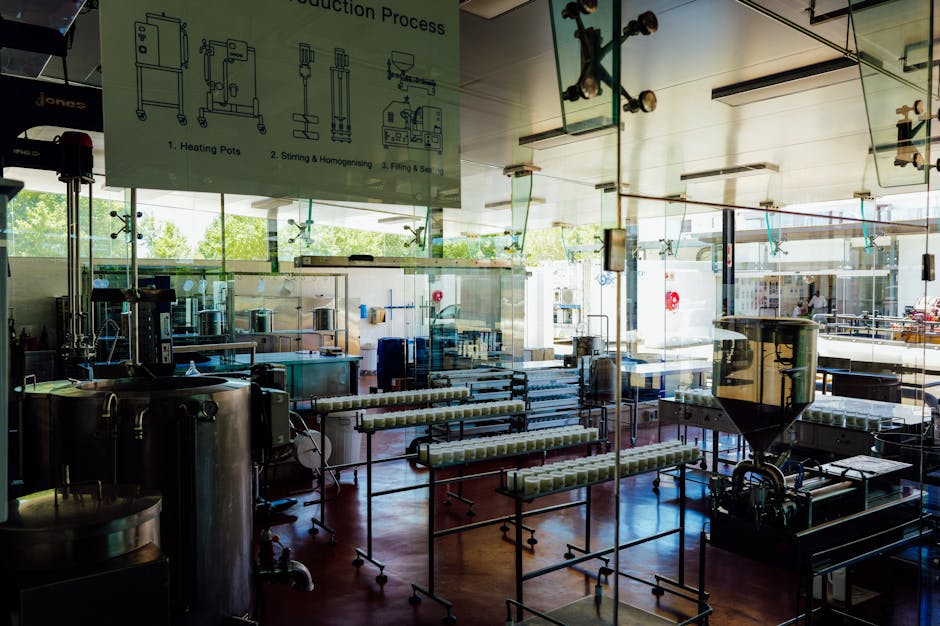
In a sprawling industrial park on the outskirts of Hefei, rows of gleaming fabrication plants hum with activity, their cleanrooms bustling with engineers in full-body suits tending to silicon wafers at nanometer precision. Just five years ago, this complex—home to ChangXin Memory Technologies (CXMT)—was a symbol of China’s ambition in an arena long dominated by American and South Korean giants. Today, it stands as proof of that ambition realized. In 2023, CXMT reported a 719% year-on-year revenue increase, catapulting it to the rank of the world’s fourth-largest producer of DRAM chips, the essential memory components powering everything from smartphones to data centers. This meteoric rise is more than a corporate success story; it is a harbinger of a new global order in semiconductor manufacturing, where geopolitical strategy and industrial policy converge to rewrite the rules of technological competition.
CXMT’s Breakthrough in the Global DRAM Market

CXMT’s ascent has been nothing short of dramatic. According to financial disclosures and industry analyses, the company’s 2023 revenue surged to approximately $8.2 billion, up from just over $1 billion the previous year. This explosive growth, driven by increased production capacity and improved yield rates in its 19nm and 17nm DRAM technologies, enabled CXMT to capture roughly 8% of the global DRAM market. The firm now trails only Samsung, SK Hynix, and Micron—the long-entrenched leaders in a market valued at over $70 billion annually. Notably, CXMT achieved this leap despite U.S. export controls restricting access to advanced semiconductor equipment. By leveraging domestic innovation and adapting existing tools, the company has managed to scale production of DDR4 and DDR5 memory chips, which are in high demand across consumer electronics and cloud infrastructure. Analysts at Reuters have described the performance as a ‘watershed moment’ for China’s semiconductor independence.
The Long Road to Technological Self-Reliance

CXMT’s rise did not happen in isolation. It is the culmination of a decade-long, state-backed campaign to reduce China’s reliance on foreign semiconductors—a vulnerability starkly exposed when U.S. sanctions crippled Huawei in 2019. In 2014, Beijing launched the National Integrated Circuit Industry Investment Fund, colloquially known as the ‘Big Fund,’ injecting billions into domestic chipmakers. CXMT, founded in 2016 with strong support from the Hefei municipal government and central ministries, was a key beneficiary. Early challenges were immense: recruiting talent, acquiring know-how, and overcoming technical bottlenecks in lithography and etching processes. The company initially faced skepticism after its first generation of chips underperformed. However, persistent reinvestment, reverse engineering, and collaboration with domestic equipment suppliers like SMEE gradually closed the gap. By 2022, CXMT had achieved stable mass production of 19nm DDR4, and by 2023, it had begun rolling out DDR5 chips competitive with mid-tier offerings from Samsung and Micron.
The Architects of China’s Memory Ambition

At the heart of CXMT’s transformation are figures like Dr. Simon Yang, the company’s longtime CEO and a veteran of the global semiconductor industry, who previously held executive roles at Infineon and Spansion. Yang has championed a strategy of ‘pragmatic innovation’—focusing not on matching cutting-edge 10nm nodes, but on mastering cost-efficient, high-volume production of slightly older but still in-demand technologies. Supported by a cadre of engineers trained in the U.S., Europe, and Taiwan, CXMT has built a culture of rapid iteration and disciplined execution. Meanwhile, Chinese policymakers, including officials in the Ministry of Industry and Information Technology (MIIT), have played a crucial enabling role, offering tax breaks, land grants, and access to low-interest loans. Their motivation is clear: to ensure that China’s digital economy is not held hostage by foreign suppliers. As one MIIT advisor told the BBC, ‘Memory is the oxygen of modern computing. We cannot outsource our oxygen.’
Global Repercussions and Market Shifts

CXMT’s emergence as a top-tier DRAM supplier is already altering the global landscape. For Chinese electronics manufacturers like Lenovo, Xiaomi, and Huawei, access to a domestic, reliable source of memory chips reduces supply chain risk and strengthens resilience against U.S. sanctions. For international competitors, the threat is real: increased competition from a well-funded, state-backed player could compress profit margins and force price adjustments. Micron, which had sought to block CXMT’s products in China on intellectual property grounds, now faces a more formidable rival. Moreover, CXMT’s success may accelerate efforts by the U.S. and European Union to bolster their own semiconductor manufacturing through initiatives like the CHIPS Act and the European Chips Act. The long-term concern is not just market share, but the erosion of technological edge in a sector critical to AI, defense, and economic sovereignty.
The Bigger Picture
CXMT’s rise reflects a broader transformation in the global tech economy: the decentralization of high-tech manufacturing and the rise of state-directed innovation models. While free-market advocates once assumed that semiconductor leadership would remain with private-sector pioneers in Silicon Valley and Seoul, China has demonstrated that sustained state investment, strategic patience, and industrial policy can shift the balance. This does not mean China has surpassed the U.S. in all chip technologies—its advanced logic chips still lag behind TSMC and Intel. But in memory, where scale and cost efficiency reign, CXMT has proven that a determined national champion can break through. The era of uncontested Western dominance in semiconductors is over.
What comes next may be even more consequential. CXMT is reportedly developing 14nm and 12nm DRAM nodes and expanding its 3D NAND capabilities. If it continues on this trajectory, it could soon challenge SK Hynix and Micron for the No. 3 spot. The U.S. and its allies now face a stark choice: innovate faster, strengthen alliances, or risk ceding more ground in the foundational layers of the digital world. The silicon battlefield has shifted, and the stakes have never been higher.
Source: Reddit