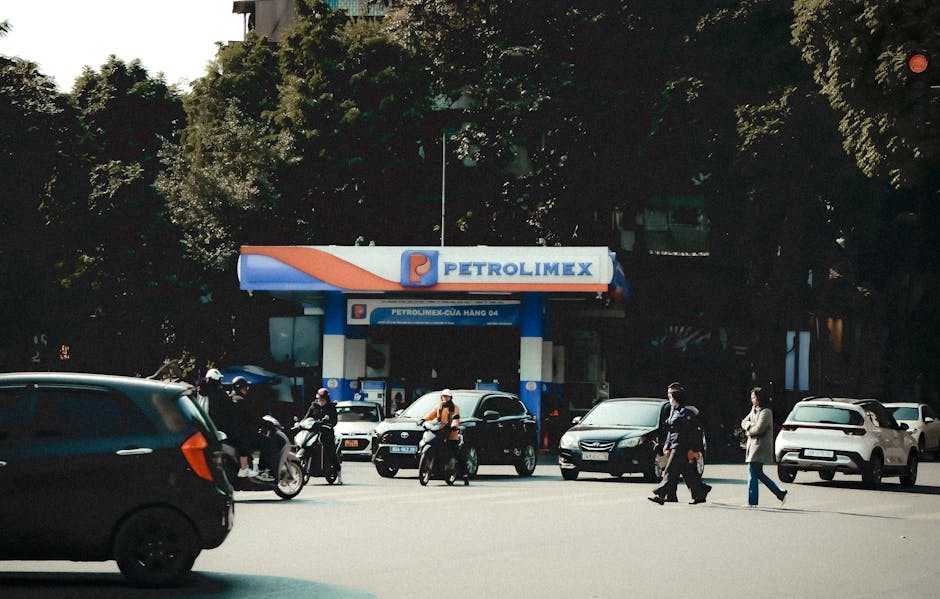
- The US fuel crisis has surged to $5.87 per gallon, a 62% increase from pre-Iran conflict levels in 2024.
- Experts warn that fuel prices are unlikely to return to pre-war levels before 2027 due to global oil shipping disruptions.
- Permanent damage to refining infrastructure and shifting energy alliances have created a new baseline for fuel costs.
- Domestic refining capacity remains 14% below 2023 levels, exacerbating the fuel crisis.
- The US and European sanctions on Iran have remained in place post-ceasefire to deter further aggressive behavior.
As of May 2026, the average price of regular gasoline in the United States has reached $5.87 per gallon—a 62% increase from the pre-Iran conflict average in 2024. Even if a ceasefire were declared today, experts warn that fuel prices are unlikely to return to pre-war levels before 2027. The prolonged disruption to global oil shipping lanes, compounded by permanent damage to refining infrastructure and shifting energy alliances, has created a new baseline for fuel costs. According to the U.S. Energy Information Administration (EIA), domestic refining capacity remains 14% below 2023 levels, and global Brent crude volatility has kept markets on edge for over 18 months. Consumers are now facing not just a temporary spike, but a structural shift in energy pricing that could redefine transportation economics across the country.
Why Peace Won’t Mean Price Relief

The assumption that ending the Iran war would automatically lower fuel prices overlooks deeper systemic issues in the global energy supply chain. While the conflict severely disrupted oil flows through the Strait of Hormuz—handling nearly 20% of the world’s seaborne oil—its aftermath has exposed vulnerabilities far beyond regional geopolitics. During the war, insurers pulled coverage from tankers in the Persian Gulf, and repeated attacks on oil facilities led to the permanent closure of several Iranian refineries. More critically, U.S. and European sanctions have remained in place post-ceasefire to deter renewed aggression, keeping Iranian crude exports capped at less than 800,000 barrels per day—down from 2.3 million in 2023. This constrained supply coincides with surging demand in Asia, particularly India and Vietnam, which are outbidding Western nations for available crude. As a result, the global oil market remains in a structural deficit, sustaining upward pressure on prices regardless of battlefield outcomes.
Refining Capacity at a Breaking Point

The bottleneck isn’t just in crude supply—it’s in the ability to turn that crude into usable gasoline. Since 2024, the U.S. has lost over 700,000 barrels per day in refining capacity due to war-related supply uncertainty, aging infrastructure, and investor reluctance. The closure of the Phillips 66 Sweeny refinery in Texas last year—citing unprofitability amid volatile crude costs—exemplifies the industry’s retreat. Meanwhile, new refinery construction has stalled; no major greenfield project has been approved since 2022, and environmental regulations have delayed upgrades at existing facilities. According to the American Fuel & Petrochemical Manufacturers (AFPM), current utilization rates are near 95%, leaving no spare capacity to respond to sudden demand shifts. Even if crude oil prices stabilize, the limited ability to refine it into gasoline means pump prices will remain elevated. This refining crunch is particularly acute on the East Coast, which relies heavily on imported refined products and has seen localized spikes above $6.20 per gallon.
Global Energy Alliances in Flux

The war has triggered a realignment of global energy trade, with lasting implications for U.S. fuel costs. Historically dependent on Middle Eastern crude, American refiners have scrambled to source alternatives from Brazil, Canada, and West Africa—regions with higher production costs and logistical complexity. At the same time, Saudi Arabia has redirected much of its surplus output to China, signing long-term supply agreements in exchange for infrastructure investment. This pivot has reduced the spare production capacity available to stabilize global markets during crises. Furthermore, OPEC+ has maintained strict output quotas throughout 2025 and 2026, prioritizing price stability over volume increases. According to analysts at Reuters, the cartel’s collective spare capacity now stands at just 1.8 million barrels per day, down from 6 million in 2022. With little cushion to absorb shocks, any disruption—even a minor one—can trigger sharp price spikes.
Economic Ripple Effects Across Industries

The sustained high cost of fuel is reverberating across the American economy, affecting everything from grocery prices to small business logistics. Transportation accounts for nearly 30% of final consumer goods costs, and trucking firms are passing on record diesel prices—now averaging $6.15 per gallon—to retailers. The National Federation of Independent Business reports that 68% of small carriers have reduced operations or raised rates since early 2025. Airlines have reinstated fuel surcharges, and Amtrak has delayed expansion plans due to budget overruns. Rural communities, where driving distances are longer and public transit options scarce, are disproportionately impacted. Moreover, higher fuel prices are contributing to persistent inflation; the Cleveland Fed’s inflation nowcasting model shows energy costs adding 1.2 percentage points to annual CPI growth in Q2 2026. With the Federal Reserve reluctant to cut rates amid inflationary pressures, borrowing costs remain high, further constraining economic activity.
Expert Perspectives
Economists are divided on how long this high-price environment will persist. Dr. Elena Torres of the Brookings Institution argues that “this is a supply-side crisis requiring long-term investment in refining and alternative energy infrastructure.” In contrast, MIT energy economist David Naimon believes market forces will eventually correct the imbalance, stating, “By 2028, we’ll see a wave of refinery expansions and efficiency gains that ease pressure.” However, both agree that geopolitical risk premiums will remain embedded in oil prices for years, reflecting a new era of energy insecurity. The International Energy Agency (IEA) has warned that without coordinated global investment, the world may face recurring fuel shocks even in peacetime.
Looking ahead, the key variables to watch include the pace of refinery modernization in the U.S. Gulf Coast, the lifting of sanctions on Iranian exports, and the trajectory of electric vehicle adoption. While EV sales grew 22% year-over-year in 2025, they still represent only 14% of new vehicle sales—insufficient to offset liquid fuel demand. Until supply constraints are resolved, American consumers should expect volatility and elevated prices. The era of cheap gasoline may be over, not because of war alone, but because of a fragile, overburdened system that lacks resilience in the face of global uncertainty.
Source: Reddit