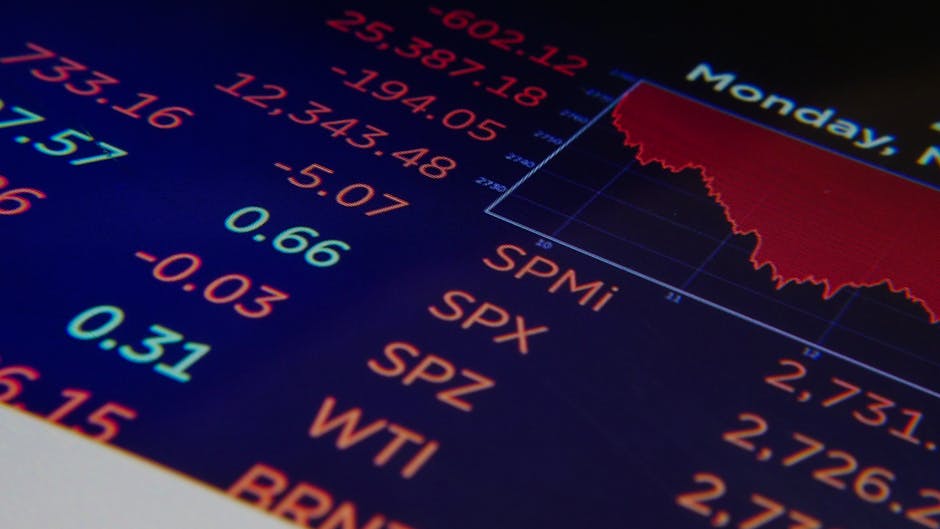
- Global bond prices have plummeted, with yields surging at their fastest pace in decades.
- Investment professionals warn of a potential flashpoint for broader financial instability in bond markets.
- Central banks’ hesitation to cut interest rates has eroded confidence in monetary policy.
- Bond-market vigilantes, institutional investors punishing unsustainable fiscal policies, are back.
- The current bond slump reflects growing skepticism about government debt trajectories worldwide.
Is the era of stable, predictable bond markets coming to an end? A growing number of investment professionals are raising alarms as global bond prices plunge and yields surge at their fastest pace in decades. Once considered a safe haven in turbulent times, government and corporate bonds are now seen by some as a potential flashpoint for broader financial instability. With inflation proving stickier than expected and central banks hesitating to cut interest rates, bond markets are sending a clear signal: confidence in monetary policy is fraying. The sudden repricing has reignited fears of a return to the 1990s-era ‘bond market vigilantes’—investors who punish governments with unsustainable fiscal policies through massive sell-offs. What does this mean for the global economy?
The Vigilante Warning: Bonds Signal Fiscal Discipline

The current bond slump reflects a resurgence of market discipline once famously described by former Fed Chair Alan Greenspan as the work of ‘bond market vigilantes.’ These are not rogue traders, but institutional investors—pension funds, insurers, and asset managers—who collectively withdraw support from sovereign debt when they perceive fiscal or monetary policies as reckless. Today, their actions suggest growing skepticism about government debt trajectories, particularly in major economies like the United States and the United Kingdom. With U.S. 10-year Treasury yields surpassing 4.7% in mid-2024—a level not seen since 2007—markets are pricing in prolonged high interest rates. This shift marks a stark reversal from the ultra-low yield environment that defined much of the post-2008 era, driven by quantitative easing and accommodative central banks. Now, investors are demanding higher compensation for holding debt, signaling a loss of complacency.
Supporting Evidence: Data and Policy Shifts

Recent data supports the view that bond markets are reacting to structural shifts, not just temporary inflation spikes. In the U.S., the Consumer Price Index (CPI) remained above 3% year-over-year for eight consecutive months through mid-2024, well above the Federal Reserve’s 2% target. Meanwhile, federal budget deficits have hovered near $2 trillion annually, with no clear path to sustainability. According to the U.S. 10-year yield hitting its highest level since 2007, investors are demanding a premium for inflation and default risk. The Bank of England has echoed similar concerns, with its chief economist noting that ‘the market is no longer willing to finance fiscal expansion at low rates.’ In Japan, even the traditionally insulated JGB market saw yields breach the Bank of Japan’s informal 1% ceiling, forcing a policy reassessment. These coordinated moves across major bond markets suggest a global repricing, not isolated volatility.
Counter-Perspectives: Are Vigilantes Overstated?

Not all economists agree that bond vigilantes are driving the current sell-off. Some argue that technical factors—such as reduced central bank buying, pension fund de-risking, and the unwind of popular ‘carry trades’—are more responsible than ideological market discipline. Paul Krugman, Nobel laureate and columnist, has long contended that in a world of floating exchange rates and independent central banks, the threat of vigilantes is exaggerated. ‘Countries that borrow in their own currency face no solvency risk,’ he wrote in a 2023 New York Times op-ed, ‘and markets know this.’ Others point to Japan, where debt-to-GDP exceeds 250% with minimal market backlash, as evidence that demographics, inflation expectations, and monetary policy matter more than fiscal hawkishness. Additionally, some analysts warn that labeling every bond selloff as ‘vigilante action’ risks oversimplifying complex market dynamics driven by algorithmic trading and liquidity constraints.
Real-World Impact: From Mortgages to Pensions

The bond market downturn has tangible consequences for everyday citizens. Higher yields translate into higher borrowing costs for mortgages, auto loans, and corporate debt. In the U.S., average 30-year fixed mortgage rates have climbed above 7.5%, chilling the housing market. Pension funds, which rely on bond returns to meet future obligations, face funding shortfalls as the present value of liabilities increases. Some state pension systems may need to raise contributions or reduce benefits. Meanwhile, governments face higher debt servicing costs—interest on the U.S. national debt is projected to exceed $1 trillion annually by 2025. This crowding-out effect could limit spending on infrastructure, education, or climate initiatives. Even equity markets are affected, as rising bond yields make stocks less attractive on a risk-adjusted basis, contributing to volatility in tech and growth sectors.
What This Means For You
For individual investors, the bond slump underscores the need to reassess portfolio risk. Traditional 60/40 stock-bond portfolios may no longer offer the same diversification benefits if bonds behave more like volatile assets. Consider laddering bond maturities, exploring inflation-protected securities like TIPS, or diversifying into short-duration strategies. Savers might benefit from higher yields on CDs and money market funds, but borrowers should act quickly before rates rise further. Above all, understand that bond markets are no longer passive backdrops—they’re active participants in shaping economic policy.
Yet one question remains unanswered: if bond vigilantes are real, who decides when fiscal policy becomes ‘irresponsible’? As global debt levels rise and climate and demographic pressures grow, the line between prudent stimulus and reckless spending may depend less on numbers and more on market perception—a dangerous game of confidence with no clear referee.
Source: Financial Times