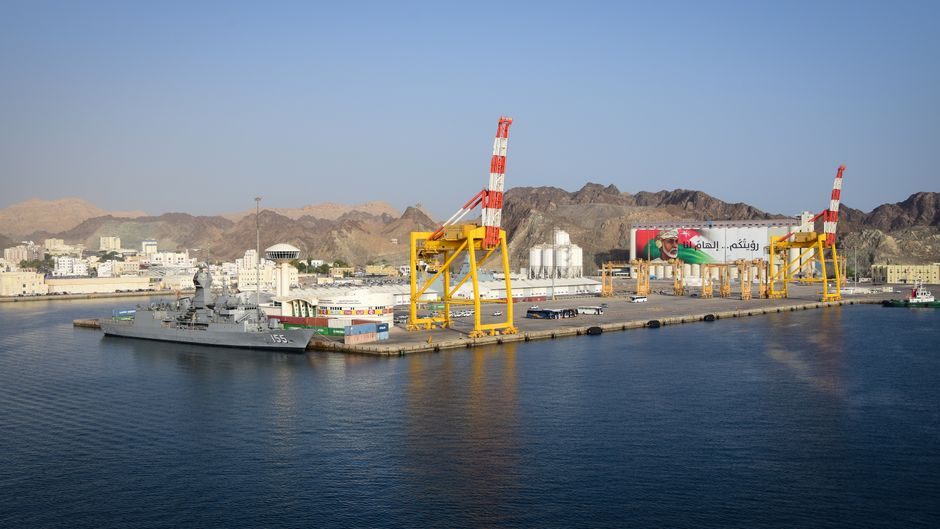
- The Strait of Hormuz has seen a 70% spike in naval standoffs between Iran and other countries since 2023.
- The Strait of Hormuz is a critical waterway that handles nearly a third of the world’s seaborne oil.
- Analysts refer to the situation in the Strait of Hormuz as a ‘forever war’ due to the perpetual brinkmanship in the area.
- Iran has intensified naval drills and deployed new stealth fast-attack craft in the region.
- The situation in the Strait of Hormuz is enforced by a state of ‘dread’ rather than diplomacy.
Just before dawn on a still, humid morning in May, the deck of a U.S. Navy guided-missile destroyer tilted slightly as it threaded through the narrow waters of the Strait of Hormuz. To the east, the silhouette of Iran’s Qeshm Island loomed under a pale sky. Radar operators tracked a flotilla of fast-moving Iranian Revolutionary Guard speedboats cutting erratic paths nearby. One approached within 300 yards before veering off—a routine provocation, but one that, in these waters, could spiral into catastrophe in seconds. This moment, repeated dozens of times over the past year, captures the precarious reality of what analysts increasingly call a ‘forever war’—a state of perpetual brinkmanship in a waterway that handles nearly a third of the world’s seaborne oil. Here, where turquoise waves meet geopolitical fault lines, peace is not absent but perpetually deferred, enforced not by diplomacy but by dread.
Current Standoff in the Strait of Hormuz

The Strait of Hormuz, a 21-mile-wide channel between Iran and Oman, has become the epicenter of a simmering crisis that defies resolution. In recent months, Iran has intensified naval drills, deployed new stealth fast-attack craft, and shadowed commercial vessels with increasing frequency. According to U.S. Naval Central Command, incidents involving Iranian vessels have risen by nearly 70% since the beginning of 2023. These maneuvers, while rarely crossing into outright attacks, are calibrated to signal defiance—particularly toward the United States and its Gulf allies. The Biden administration has responded with a reinforced carrier group and heightened surveillance, but no decisive diplomatic breakthrough has followed. Meanwhile, oil prices have fluctuated on the edge of volatility, and insurers have raised premiums for tankers transiting the strait. The International Energy Agency warns that any sustained disruption could send global energy markets into turmoil, particularly in Asia, where over 80% of crude imports from the Gulf originate.
How the Crisis Took Root

The roots of today’s standoff stretch back decades, to the 1979 Islamic Revolution and the subsequent Iran-Iraq War, when both nations targeted oil infrastructure and merchant shipping in the so-called ‘Tanker War.’ But the modern phase began in 2018, when President Donald Trump unilaterally withdrew from the Joint Comprehensive Plan of Action (JCPOA) and reimposed harsh sanctions on Iran. In response, Tehran began incrementally exceeding uranium enrichment limits and harassing vessels in the strait, signaling its leverage over global energy flows. Despite efforts under President Biden to revive the nuclear deal, negotiations collapsed in 2022 amid internal political turmoil in Tehran and unresolved disputes over sanctions relief and inspections. Since then, Iran has fortified its presence in the strait, viewing it as both a deterrent and a bargaining chip. As one former U.S. diplomat put it, the strait is Iran’s ‘strategic chokehold’—a weapon that costs little to wield but carries immense leverage.
The Actors Shaping the Conflict

The crisis is shaped not by a single leader but by a constellation of actors with competing interests. On the Iranian side, the Islamic Revolutionary Guard Corps (IRGC), particularly its naval branch, operates with significant autonomy, often escalating tensions to assert influence and justify its budget. Supreme Leader Ayatollah Ali Khamenei remains skeptical of diplomacy with the U.S., framing resistance as a matter of national dignity. Meanwhile, Gulf states like Saudi Arabia and the UAE walk a tightrope—seeking stability but wary of appearing too aligned with Washington. The U.S. military, for its part, is cautious; after two decades of war in the Middle East, there is little appetite for another conflict, especially one that could erupt from a single misjudged maneuver in congested waters. Yet, as the BBC has reported, even low-level confrontations risk miscalculation, particularly when communication channels between Washington and Tehran remain limited.
Global Consequences of a Frozen Conflict

The ongoing crisis has far-reaching implications beyond the Persian Gulf. For global markets, the persistent threat of disruption keeps oil prices elevated and supply chains fragile. Asian economies, especially Japan, South Korea, and China, which rely heavily on Gulf oil, have quietly diversified sources but remain vulnerable. For regional stability, the standoff undermines efforts to de-escalate broader Middle East tensions, including those involving Yemen and Israel. Humanitarian costs are also mounting: merchant mariners from dozens of nations face heightened risks, and insurers now treat the strait as a high-threat zone. Diplomatically, the failure to resolve the nuclear issue or establish maritime communication protocols reflects a broader breakdown in multilateral crisis management, leaving the world reliant on deterrence rather than dialogue.
The Bigger Picture
This is not merely a regional dispute but a symptom of a fractured global order—one where traditional arms control and diplomatic norms are eroding. The Strait of Hormuz has become a theater for hybrid warfare, where states test boundaries without declaring war. In this environment, deterrence replaces diplomacy, and the risk of accidental war grows with each close encounter. The crisis also underscores a paradox: as the world seeks to transition away from fossil fuels, its most volatile flashpoints remain tied to oil. Until there is a sustained, credible diplomatic effort—backed by regional and international actors—this cycle of tension will persist, not because war is inevitable, but because peace has not been chosen.
What comes next may hinge not on military posturing but on quiet diplomacy—backchannel talks, confidence-building measures, and perhaps a maritime security pact involving regional powers. But with distrust deep and leaderships under domestic pressure, such solutions remain distant. For now, the waters of the Strait of Hormuz will continue to reflect not just the sun, but the shadow of a war that never fully began—and never truly ends.
Source: Nationalsecurityjournal