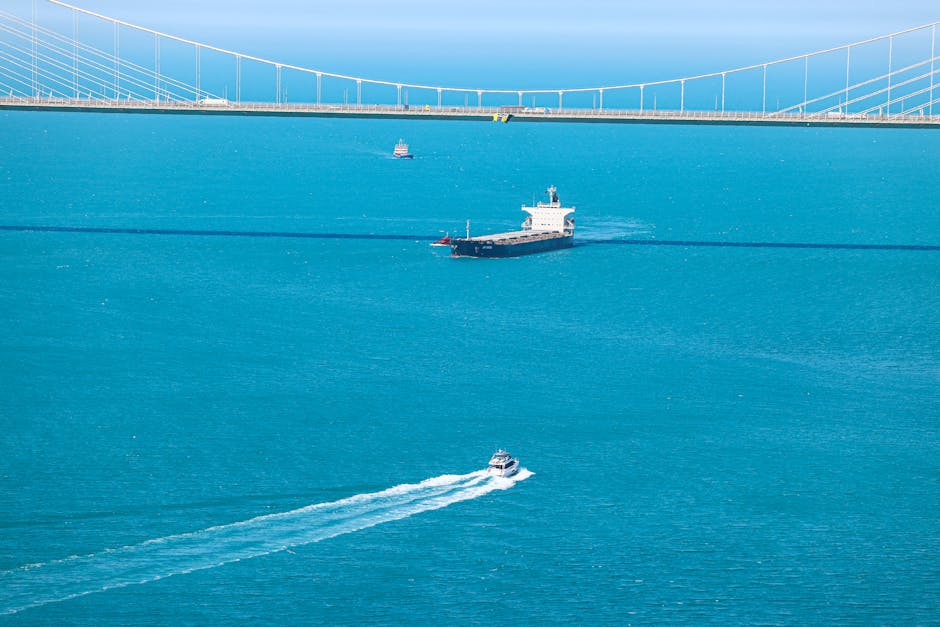
- Iran’s IRGC cleared 26 vessels through the Strait of Hormuz in 24 hours, a surge in maritime traffic amid rising tensions.
- The Strait of Hormuz is a critical waterway, through which nearly 20% of the world’s traded oil passes.
- Increased naval activity underscores the fragile balance between commerce and conflict in the Persian Gulf.
- A single disruption in the Strait can ripple through global energy markets, as seen in the 2019 oil tanker attack.
- Diplomatic talks between Iran and the US remain stalled, raising concerns over global energy supply stability.
Iran’s Islamic Revolutionary Guard Corps (IRGC) reported clearing 26 vessels through the Strait of Hormuz within a 24-hour period, marking a notable surge in maritime traffic through one of the world’s most strategically vital waterways. This spike occurs against a backdrop of stalled diplomatic talks between Iran and the United States, raising concerns over the stability of global energy supplies. The Strait, through which nearly 20% of the world’s traded oil passes, has long been a flashpoint in regional tensions, and the recent uptick in naval activity underscores the fragile balance between commerce and conflict in the Persian Gulf.
Maritime Traffic Reaches Recent Highs

According to data released by Iran’s Ports and Maritime Organization, 26 commercial and energy-carrying vessels transited the Strait of Hormuz under IRGC supervision in a single 24-hour window, the highest verified clearance rate in over six months. Satellite tracking from MarineTraffic and AIS data confirm increased vessel density near the narrow passage, which at its narrowest is just 21 nautical miles wide. The U.S. Energy Information Administration estimates that approximately 17 million barrels of crude oil pass through the strait daily, primarily from Saudi Arabia, Iraq, and the United Arab Emirates. Even minor disruptions can ripple through global markets; a 2019 attack on oil tankers in the Gulf triggered a 4% spike in Brent crude prices within 48 hours. The current surge suggests either a backlog clearance or deliberate acceleration of shipments amid growing uncertainty over regional security.
Key Actors and Their Strategic Moves

The IRGC Navy, distinct from Iran’s regular naval forces, maintains a robust presence in the strait and has historically used maritime patrols as both a security and political tool. In recent weeks, the IRGC has increased its surveillance and escort operations, citing “protection of national interests” and “safeguarding navigation.” Meanwhile, the U.S. Fifth Fleet, headquartered in Bahrain, continues to monitor the area with naval assets including destroyers and reconnaissance aircraft. Despite the absence of direct confrontation, U.S. Central Command has acknowledged “unusual patterns of vessel movement” and has reinforced its maritime domain awareness. Regional actors such as Saudi Arabia and the UAE have quietly increased their own naval coordination, while international shipping firms have begun re-evaluating transit protocols. The International Maritime Bureau has issued no formal alerts, but private security advisories note “elevated readiness” for vessels approaching the strait.
Trade-Offs Between Security and Economic Flow

The surge in vessel traffic presents a complex calculus for all stakeholders. For Iran, facilitating smooth passage bolsters its claim as a responsible regional actor while maintaining leverage over global energy markets. However, any incident—even an accidental collision or mechanical failure—could be interpreted as deliberate, risking escalation. For shipping companies, delays mean increased costs; the average daily charter rate for a Very Large Crude Carrier (VLCC) exceeds $70,000, making rapid transit economically imperative. On the other hand, faster movement through a narrow, congested corridor heightens collision risks, particularly given limited deep-water channels. Insurance underwriters at Lloyd’s of London have not yet adjusted war risk premiums, but sources indicate contingency plans are being reviewed. The broader trade-off lies in balancing deterrence with de-escalation: too aggressive a posture risks market panic, while perceived weakness could invite miscalculation.
Why the Timing Matters Now

The current surge in traffic coincides with a critical juncture in U.S.-Iran relations, where nuclear negotiations remain effectively frozen despite intermittent diplomatic signals. The collapse of the 2015 JCPOA and subsequent U.S. sanctions have pushed Iran to deepen ties with China and Russia, while maintaining ambiguity over its nuclear program. In this context, controlling the strait serves as both a defensive shield and a strategic bargaining chip. Additionally, global oil demand is rebounding in early 2024, with OPEC+ maintaining production curbs, making uninterrupted flow from the Gulf even more crucial. Unlike previous flare-ups in 2019 or 2021, there are no reported seizures or attacks, suggesting a calibrated approach by Tehran to signal capability without provoking direct conflict.
Where We Go From Here
In the next six to twelve months, three plausible scenarios could unfold. First, a gradual de-escalation could occur if indirect talks resume, leading to reduced IRGC patrols and normalized transit patterns. Second, a tit-for-tat incident—such as the detention of a foreign vessel on disputed legal grounds—could trigger a temporary spike in military deployments and insurance rates. Third, if broader geopolitical tensions intensify, particularly involving Israel or the Red Sea crisis, Iran may opt for more assertive control measures, including selective delays or “inspection” of flagged vessels. Each scenario hinges on diplomatic momentum, regional spillover effects, and the willingness of major powers to engage in risk mitigation.
Bottom line — While the clearance of 26 ships in 24 hours suggests operational normalcy, the underlying dynamics in the Strait of Hormuz reflect a volatile equilibrium where commerce and coercion exist in tense proximity, demanding sustained international vigilance.
Source: Timesnownews