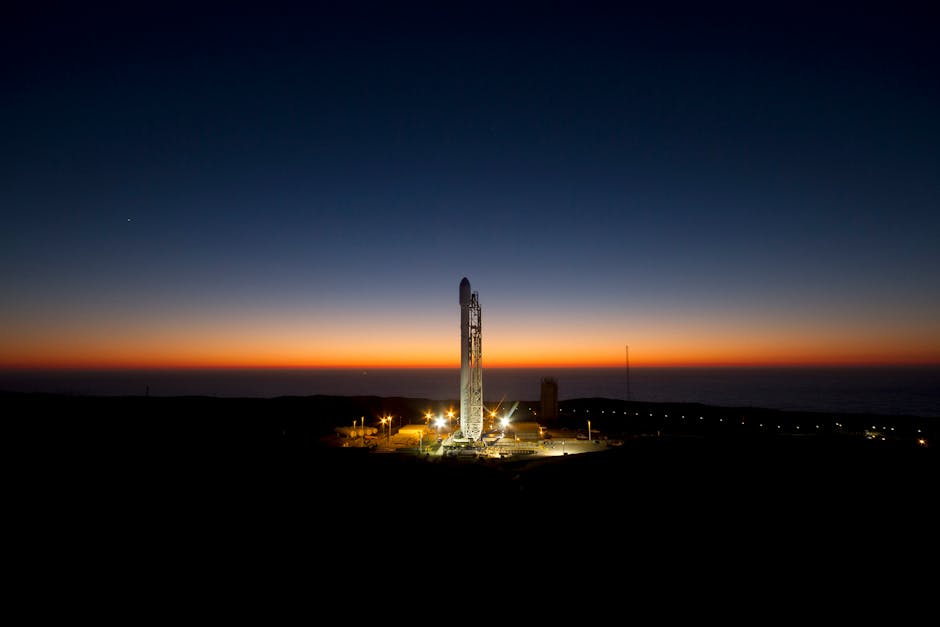
- SpaceX achieved its most successful Starship test flight, completing a near-full mission profile with the Super Heavy booster and Starship spacecraft.
- The 12th flight test saw controlled descent of the Super Heavy booster and the first successful reentry of the Starship upper stage.
- The Starship vehicle lifted off from Starbase in Boca Chica, Texas, powered by 33 Raptor engines on the Super Heavy booster.
- The spacecraft maintained stable attitude control during atmospheric reentry at hypersonic speeds with thermal protection tiles largely intact.
- The flight marked the longest and most complete flight in the Starship program’s history, lasting about 66 minutes.
SpaceX has achieved its most successful Starship test flight to date, with the fully integrated Super Heavy booster and Starship spacecraft completing a near-full mission profile on Friday evening. The 12th flight test saw both stages perform critical maneuvers previously unattained, including controlled descent of the Super Heavy booster and the first successful reentry of the Starship upper stage. While full recovery was not achieved, telemetry confirmed sustained vehicle integrity through peak heating, a pivotal hurdle for future crewed and lunar missions.
Flight Data Confirms Breakthrough Performance

The Starship vehicle lifted off at 6:25 p.m. CT from Starbase in Boca Chica, Texas, powered by 33 Raptor engines on the Super Heavy booster, generating over 17 million pounds of thrust at liftoff. After stage separation via hot-staging—a technique refined over prior flights—the booster executed a controlled descent burn and reached a simulated landing point over the Gulf of Mexico. The Starship upper stage, meanwhile, burned for over six minutes, reaching near-orbital velocities. Crucially, the spacecraft maintained stable attitude control during atmospheric reentry at hypersonic speeds, with thermal protection tiles largely intact as it descended toward the Indian Ocean. It transmitted data until splashdown about 66 minutes after launch, marking the longest and most complete flight in the program’s history.
Key Players Advance Rapid Development Agenda

SpaceX, led by CEO Elon Musk, continues to apply its iterative, test-driven approach to rocket development, prioritizing rapid prototyping over traditional aerospace timelines. Engineers at Starbase have implemented over 1,000 design changes since the first integrated flight test in April 2023, including upgrades to the heat shield, avionics, and engine ignition systems. The Federal Aviation Administration (FAA) granted a launch license after environmental and safety reviews, while NASA maintains a vested interest through its Artemis program, which relies on Starship as the Human Landing System for future lunar surface missions. Musk highlighted post-flight that “we’re finally through the reentry hurdle,” a long-standing technical barrier that had doomed earlier vehicles.
Technical Gains Come With Regulatory and Environmental Trade-offs

The success of Flight 12 brings significant technical momentum but also intensifies scrutiny over environmental and regulatory challenges. While reentry survival validates Starship’s heat shield design—critical for returning from the Moon or Mars—each test still carries risks of debris, acoustic damage, and ecological disruption in sensitive coastal habitats. The FAA requires SpaceX to mitigate wildlife impacts at Starbase, particularly for endangered species like the ocelot, and future launch cadence may depend on compliance with ongoing environmental assessments. Moreover, full reusability—central to Musk’s vision of lowering launch costs to $10 per kilogram—remains unproven, as neither stage was recovered. However, the data gathered vastly improves reliability models and accelerates certification for orbital refueling and deep space operations.
Why Now: A Convergence of Engineering and Strategic Timing

This flight follows a pivotal shift in both technical capability and strategic urgency. After three failed attempts in 2023, SpaceX introduced over 500 hardware improvements, including enhanced grid fins, more durable TPS tiles, and upgraded engine chill procedures. Concurrently, NASA’s Artemis III mission, slated for 2026, depends on Starship completing multiple uncrewed lunar landings and in-orbit refueling demonstrations. Delays could push human lunar return to the late 2020s. The successful reentry also positions Starship ahead of competitors in the heavy-lift race, reinforcing U.S. leadership in space infrastructure amid growing international competition from China’s Long March 10 and Europe’s developing ArianeNext programs.
Where We Go From Here
Over the next six to twelve months, three scenarios are likely: First, SpaceX could conduct two to three additional test flights, aiming for booster and ship recovery by mid-2025. Second, if regulatory approvals accelerate, orbital refueling demonstrations could begin by late 2025, a prerequisite for lunar missions. Third, a setback during reentry or recovery could delay NASA’s Artemis timeline, forcing a reassessment of landing architecture. Each path hinges on data from Flight 12, which demonstrated that thermal management and flight control during reentry—long considered the greatest technical risks—are now within reach of routine execution.
Bottom line — this flight marks the turning point where Starship transitions from experimental prototype to credible orbital system, bringing Mars ambitions and lunar exploration significantly closer to reality.
Source: The New York Times