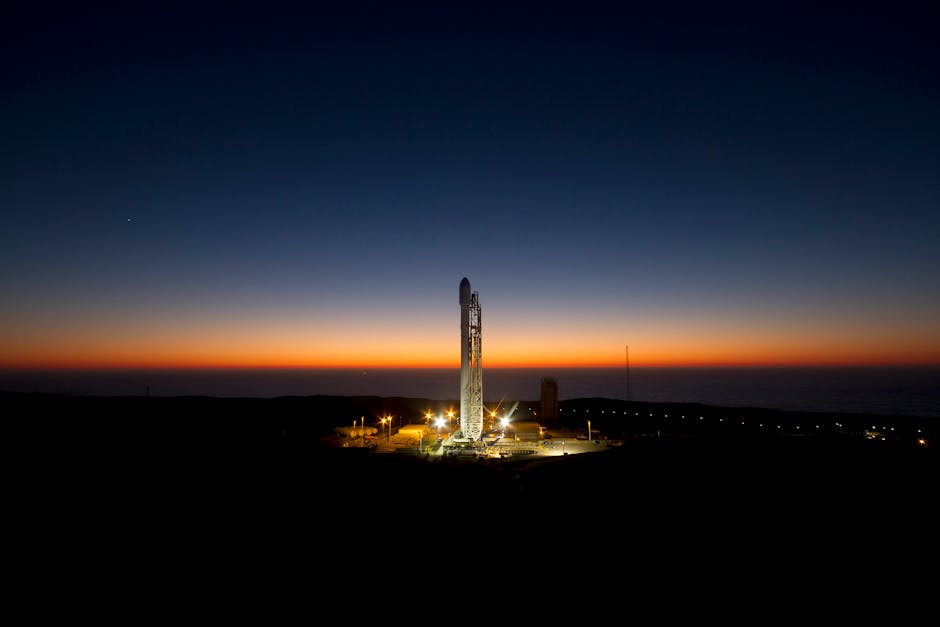
- SpaceX’s second test flight of its upgraded Starship rocket was scrubbed due to a last-minute anomaly in the upper stage’s propellant pressurization system.
- The launch was aborted with less than two minutes remaining, with SpaceX aiming to attempt another liftoff as soon as Friday pending technical reviews and weather.
- The new Starship configuration includes numerous hardware upgrades and refined ground infrastructure aimed at improving reliability and safety.
- The technical issue during the countdown was isolated to the upper stage’s autogenous pressurization system, which uses heated propellant vapors.
- This test marked the first attempt since a failed debut in April 2023, with the company remaining on track to reach orbit.
SpaceX has postponed the highly anticipated second test flight of its upgraded Starship rocket after a last-minute anomaly during the countdown. The launch, scheduled for Thursday from Starbase in Boca Chica, Texas, was aborted with less than two minutes remaining due to a failure in the upper stage’s propellant pressurization system. The company, led by Elon Musk, remains on track to attempt another liftoff as soon as Friday, pending technical reviews and favorable weather. This test marked the first attempt since a failed debut in April 2023, during which the original Starship prototype exploded mid-flight. The new configuration includes numerous hardware upgrades, enhanced flight termination systems, and refined ground infrastructure aimed at improving reliability and safety.
Technical Anomalies and Flight Readiness Data

During Thursday’s countdown, telemetry data revealed a failure to achieve stable helium pressurization in the Starship’s upper stage, specifically affecting the Super Heavy booster’s ability to maintain proper tank pressure ahead of ignition. According to SpaceX’s live webcast, the automated launch sequencer triggered a hold at T-minus 90 seconds when pressures fell outside acceptable thresholds. Engineers confirmed the issue was isolated to the upper stage’s autogenous pressurization system, which uses heated propellant vapors rather than separate inert gas systems. The company has not disclosed whether a manual override was attempted. Prior to the scrub, SpaceX reported 95% of pre-launch checkouts completed successfully, including full cryogenic loading of liquid methane and oxygen. The Federal Aviation Administration (FAA) had granted a modified launch license earlier in the week following a rigorous safety review, allowing for a faster re-flight cadence under specific conditions. NASA, which plans to use a future version of Starship for lunar landings under the Artemis program, has been closely monitoring progress.
Key Players in the Starship Program

SpaceX leads the development of Starship, with Elon Musk overseeing the program’s aggressive timeline despite regulatory and technical challenges. The company’s engineering team at Starbase has conducted over 200 static fire tests on Raptor engines and upgraded 33 booster engines to version 3, which offer higher thrust and improved durability. The U.S. Federal Aviation Administration regulates orbital launches and required SpaceX to implement 63 corrective actions after the April 2023 failure, including better flame trench protection and faster flight termination response. Reuters reported that SpaceX has invested heavily in infrastructure, building a mobile launch tower and enhanced deluge system to withstand the rocket’s extreme thermal and acoustic output. NASA remains a critical stakeholder, having committed $4.2 billion to develop a human-rated lunar lander variant. Meanwhile, competitors like Blue Origin continue development of their own heavy-lift vehicles, though none match Starship’s planned payload capacity of over 100 metric tons to low Earth orbit.
Trade-Offs Between Speed, Safety, and Innovation

SpaceX’s rapid development model prioritizes iterative testing over traditional aerospace caution, accepting higher short-term risk for faster long-term gains. This approach enabled the company to rebuild and upgrade Starship in just seven months, but it also increases the likelihood of launch scrubs and in-flight failures. The trade-off lies in balancing public safety, regulatory compliance, and environmental concerns against the urgency of advancing deep-space capabilities. While the upgraded vehicle includes better fire suppression and debris mitigation, the Boca Chica site remains near ecologically sensitive wetlands, drawing scrutiny from environmental groups. On the other hand, success would dramatically reduce launch costs and enable ambitious missions to the Moon and Mars. Moreover, private investment and government partnerships—particularly with NASA—rely on demonstrable progress, making each test flight a pivotal moment for funding and public confidence.
Timing: Why This Launch Window Matters

This launch attempt comes at a critical juncture for SpaceX, as it seeks to validate design changes before advancing to orbital refueling tests—a capability essential for NASA’s Artemis III mission. The seven-month gap between flights reflects both the intensity of redesign efforts and regulatory delays. Recent improvements in engine reliability and ground systems have increased confidence, but the pressurization issue underscores lingering complexities in managing cryogenic fluids at scale. Additionally, SpaceX aims to conduct multiple Starship launches in 2024 to support Starlink satellite deployment and potential military applications under the U.S. Space Force’s Rocket Cargo program. With FAA approval now in place for up to five launches this year, the window for rapid iteration is open—but dependent on resolving technical bottlenecks quickly.
Where We Go From Here
In the next six to twelve months, Starship’s trajectory could unfold in one of three ways: First, if Friday’s launch succeeds and achieves stage separation, SpaceX may proceed with an orbital test involving controlled re-entry, potentially reaching splashdown near Hawaii. Second, repeated scrubs or another in-flight failure could trigger a new round of FAA investigations, delaying the program by months. Third, partial success—such as achieving orbit but losing the vehicle during re-entry—could still satisfy key milestones and accelerate development of the lunar lander variant. Each scenario hinges on resolving propulsion and pressurization challenges while maintaining regulatory goodwill. NASA’s timeline for crewed lunar landings, currently set for 2026, depends heavily on consistent progress in this test campaign.
Bottom line — despite Thursday’s scrub, SpaceX remains closer than ever to proving Starship’s viability as the most powerful launch vehicle ever built, with implications for space exploration, commercial launch dominance, and interplanetary ambitions.
Source: The New York Times