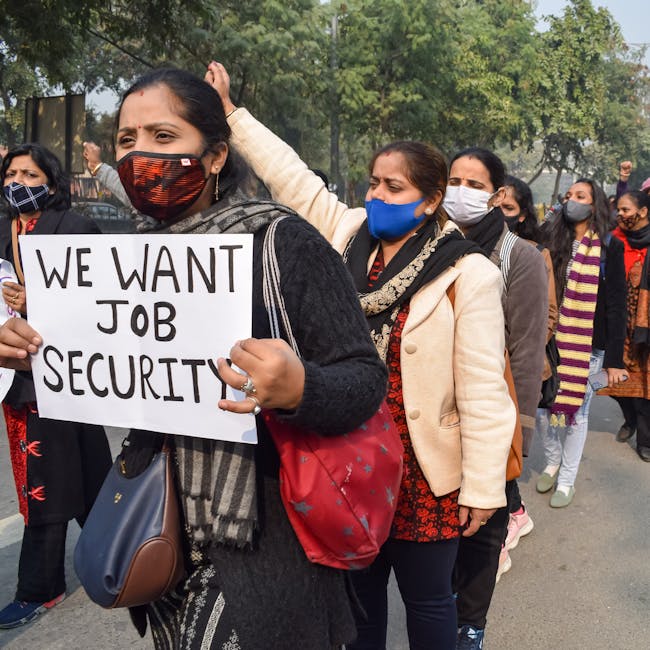
- India’s youth unemployment rate has hit a record high of 45.1% among those aged 15 to 29, according to the Centre for Monitoring Indian Economy.
- The country’s robust GDP growth has failed to generate enough formal sector jobs to absorb the 10-12 million young people entering the workforce each year.
- The ‘cockroach’ movement has emerged as a darkly humorous symbol of resilience amid joblessness among India’s youth.
- Young Indians are adopting the cockroach as a metaphor for their invisibility, resilience, and stigmatization despite their ability to endure hardship.
- The unemployment crisis is creating a ‘ticking time bomb’ for social stability in India, according to economists.
India’s youth unemployment rate has surged to a staggering 45.1% among those aged 15 to 29, according to the Centre for Monitoring Indian Economy (CMIE), marking a record high in over a decade. This crisis has ignited a wave of digital dissent, with young Indians adopting the cockroach—a creature known for survival in harsh conditions—as a darkly humorous symbol of resilience amid joblessness. The viral ‘cockroach protest’ reflects not just economic distress but a profound generational disillusionment, as millions of educated youth find themselves trapped in underemployment or outright joblessness. Despite robust GDP growth averaging 6-7% annually, the economy has failed to generate enough formal sector jobs to absorb the 10-12 million young people entering the workforce each year, creating what economists describe as a ‘ticking time bomb’ for social stability.
The Rise of the ‘Cockroach’ Movement

The cockroach, long associated with resilience and survival in the face of extermination, has become an ironic mascot for India’s frustrated youth. Originating on social media platforms like X (formerly Twitter) and Instagram, the movement features memes, digital art, and self-deprecating slogans such as ‘I’m not unemployed, I’m a cockroach—surviving against all odds.’ The metaphor resonates deeply: much like the insect, young Indians feel invisible, resilient, and unfairly stigmatized despite their ability to endure hardship. The movement gained momentum after a viral post by a Bengaluru-based engineering graduate who described waiting two years for a job while surviving on gig work and family support. This digital act of protest has transcended humor, evolving into a broader commentary on systemic economic exclusion and the widening gap between policy promises and ground reality.
Roots of the Jobs Crisis

India’s employment crisis is rooted in structural imbalances between education, industry demand, and economic policy. While the country produces over 1.5 million engineering graduates annually, many lack the skills required by a rapidly digitizing economy. Simultaneously, formal job creation has stagnated, with the private sector dominated by small and medium enterprises that offer limited career progression. Public sector hiring, once a key employer, has slowed due to fiscal constraints and automation. The gig economy, while growing, often provides precarious work without benefits or stability. Moreover, regional disparities exacerbate the issue—urban centers like Mumbai and Delhi offer more opportunities, while rural youth face severe underemployment. Despite government initiatives like ‘Make in India’ and ‘Skill India,’ outcomes have fallen short, with only a fraction of trainees securing jobs. The mismatch between labor supply and market demand has left millions of young people caught in a cycle of internships, freelance gigs, and unpaid family labor.
Economic and Social Consequences

The long-term implications of youth unemployment extend far beyond individual hardship. Economists warn that prolonged joblessness among young people can lead to ‘scarring effects’—reduced lifetime earnings, diminished career trajectories, and lower consumer spending, which in turn dampens economic growth. A 2023 Reuters report highlighted that nearly 30% of Indian youth are classified as NEET—Not in Education, Employment, or Training—a demographic increasingly vulnerable to mental health issues and social alienation. Furthermore, the frustration evident in the cockroach movement could fuel political unrest, particularly as elections approach. Historically, youth-led movements have driven change, and the current wave of digital dissent may signal a broader demand for accountability. With India projected to have the world’s largest working-age population by 2030, failing to address this crisis risks undermining the nation’s demographic dividend.
Government Response and Policy Gaps

The Indian government has acknowledged the employment challenge but faces criticism for relying on short-term fixes rather than systemic reform. Programs like the Prime Minister’s Employment Generation Programme (PMEGP) and the recent introduction of Agniveer—a short-term military recruitment scheme—have been met with mixed reactions. While Agniveer aims to create 46,000 jobs annually, critics argue it offers temporary roles without long-term security. Meanwhile, labor reforms passed in 2020, intended to boost manufacturing, have yet to translate into significant job growth. Data from the Periodic Labour Force Survey (PLFS) shows that only 7% of India’s workforce is employed in formal, salaried jobs with social protections. Without stronger investments in education, vocational training, and labor-intensive industries like manufacturing and green energy, experts say job creation will remain insufficient. The BBC has reported that many young Indians are now emigrating for work, signaling a potential brain drain.
Expert Perspectives
Economists are divided on solutions. While some, like Dr. Pronab Sen, former Chief Statistician of India, emphasize the need for better data transparency and demand-driven skill development, others like Jayati Ghosh, professor of economics at SOAS, argue for greater public investment and job guarantees. Ghosh contends that ‘trickle-down job creation has failed’ and calls for a national employment policy. Meanwhile, tech entrepreneurs suggest that digital entrepreneurship and startup incubators could offer pathways, though access remains uneven. The cockroach movement, they note, is not just a cry for jobs but a demand for dignity and recognition in an economy that often overlooks its youngest participants.
Looking ahead, the trajectory of India’s youth employment will depend on policy courage and institutional reform. Can the government pivot from symbolic gestures to scalable job creation? Will the private sector step up to absorb skilled talent? And can education systems adapt to future labor markets? The cockroach, as a symbol, may be temporary, but the crisis it represents is enduring. The world will be watching how India navigates this defining challenge of its 21st-century economy.
Source: Financial Times