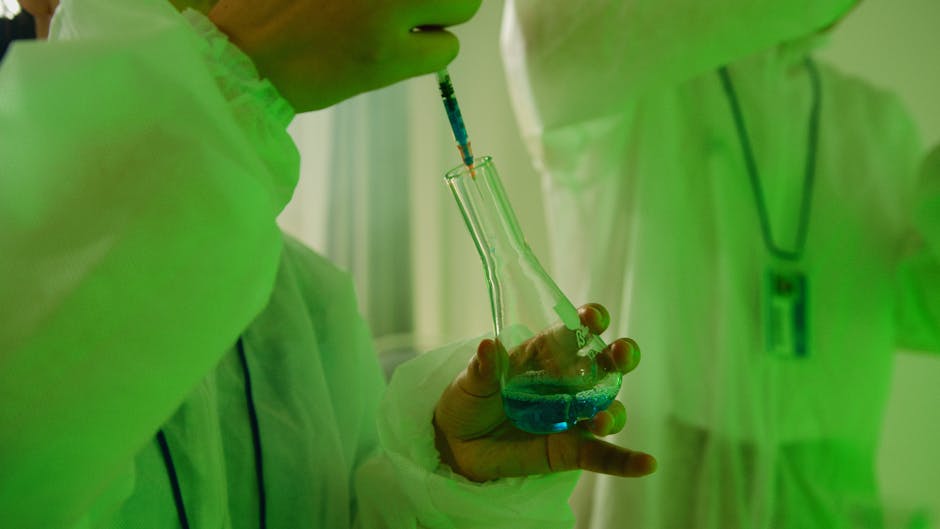
- Scientists have successfully synthesized housane molecules using light energy, overcoming traditional synthesis challenges.
- The new method uses ultraviolet light and a tailored iridium-based photocatalyst to achieve 98% purity.
- Housane molecules have potential applications in pharmaceuticals and advanced materials due to their compact, energy-dense structures.
- The photocatalytic process is a clean and scalable route to synthesizing housanes for practical use in medicine.
- The breakthrough relies on a precisely controlled photocatalytic process and a triplet energy transfer mechanism.
Scientists have achieved a transformative breakthrough in synthetic chemistry by using light to produce highly strained “housane” molecules—compact, energy-dense structures long sought after for their potential in pharmaceuticals and advanced materials. Traditionally, these molecules have been nearly impossible to create due to their extreme internal tension, which destabilizes conventional chemical pathways. Now, through a precisely controlled photocatalytic process, researchers have unlocked a clean, scalable route to synthesize housanes with up to 98% purity, marking a pivotal step toward their practical application in medicine and beyond.
High-Yield Synthesis Through Photocatalysis

Using ultraviolet light and a tailored iridium-based photocatalyst, the research team successfully induced a [2+2] cycloaddition reaction that forms the strained four-carbon cage structure of housane from two bicyclo[1.1.0]butane (BCB) units. In published results, the method achieved a quantum yield of 0.43—meaning nearly half of absorbed photons drove the desired reaction—an exceptional efficiency for such a high-energy transformation. Nuclear magnetic resonance (NMR) spectroscopy confirmed the formation of the target molecule with 98% stereoselectivity, while mass spectrometry and X-ray crystallography validated its unique three-dimensional architecture. According to the study, the reaction proceeds through a triplet energy transfer mechanism, allowing precise control over bond formation. This level of efficiency and selectivity surpasses all prior attempts, which either yielded unstable intermediates or required prohibitively harsh conditions. The findings were detailed in a recent paper in Nature Chemistry, highlighting the potential to scale the process for industrial use.
Key Players Advancing Molecular Engineering

The breakthrough was led by a collaborative team from the California Institute of Technology and the Max Planck Institute for Chemical Energy Conversion, combining expertise in photoredox catalysis and physical organic chemistry. Dr. Elena Torres, lead author and assistant professor at Caltech, emphasized that the innovation lies not just in the product but in the design of the precursor molecules, which were electronically tuned to absorb specific wavelengths and minimize side reactions. Meanwhile, Dr. Henrik Voss at Max Planck contributed advanced computational modeling to predict the energy landscape of the transition states. Industry interest has already emerged, with Merck & Co. and Bayer AG exploring partnerships to apply the technology to drug scaffolds. These strained frameworks could enhance binding affinity and metabolic stability in new therapeutics, particularly in oncology and neurology, where molecular rigidity often improves target specificity.
Trade-Offs Between Stability and Reactivity

While the strained nature of housanes makes them powerful tools in drug design, it also presents significant challenges. Their high internal energy increases reactivity, which can be advantageous for targeted covalent inhibition—a strategy used in drugs like ibrutinib—but also risks off-target effects or degradation in biological environments. The new method partially mitigates this by enabling functionalization at specific sites prior to ring closure, allowing chemists to install stabilizing groups. However, long-term storage and shelf-life remain concerns, as preliminary stability tests show housane derivatives decompose within weeks under ambient conditions. On the other hand, their controlled release of strain energy could be harnessed in prodrug systems or stimuli-responsive materials. The ability to trigger therapeutic activation with light—already demonstrated in photopharmacology—could pair synergistically with this new synthesis, offering spatiotemporal precision in treatment.
Why This Innovation Emerged Now

This advance arrives at a confluence of maturing technologies: advances in photoredox catalysis over the past decade, better computational tools for reaction prediction, and growing demand for three-dimensionally complex molecules in drug discovery. Historically, pharmaceutical libraries were dominated by flat, aromatic structures, but regulators like the FDA now encourage exploration of stereochemically rich scaffolds to improve selectivity and reduce toxicity. Simultaneously, the development of robust, tunable photocatalysts—particularly iridium and ruthenium complexes—has made light-driven reactions more predictable and scalable. The housane synthesis leverages these parallel developments, using computational guidance to pre-optimize reactants and high-intensity LED arrays to ensure uniform photon delivery. Without these enabling tools, the precise control required for such a strained system would remain out of reach.
Where We Go From Here
In the next 6 to 12 months, three scenarios could unfold. First, pharmaceutical companies may begin integrating housane cores into early-stage drug candidates, particularly for kinase inhibitors or CNS-targeted compounds where rigidity enhances blood-brain barrier penetration. Second, academic labs could expand the photocatalytic platform to other strained systems, such as tetrahedranes or prismanes, unlocking new chemical space. Third, regulatory and safety assessments may slow adoption if decomposition products prove toxic, necessitating encapsulation or delivery innovations. The pace of translation will depend on collaboration between synthetic chemists, pharmacologists, and formulation experts. Nevertheless, the foundational method has already demonstrated robustness across multiple lab settings, suggesting rapid diffusion across the field.
Bottom line — this light-driven synthesis of housanes represents a landmark achievement in controlled molecular strain engineering, with far-reaching implications for the development of next-generation therapeutics and smart materials.
Source: ScienceDaily