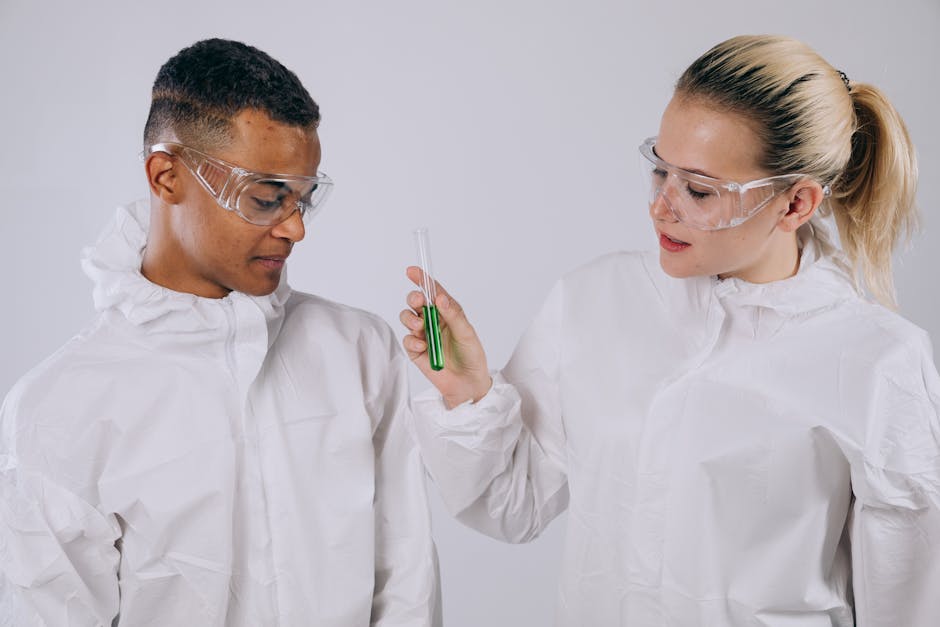
- A new electrolyte solution extended lithium-metal battery cycle life by over 400% compared to commercial standards.
- A new generation of chemists is redefining molecular design and reaction engineering to address 21st-century challenges.
- The work of Dr. Elena Riera, Dr. Kwame Osei, and Dr. Haruka Tanaka is pivotal in advancing clean energy, pharmaceutical development, and sustainable materials.
- Chemistry is poised to drive technological transformation across sectors, similar to the impact of physics in the mid-20th century.
- Next-generation batteries and pharmaceutical synthesis require innovative molecular designs to meet industry demands.
In a laboratory at Stanford University, a single drop of a new electrolyte solution has extended the cycle life of lithium-metal batteries by over 400% compared to commercial standards. This leap is just one of many emerging from a new generation of chemists redefining what’s possible in molecular design and reaction engineering. As global demand for clean energy, faster pharmaceutical development, and sustainable materials intensifies, the work of scientists like Dr. Elena Riera, Dr. Kwame Osei, and Dr. Haruka Tanaka is proving pivotal. Their innovations—spanning electrochemistry, catalysis, and synthetic methodology—are not only advancing fundamental understanding but also bridging the gap between lab-scale discovery and industrial application, marking a turning point in how chemistry addresses 21st-century challenges.
Why Chemistry Is at an Inflection Point

Chemistry today stands where physics was in the mid-20th century—poised to drive technological transformation across sectors. The urgency of climate change, the need for rapid drug discovery, and the limits of current materials have created unprecedented demand for molecular innovation. According to the International Energy Agency, next-generation batteries must achieve at least 500 watt-hours per kilogram to enable long-range electric aviation, a target current lithium-ion systems fall far short of. Meanwhile, the pharmaceutical industry loses an estimated $8 billion annually due to slow synthesis times. These pressures have catalyzed a shift toward precision chemistry—where reactions are not just faster and safer, but smarter. The work of emerging leaders in the field is now accelerating this transition, leveraging computational modeling, AI-guided experimentation, and novel catalysts to overcome longstanding barriers.
Profiles in Molecular Innovation

Dr. Elena Riera of Stanford University has pioneered a class of fluorinated ether-based electrolytes that stabilize lithium-metal anodes, preventing dendrite formation—a major cause of battery failure. Her design, published in Nature, enables batteries to sustain over 1,200 charge cycles with 92% capacity retention. Separately, Dr. Kwame Osei at the Max Planck Institute for Chemical Energy Conversion has developed a cobalt-nitrogen-carbon catalyst that accelerates hydrogenation reactions by a factor of ten, reducing energy input and eliminating the need for rare platinum-group metals. Meanwhile, Dr. Haruka Tanaka at Kyoto University has introduced a photoredox-coupled flow system that cuts synthesis time for complex organic molecules from days to minutes, a breakthrough with immediate implications for drug manufacturing. Together, their work exemplifies a shift toward functional, scalable chemistry with real-world impact.
Behind the Breakthroughs: Methods and Mechanisms

Riera’s electrolyte formulation exploits the electron-withdrawing properties of fluorine to create a more uniform solid-electrolyte interphase (SEI), crucial for anode stability. By fine-tuning solvent polarity and salt concentration, her team achieved ion transport efficiency previously only theorized. Osei’s catalyst, in contrast, relies on single-atom dispersion of cobalt within a nitrogen-doped carbon matrix, maximizing active sites while minimizing material use. His team used X-ray absorption spectroscopy at the DESY synchrotron to confirm the catalyst’s structure under operational conditions, a rare feat in catalysis research. Tanaka’s system integrates visible-light photocatalysis with microfluidic engineering, enabling precise control over reaction parameters. Using machine learning to optimize residence time and light intensity, her lab has automated the synthesis of several FDA-approved compounds, reducing waste by up to 70%. These approaches reflect a new paradigm: chemistry driven by interdisciplinary tools and data-rich experimentation.
Global Impact Across Industries

The implications of these advances extend far beyond the laboratory. Riera’s battery technology is being tested by Airbus for use in hybrid-electric regional aircraft, potentially accelerating the decarbonization of short-haul aviation. Osei’s catalyst is now licensed to BASF for use in sustainable fertilizer production, where it could reduce global CO₂ emissions by an estimated 18 million tons annually if adopted at scale. Tanaka’s rapid synthesis platform has attracted partnerships with Pfizer and Takeda, aiming to cut drug development timelines by up to 40%. In developing nations, her low-cost, modular reactors could enable decentralized pharmaceutical production, increasing access to essential medicines. These applications underscore how molecular-level innovations can ripple across supply chains, economies, and health systems, positioning chemistry as a central pillar of sustainable development.
Expert Perspectives
“We’re witnessing a renaissance in synthetic chemistry,” says Dr. Frances Arnold, Nobel laureate in Chemistry and professor at Caltech, who was not involved in the studies. “What used to take teams of chemists months can now be done in hours, with greater precision.” However, some experts urge caution. Dr. Jennifer Doudna, biochemist at UC Berkeley, warns that scaling such technologies requires rigorous safety and lifecycle assessments: “Innovations in catalysis and energy storage must not trade environmental gains in one area for losses in another, such as fluorinated compound persistence.” Still, the consensus is that these breakthroughs represent more than incremental progress—they signal a systemic shift in how chemistry is practiced and applied.
Looking ahead, the next frontier lies in integration. Can AI-designed catalysts work seamlessly with automated synthesis platforms? Can next-gen batteries incorporate self-healing electrolytes inspired by biological systems? The work of Riera, Osei, and Tanaka suggests that the future of chemistry is not just about discovering new molecules, but about reimagining the entire process of molecular engineering. As funding agencies like the U.S. National Science Foundation and the European Research Council prioritize convergent research, the line between chemistry, engineering, and data science will continue to blur—ushering in an era where molecular innovation is faster, greener, and more equitable than ever before.
Source: Nature