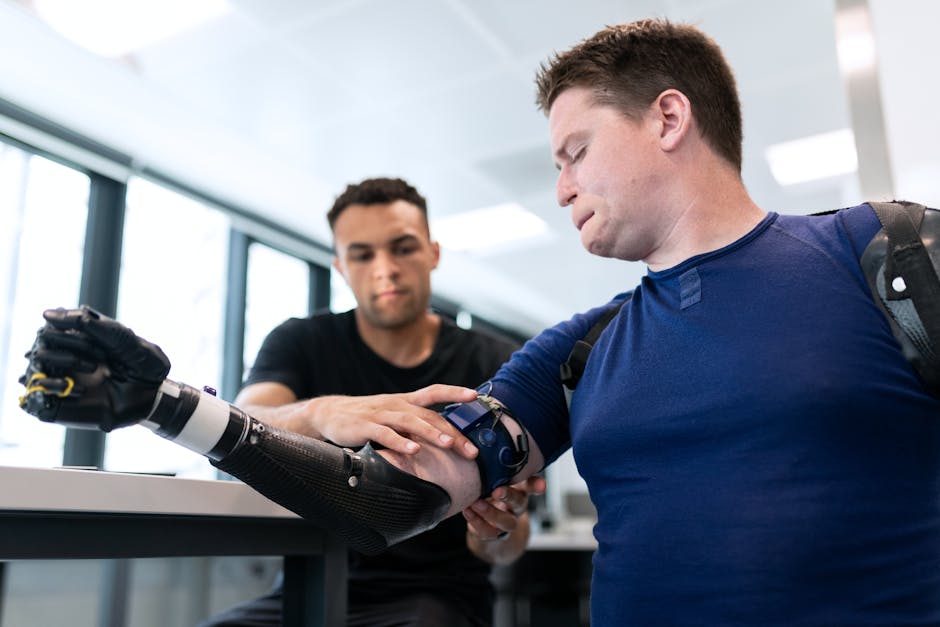
- A wearable robot, paired with gene therapy, accelerates muscle recovery in kids with spinal muscular atrophy.
- The robot, a soft, modular exosuit, adapts to a child’s developing frame and natural movement patterns.
- Gene therapies like Zolgensma offer hope for SMA recovery, but wearable robotics can enhance their effectiveness.
- Wearable robotics can significantly boost the effectiveness of gene therapy in children with spinal muscular atrophy.
- Early results show children with SMA achieving motor milestones months earlier than expected with the exosuit and Zolgensma.
Can a wearable robot change the trajectory of a child’s life when paired with cutting-edge medicine? For kids with spinal muscular atrophy (SMA), a rare and often devastating genetic disorder, that question now has a promising answer. SMA progressively weakens muscles, robbing children of basic motor functions like sitting, standing, or walking. While gene therapies like onasemnogene abeparvovec (Zolgensma) have offered hope, recovery remains incomplete and uneven. Now, researchers are asking: can robotics close the gap? A new study suggests that a lightweight, AI-assisted exoskeleton doesn’t just support movement—it actively accelerates muscle recovery in young patients receiving gene therapy.
Can Robotics Enhance Gene Therapy for SMA?

Yes—when precisely timed and individually calibrated, wearable robotics can significantly boost the effectiveness of gene therapy in children with spinal muscular atrophy. The device, developed by a team at the Sant’Anna School of Advanced Studies in Pisa and tested in a small clinical trial across Italy and Germany, is a soft, modular exosuit made of lightweight polymers and embedded sensors. Unlike rigid medical exoskeletons used in adult rehabilitation, this suit adapts to a child’s developing frame and natural movement patterns. When paired with Zolgensma, the FDA-approved gene therapy that delivers a functional copy of the SMN1 gene, the exosuit helped children achieve motor milestones months earlier than expected. According to the Nature study, children using the device in conjunction with physiotherapy showed 2.6 times greater improvement in motor function scores over six months compared to those receiving gene therapy alone.
What Evidence Supports the Exosuit’s Effectiveness?

The clinical trial followed 18 children aged 12 to 36 months, all diagnosed with SMA Type 1, the most severe form of the disease. After receiving gene therapy, half were assigned to a control group receiving standard physical therapy, while the other half used the robotic exosuit for 45 minutes daily during therapy sessions. By the six-month mark, 78% of children in the exosuit group could sit unassisted, compared to 33% in the control group. Two children even achieved independent standing—outcomes rarely seen at that stage without invasive support. Dr. Elena Martini, lead researcher on the project, explained: “The exosuit doesn’t replace muscle—it activates it. By providing just enough assistance to complete movements, it creates a feedback loop that stimulates neuromuscular plasticity.” The suit’s embedded AI adjusts support in real time, reducing assistance as strength improves, effectively turning therapy into a dynamic, responsive process. These findings align with broader research on activity-dependent neuroplasticity, underscoring the importance of early, intensive motor engagement after genetic intervention.
Are There Skeptics or Limitations to the Approach?

Despite the optimism, some experts urge caution, noting the study’s small size, lack of long-term data, and high cost of both gene therapy and the robotic system. Dr. Rajiv Ratan, a neurologist at Weill Cornell Medicine not involved in the study, told ScienceDaily that “while the results are exciting, we need larger, multicenter trials to confirm efficacy and assess whether benefits persist into later childhood.” Additionally, access remains a major concern—Zolgensma alone costs over $2 million per dose, and the exosuit is not yet commercially available. There are also questions about scalability: can such personalized, high-tech rehabilitation be delivered equitably? Some families may lack the infrastructure or trained therapists to use the device effectively. Furthermore, the suit currently supports only lower-limb movement, leaving upper-body weakness unaddressed—a significant limitation for daily function.
What Real-World Impact Could This Have?

For families living with SMA, this technology could redefine what’s possible. Consider the case of four-year-old Leo from Munich, who, after treatment, went from being unable to lift his head to walking with minimal support in under a year. His mother described it as “a second chance at childhood.” Beyond individual stories, the implications extend to healthcare systems: earlier mobility reduces reliance on ventilators, feeding tubes, and spinal surgeries, potentially lowering lifetime care costs. If integrated into early intervention programs, the exosuit could become part of a new treatment paradigm—gene therapy plus robotic rehabilitation. Researchers are already developing versions for home use and exploring applications in other neuromuscular conditions like Duchenne muscular dystrophy and cerebral palsy. The goal is not just functional improvement but neurodevelopmental normalization, helping children build motor skills during critical windows of brain development.
What This Means For You
For parents, caregivers, and clinicians, this innovation signals a shift toward synergistic therapies—where biology and engineering work together to amplify outcomes. It suggests that medical breakthroughs don’t end with a drug infusion; recovery is an active process that can be enhanced with smart technology. While widespread access is still years away, the study offers a roadmap for combining precision medicine with assistive robotics. It also highlights the importance of early diagnosis and rapid intervention, especially as newborn screening for SMA becomes standard in more countries.
Still, unanswered questions remain: How long do the benefits last? Can the exosuit help older children or those with advanced disease? And perhaps most critically, how can this technology be made affordable and accessible globally? As science pushes the boundaries of what’s possible, equity must remain central to the conversation.
Source: Nature