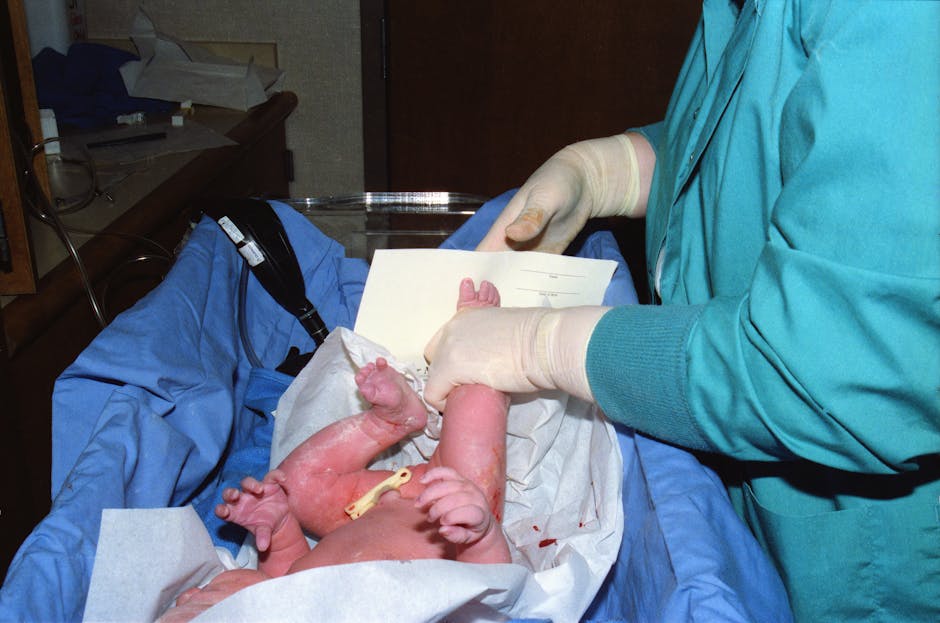
- Healthy newborns are dying after birth due to vitamin K deficiency bleeding, a condition that can be prevented with a simple shot.
- Vitamin K is crucial for producing clotting factors, which stop bleeding, and newborns are born with low levels due to poor placental transfer and low breast milk amounts.
- Vitamin K deficiency bleeding can cause sudden, severe internal bleeding, often in the brain, and can appear in three phases: early, classic, or late.
- Late-stage vitamin K deficiency bleeding is particularly deadly, with up to 20% mortality rates, and survivors often suffer permanent neurological damage.
- The American Academy of Pediatrics recommends a single intramuscular vitamin K shot for all newborns to prevent vitamin K deficiency bleeding.
Why are otherwise healthy newborns suddenly bleeding into their brains days after birth? The answer, increasingly, lies in a simple medical decision made in the delivery room: whether or not to administer the vitamin K shot. Once a near-universal practice, parental refusal of this injection has risen alongside misinformation about its safety. As a result, pediatricians are seeing a troubling comeback of vitamin K deficiency bleeding (VKDB), a rare but fatal condition that strikes infants with no warning. These aren’t just statistics—they are babies who cried once and never woke up, their lives cut short by a deficiency that a single shot could have prevented.
What Happens When Newborns Miss the Vitamin K Shot?

The human body needs vitamin K to produce clotting factors, essential proteins that stop bleeding. Newborns are born with extremely low levels of vitamin K because it doesn’t cross the placenta well and breast milk contains only trace amounts. Without supplementation, some infants develop VKDB, which can cause sudden, severe internal bleeding, often in the brain. The condition typically appears in one of three phases: early (within 24 hours), classic (days 2–7), or late (weeks 2–12). Late VKDB is especially dangerous, with mortality rates up to 20% and half of survivors suffering permanent neurological damage. The American Academy of Pediatrics has recommended a single intramuscular vitamin K shot for all newborns since 1961, reducing VKDB incidence dramatically—until recent hesitancy began reversing that progress.
What Does the Data Say About Vitamin K Refusals?

Recent studies confirm a direct link between declining vitamin K shot uptake and rising VKDB cases. A 2013 outbreak in Tennessee identified three infants with late VKDB; all had parents who declined the vitamin K injection. Research published in the CDC’s Morbidity and Mortality Weekly Report showed that before the routine shot, VKDB affected 0.25 to 1.7 per 10,000 births. After universal administration began, that number dropped nearly tenfold. But in areas with high refusal rates, such as parts of Oregon and Washington, VKDB has re-emerged. A 2022 study in the journal Pediatrics found that 85% of late VKDB cases occurred in infants whose parents refused the shot. Experts stress that oral vitamin K, while available in some countries, is less effective due to inconsistent absorption and dosing gaps.
Why Do Some Parents Refuse the Vitamin K Shot?

Despite overwhelming medical consensus, some parents remain skeptical. Concerns often stem from outdated studies linking vitamin K injections to childhood leukemia, a connection thoroughly debunked by subsequent research. The original 1992 UK study suggesting a correlation was found to have methodological flaws, and multiple large-scale reviews, including one by the World Health Organization, have found no credible evidence of cancer risk. Other objections include distrust of medical institutions, preference for “natural” birth practices, or misinformation spread in online parenting forums. Some parents opt for oral dosing, unaware it requires multiple doses and still carries higher failure rates. While respecting parental autonomy is important, pediatricians warn that the decision not to administer vitamin K shifts the risk onto the infant, who cannot consent and bears the full consequences.
What Are the Real-World Consequences of Refusal?

The consequences are not theoretical. In 2019, a previously healthy 6-week-old in Texas was rushed to the hospital with seizures and was found to have massive brain hemorrhaging from VKDB. The parents had declined the vitamin K shot at birth. Despite emergency care, the infant died. Similar cases have been reported in the U.S., Germany, and the Netherlands, where public health officials have launched campaigns to counter misinformation. In the Netherlands, where oral vitamin K is standard, a 2018 study still found breakthrough cases, underscoring the need for reliable delivery methods. Hospitals are now tracking refusal rates more closely, and some are requiring detailed consent discussions to ensure parents understand the risks. These are not rare anomalies—they are preventable tragedies reoccurring in plain sight.
What This Means For You
If you’re expecting a child or advising new parents, understanding the importance of the vitamin K shot is vital. It is safe, effective, and has prevented countless infant deaths over the past six decades. While it’s natural to question medical interventions, especially for newborns, the evidence overwhelmingly supports this one. The risks of not giving it far outweigh any theoretical concerns. Choosing to decline the shot introduces a preventable danger to an infant who cannot speak for themselves. This isn’t about fearmongering—it’s about protecting the most vulnerable.
As medical advances continue, why are we seeing a resurgence of preventable diseases not seen in decades? And how can public health systems better communicate life-saving interventions in an era of rampant misinformation?
Source: Propublica