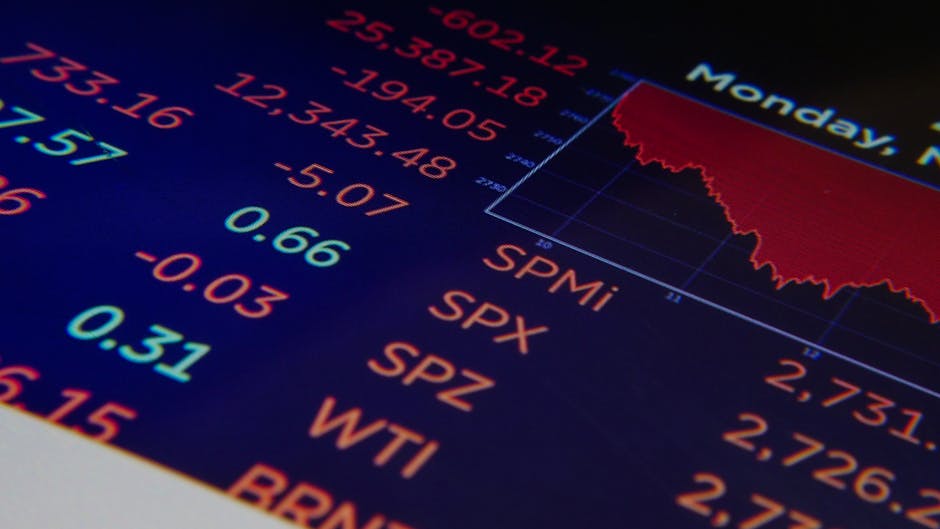
- The S&P 500 achieved 7 consecutive weekly gains, advancing over 9% since early April, defying inflation and interest rate hike warnings.
- Investors are focusing on resilient corporate earnings and slowing but still-positive economic growth despite higher inflation.
- The current rally suggests investors are pricing in a ‘soft landing’ scenario, where inflation cools without triggering a severe economic downturn.
- Recent data showed first-quarter GDP growth at 1.6%, below 2023’s pace but still positive, while labor markets remain robust.
- The divergence between financial markets and economic fundamentals has sparked debate among economists and strategists about improved sentiment or a disconnect from reality.
The S&P 500 has achieved a rare feat in modern market history: seven consecutive weekly gains, advancing more than 9% since early April, even as U.S. inflation data shows persistent price pressures and the Federal Reserve signals further interest rate hikes. This rally defies traditional economic logic, where higher borrowing costs and inflation typically erode equity valuations. While the consumer price index rose 3.5% year-over-year in April—well above the Fed’s 2% target—investors have shrugged off macroeconomic headwinds, focusing instead on resilient corporate earnings and slowing but still-positive economic growth. This divergence between financial markets and economic fundamentals has sparked debate among economists and strategists about whether the rally reflects improved sentiment or a dangerous disconnect from reality.
Why Markets Are Defying Economic Gravity

Typically, rising inflation and tighter monetary policy act as a drag on stock markets by increasing borrowing costs, reducing corporate profit margins, and lowering the present value of future earnings. Yet, the current rally suggests that investors are pricing in a so-called ‘soft landing’—a scenario where inflation cools without triggering a severe economic downturn. Recent data from the Bureau of Economic Analysis showed first-quarter GDP growth at 1.6%, below 2023’s pace but still positive, while labor markets remain robust with unemployment near 3.9%. According to JPMorgan Asset Management, over 80% of S&P 500 companies beat earnings expectations in the first quarter, with tech and financial sectors leading the charge. This earnings resilience has helped sustain investor confidence, even as the Federal Reserve holds its benchmark rate at a 23-year high of 5.25%-5.50%.
Corporate Earnings Fuel Market Momentum

The backbone of the current rally lies in corporate performance. Despite elevated interest rates, many large-cap firms have managed to maintain profit margins through cost optimization, pricing power, and strong demand for AI-related technologies. Microsoft, Alphabet, and Meta all reported double-digit revenue growth in Q1, driven by cloud computing and digital advertising. These tech giants now account for nearly 30% of the S&P 500’s total market capitalization, giving their performance outsized influence on the index. Meanwhile, banks such as JPMorgan Chase and Bank of America benefited from higher interest margins, boosting net interest income. According to FactSet, aggregate earnings for the index rose 4.7% year-over-year, marking the first positive growth cycle after five consecutive quarters of declines. This rebound has provided a fundamental justification for the rally, at least in the eyes of many institutional investors.
Cracks Beneath the Surface?

Beneath the headline strength, warning signs persist. While large-cap tech stocks have led gains, nearly half of the S&P 500 constituents are still trading below their 200-day moving averages, indicating a narrow market breadth. Historically, such concentration increases vulnerability to volatility if momentum shifts. Inflation remains stubborn in key sectors: shelter costs account for over 40% of the CPI increase, and services inflation has proven stickier than anticipated. The Fed has made clear that it will not cut rates prematurely, with Chair Jerome Powell recently stating, “We are prepared to maintain our current policy stance for as long as necessary.” Financial conditions have tightened, with mortgage rates hovering near 7% and corporate bond spreads widening slightly. These factors could eventually weigh on consumer spending and capital investment, undermining the very earnings growth now supporting the rally.
Who Stands to Gain or Lose?

If the rally holds, large institutional investors and retail participants with exposure to U.S. equities will benefit, particularly those invested in low-cost index funds. However, savers and fixed-income investors continue to lose ground to inflation, as real yields on 10-year Treasuries remain below 1%. Wage growth, while still positive at 3.9% year-over-year, has not kept pace with inflation for middle- and lower-income households, squeezing disposable income. Meanwhile, highly leveraged companies and commercial real estate firms face mounting pressure from higher borrowing costs. The housing market, already constrained by affordability, could see further slowdowns. International investors are also reassessing U.S. equity exposure; some European fund managers have begun rotating into European and Japanese equities, where valuations appear more attractive and monetary policy is less restrictive.
Expert Perspectives
Market analysts are divided on the rally’s sustainability. David Kelly, chief global strategist at JPMorgan Asset Management, believes the economy remains on a soft landing path, citing strong labor data and manageable inflation trends. “Markets are not irrational—they’re looking six to twelve months ahead,” he told Reuters. Conversely, Mohamed El-Erian, chief economic advisor at Allianz, warns of complacency, arguing that “equities are pricing in perfection, but the Fed is still behind the curve on inflation.” He points to the risk of a delayed policy impact, as tighter financial conditions take time to affect the real economy. Such divergent views reflect broader uncertainty about whether current market levels are justified or represent a bubble building on momentum rather than fundamentals.
Looking ahead, investors should watch key data points: the May CPI report due June 12, upcoming Fed minutes, and second-quarter earnings forecasts. If inflation resumes an upward trajectory, the Fed may consider a rate hike as early as July, potentially derailing the rally. Conversely, clearer signs of disinflation could pave the way for rate cuts by year-end, boosting risk assets. The narrow leadership of the rally also raises the question of whether broader market participation will emerge. For now, the S&P 500’s ascent continues—but the path forward grows increasingly uncertain as the tug-of-war between earnings strength and macroeconomic risk intensifies.
Source: The New York Times