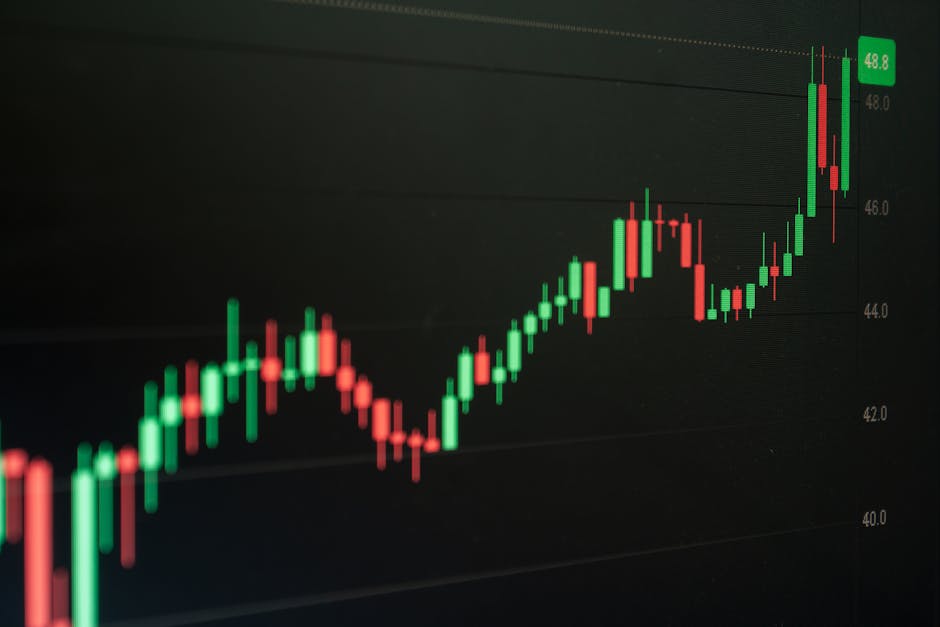
- Oil prices surged nearly 7% after President Trump’s warning to Iran, driven by fears of military conflict in a critical oil-producing region.
- Inflation fears have been reignited, with a potential supply-driven price spike threatening to disrupt global financial systems.
- The Strait of Hormuz, through which 20% of the world’s oil passes, is a key location in the escalating tensions between the US and Iran.
- A previous attack on oil tankers near the Strait of Hormuz caused a 4% single-day spike in crude prices in 2019.
- Global markets are grappling with the uncertainty of a potential military conflict, leading to a classic flight to safety in financial systems.
What happens to global markets when a single geopolitical threat threatens energy supplies and inflation targets? That’s the question investors are grappling with after President Donald Trump issued a stark warning to Iran, reigniting fears of military conflict in one of the world’s most critical oil-producing regions. The immediate aftermath saw oil prices surge, bond yields tumble, and stock markets waver — a classic flight to safety disrupted by uncertainty. With inflation already a fragile concern for central banks, the prospect of a supply-driven price spike has sent shockwaves through financial systems. How significant could this escalation become, and what does it mean for everyday consumers and investors?
Why Are Oil Prices Spiking Amid Iran Tensions?

The direct answer lies in the strategic importance of the Strait of Hormuz, through which about 20% of the world’s oil passes. When President Trump warned Iran of “consequences like few have ever witnessed,” markets interpreted it as a potential precursor to military action that could disrupt oil shipments. Within hours, Brent crude jumped nearly 7%, rising from $67 to over $71 per barrel, while U.S. WTI crude also climbed sharply. This isn’t speculative fear — in 2019, attacks on oil tankers near the strait caused a 4% single-day spike in crude prices. Energy analysts at Reuters note that even the threat of conflict can tighten perceived supply, especially when global inventories are already lean. With OPEC+ maintaining production cuts and geopolitical risk premiums rising, the foundation for sustained price increases is forming.
What Evidence Shows Inflation Fears Are Returning?

Financial markets are pricing in renewed inflation risk, and the bond market tells the clearest story. The yield on the 10-year U.S. Treasury note, often a barometer of inflation expectations, initially fell — not because inflation is cooling, but because investors fled to safe assets amid uncertainty. However, breakeven inflation rates, derived from Treasury Inflation-Protected Securities (TIPS), rose to their highest level in six months. According to data from the Federal Reserve Bank of St. Louis, the 5-year breakeven rate climbed to 2.71%, signaling that traders expect inflation pressures to build over the medium term. Meanwhile, shipping costs in the Persian Gulf have increased, with freight rates for oil tankers rising by over 15% in one week, per the Baltic Dry Index. Historical precedent supports this concern: during the 1979 Iranian Revolution, oil prices more than tripled, contributing to a global recession and stagflation in the U.S. Today’s economy, still recovering from pandemic-era volatility, may be ill-prepared for a similar shock.
Are There Counterarguments to the Inflation Alarm?

Some economists caution against overreacting to short-term volatility. Michael Gapen, chief U.S. economist at Barclays, argues that while oil price spikes can temporarily lift headline inflation, their long-term impact has diminished in recent decades due to improved energy efficiency and diversified supply chains. “The U.S. is now a net energy exporter, which changes the transmission mechanism,” he noted in a recent analysis. Additionally, demand-side factors remain weak in key economies: China’s industrial growth is slowing, and European manufacturing remains subdued. If global demand falters, even a supply disruption may not sustain higher prices. Moreover, central banks like the Federal Reserve have signaled a willingness to look past transitory inflation shocks, focusing instead on labor markets and core inflation — which excludes volatile food and energy prices. In this view, the current market reaction may be overblown, reflecting sentiment more than fundamentals.
What Are the Real-World Economic Consequences?

The ripple effects are already emerging. U.S. gasoline prices have risen for three consecutive weeks, with the national average exceeding $3.50 per gallon, according to the American Automobile Association. For consumers, this means higher costs for commuting and travel, potentially dampening discretionary spending. Airlines are reconsidering fuel hedging strategies, with United and Delta warning of upcoming fare adjustments. In emerging markets, the impact could be more severe: countries like Turkey and Pakistan, which rely heavily on imported oil, face widening trade deficits and currency depreciation. Central banks in these nations may be forced to raise interest rates prematurely, stifling growth. Meanwhile, equity markets remain divided — energy stocks surge, while consumer discretionary and tech sectors lag, reflecting a rotation driven by macro fears.
What This Means For You
If you’re an investor, consider whether your portfolio is positioned for higher volatility and potential inflation. Energy and commodities may offer hedges, but geopolitical risks are inherently unpredictable. For consumers, rising fuel and transportation costs could mean tighter household budgets in the coming months. The broader lesson is that global markets remain deeply interconnected with geopolitical stability, especially in energy-critical regions. While a full-scale conflict is not inevitable, the mere risk is enough to shift economic trajectories.
Yet one question remains unanswered: can central banks maintain their current policies if inflation driven by supply shocks becomes persistent? The answer may redefine monetary policy for years to come.
Source: The New York Times