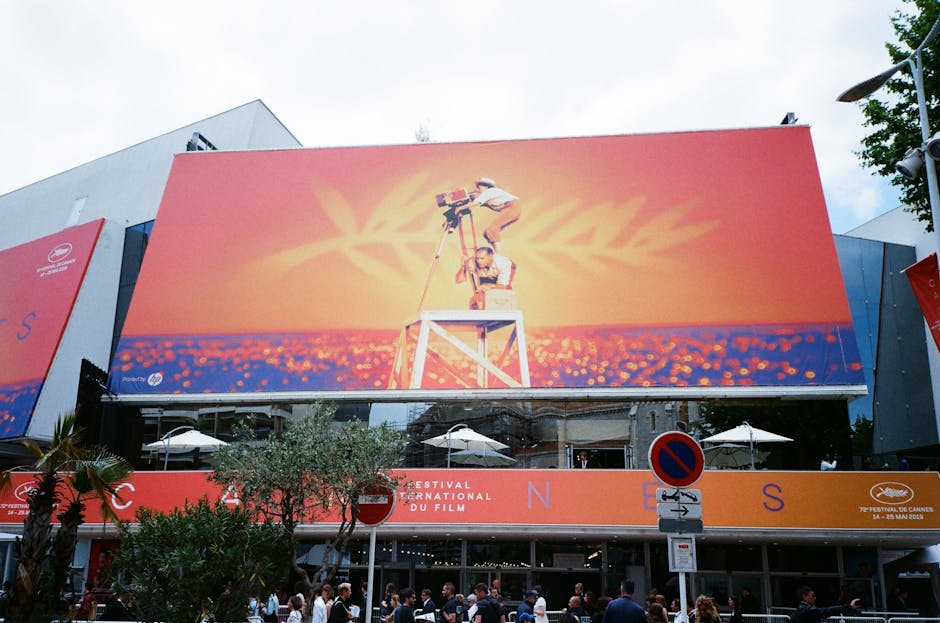
- The sci-fi thriller ‘Hope’ sparked heated debates at the Cannes Film Festival, showcasing a divide among critics and industry insiders.
- Yorgos Lanthimos’s genre-defying film blends existential sci-fi, visceral action, and absurdist dark comedy, pushing the boundaries of contemporary cinema.
- The movie’s near-future society, where emotions are chemically suppressed, raises questions about the state of humanity and social control.
- The film’s visual design, featuring sterile cityscapes and chaotic violence, adds to its thought-provoking and visually striking narrative.
- ‘Hope’ has become a cultural flashpoint, sparking conversations about the role of emotion and empathy in modern society.
Why is everyone at Cannes arguing about a movie called ‘Hope’? At this year’s festival, where the Palme d’Or race lacks a clear favorite, the buzz hasn’t centered on consensus but on conflict. Yorgos Lanthimos’s latest, a dystopian sci-fi action film titled ‘Hope,’ has become the lightning rod for passionate disagreement among critics, cinephiles, and industry insiders. Some hail it as a visionary leap forward in speculative storytelling, while others dismiss it as emotionally hollow spectacle. In a lineup without dominant front-runners, ‘Hope’ didn’t just stand out — it split the room. With walkouts, standing ovations, and heated debates spilling from screening halls into the Croisette, the film has become less a mere entry and more a cultural flashpoint. But what exactly makes this movie so divisive, and what does that say about the state of contemporary cinema?
What Makes ‘Hope’ So Controversial?

‘Hope’ is a genre-defying film that blends existential sci-fi with visceral action and absurdist dark comedy, a signature style of Greek director Yorgos Lanthimos, known for ‘The Lobster’ and ‘Poor Things.’ Set in a near-future society where emotions are chemically suppressed to maintain social order, the story follows a rogue scientist (played by Emma Stone) who reactivates her capacity to feel and incites a rebellion. The film’s visual design is striking — sterile, symmetrical cityscapes contrasted with moments of chaotic, almost balletic violence. Lanthimos employs his trademark deadpan dialogue and off-kilter pacing, which some viewers find hypnotic and others frustratingly detached. The controversy stems not just from its narrative risks, but from its tone: is it a profound meditation on human emotion, or a pretentious exercise in style over substance? The answer depends largely on who you ask — and how much they value ambiguity in storytelling.
What Are Critics Saying About the Film?

Reactions to ‘Hope’ have been sharply divided. On Reuters, critic Sarah Bradbury called the film ‘a bold, unsettling triumph’ that ‘challenges audiences to feel in a world designed to numb them.’ Meanwhile, The Guardian’s Peter Bradshaw awarded it three stars, praising its ‘daring aesthetic’ but questioning its emotional payoff, writing, ‘Lanthimos builds a world of feeling, yet leaves us stranded outside it.’ At the press screening, reports of audience walkouts were balanced by a six-minute standing ovation at the premiere. Industry analysts note that such polarization isn’t uncommon for Lanthimos, whose previous films have also provoked strong reactions. According to festival tracker Cineuropa, ‘Hope’ currently holds a 58% positive critical rating across early reviews — a number that underscores its status as a true love-it-or-hate-it experience in a year without a consensus favorite.
Are There Legitimate Criticisms of the Film?

Yes — and many stem from concerns about emotional accessibility and narrative coherence. Some critics argue that ‘Hope’ prioritizes style and concept at the expense of character development. Writing for IndieWire, David Ehrlich described it as ‘a stunningly crafted film that ultimately feels emotionally inert — like watching a symphony played in a vacuum.’ Others have questioned the film’s treatment of trauma and resistance, suggesting that its dystopian allegory lacks grounding in real-world struggles. Notably, French philosopher and festival panelist Claire Morel suggested during a Q&A that the film ‘romanticizes emotional volatility without examining its consequences.’ Additionally, the film’s third act, which shifts into full-scale rebellion with surreal, dreamlike battle sequences, has been called ‘confusing’ and ‘overindulgent’ by some viewers. These critiques don’t dismiss the film outright but highlight a growing divide in how audiences interpret and value cinematic innovation — especially when it comes at the cost of narrative clarity or emotional resonance.
What Does This Mean for the Palme d’Or and Beyond?

The polarization of ‘Hope’ reflects a broader trend at this year’s Cannes: a festival without a dominant narrative. In past years, films like ‘Parasite’ or ‘Triangle of Sadness’ emerged as clear favorites, generating momentum toward the top prize. This year, with no such consensus, the jury — led by American director Greta Gerwig — faces a more fragmented landscape. ‘Hope’ could still win the Palme d’Or as a bold artistic statement, but its divisiveness might work against it in a prize that often favors unifying, crowd-pleasing works. Beyond the awards, however, the film’s impact may be more cultural than competitive. Its debates have reignited conversations about the role of discomfort in art, the boundaries of genre, and whether cinema should challenge or comfort its audience. As studios increasingly prioritize safe, franchise-driven content, ‘Hope’ stands as a defiant outlier — one that may influence independent filmmaking for years to come.
What This Means For You
If you’re a film lover, ‘Hope’ represents a rare kind of cinematic experience — one that doesn’t just entertain but demands a reaction. Whether you end up praising or panning it, the film forces engagement, asking what we want from movies in an age of algorithmic predictability. Its success or failure may shape how risk-taking films are funded and distributed in the future. For now, it serves as a reminder that art doesn’t have to be universally loved to be important.
As the festival continues, one question lingers: can a film be both emotionally alienating and profoundly moving at the same time? And if so, does that contradiction make it more truthful — or just more frustrating? The debate, much like the film itself, is unlikely to reach a tidy resolution.
Source: The New York Times