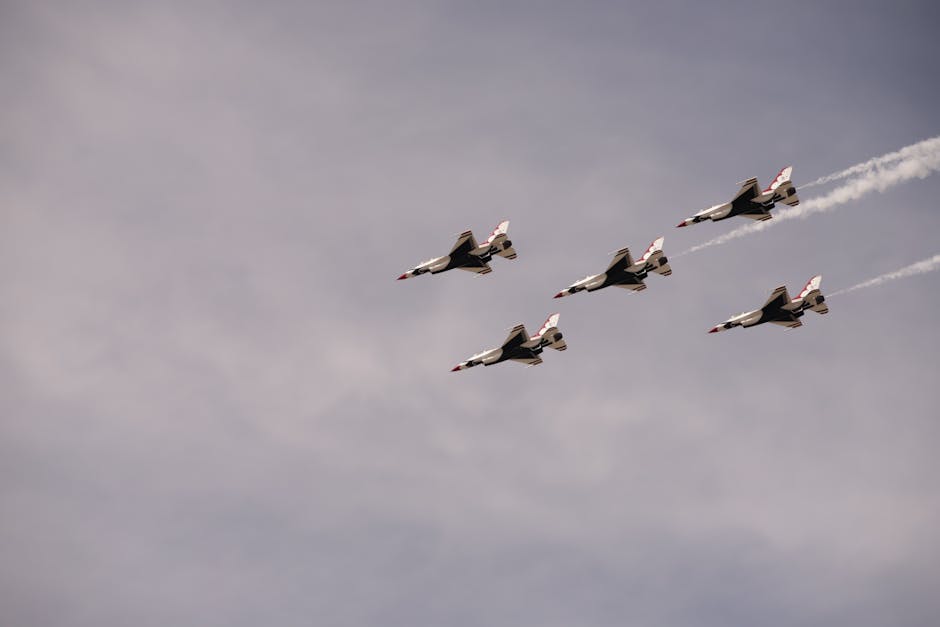
- President Donald Trump ordered a halt to a U.S. strike on Iranian military sites just 10 minutes before launch.
- The strike was in response to Iran’s downing of a U.S. surveillance drone over the Strait of Hormuz.
- Leaders in Saudi Arabia, the UAE, and Kuwait warned of a regional conflict that could be sparked by further escalation.
- The Trump administration approved a coordinated air and naval strike targeting Iranian military sites.
- Trump cited not wanting to kill 150 people as the reason for canceling the operation.
As the sun set over the Persian Gulf, warplanes sat idling on U.S. Navy carriers and drone feeds flickered across command screens at Central Command in Tampa, Florida. The machinery of war was primed for a strike—precision-guided munitions armed, pilots briefed, coordinates locked. But in a dramatic reversal just ten minutes before launch, President Donald Trump ordered a halt. The target: multiple Iranian military sites, in response to the downing of a U.S. surveillance drone days earlier. The reason: a flurry of urgent calls from leaders in Saudi Arabia, the United Arab Emirates, and Kuwait, who warned that further escalation could ignite a regional conflagration neither their nations nor America could contain.
Immediate Halt to Military Action

On the evening of June 21, 2019, the Trump administration had approved a coordinated air and naval strike targeting radar installations, air defense systems, and command centers in Iran. The operation was retaliation for Iran’s downing of a U.S. RQ-4 Global Hawk drone over the Strait of Hormuz, which American officials said was flying in international airspace. Initially, Trump confirmed the strike was imminent, stating the response would be “proportionate” to the provocation. But by late evening, he announced via Twitter that he had canceled the operation, saying, “I was poised to retaliate last night at 10:00 p.m., but stopped it in its tracks because I didn’t want to kill 150 people.” He added that Gulf allies had urged restraint, emphasizing that serious negotiations were underway to de-escalate tensions. According to senior defense officials, the pause was not unilateral; it followed intense diplomatic backchanneling involving Oman and European intermediaries.
The Path to the Brink

The near-strike was the culmination of months of escalating tensions between the United States and Iran. After unilaterally withdrawing from the 2015 Iran nuclear deal in 2018, the Trump administration reimposed stringent economic sanctions, aiming to force Tehran into renegotiating a broader agreement. Iran responded by gradually exceeding uranium enrichment limits set by the original accord. Hostilities intensified in May 2019, when tankers were attacked near the Strait of Hormuz—incidents the U.S. blamed on Iran, though Tehran denied involvement. By June, U.S. military deployments in the region surged, including the USS Abraham Lincoln carrier strike group and B-52 bombers. The downing of the drone—claimed by Iran as a violation of its airspace—brought both nations closer to direct conflict than at any point since the 1988 shootdown of Iran Air Flight 655. The aborted strike marked a pivot from kinetic response to cautious diplomacy, underscoring how close the two sides had come to war.
Leaders Shaping the Crisis

The decision to stand down was shaped by a complex web of regional and domestic actors. President Trump, known for his impulsive foreign policy style, reportedly consulted with Defense Secretary Patrick Shanahan, National Security Advisor John Bolton, and Chairman of the Joint Chiefs General Joseph Dunford. Bolton, a long-time advocate for regime change in Iran, favored a strong military response, while more moderate voices in the Pentagon warned of unpredictable blowback. Crucially, leaders in Riyadh, Abu Dhabi, and Kuwait City expressed alarm over the prospect of retaliatory attacks on their soil—fearing Iranian proxies like Hezbollah or missile strikes on oil infrastructure. Oman, which has historically mediated between Washington and Tehran, played a quiet but pivotal role in relaying messages. Meanwhile, European powers, including France and Germany, intensified diplomatic outreach, urging restraint and offering to facilitate dialogue.
Consequences of Restraint

The cancellation of the strike altered the trajectory of U.S.-Iran relations, at least temporarily. While hardliners in both countries criticized the move—some calling it a sign of weakness—others saw it as a necessary pause to avoid a catastrophic war. In Iran, Supreme Leader Ayatollah Ali Khamenei remained defiant but signaled openness to indirect talks. For U.S. allies in the Gulf, the moment highlighted their vulnerability and dependence on American protection, even as they quietly pushed Washington toward de-escalation. Militarily, the pause allowed time for intelligence reassessment, including questions about whether the drone had actually entered Iranian airspace. Strategically, it revealed the limits of Trump’s “maximum pressure” campaign and exposed fractures within his national security team, particularly between interventionist and pragmatic factions.
The Bigger Picture
This episode underscores the volatility of 21st-century brinkmanship, where decisions made in minutes can ripple across global markets, alliances, and geopolitical balances. The U.S. and Iran have long danced along the edge of war without crossing it, relying on proxies, cyber operations, and calibrated provocations. But the near-launch of a direct military strike reveals how fragile deterrence has become. In an era of instant communication and decentralized command structures, the margin for error shrinks with each escalation. Moreover, the role of regional allies in tempering U.S. actions suggests a shift in influence—smaller states wielding quiet but decisive power in global crises.
What comes next remains uncertain. Diplomatic channels, though strained, remain open. Backdoor negotiations through Oman and European intermediaries could lead to a temporary de-escalation. Yet the underlying tensions—nuclear ambitions, regional dominance, economic warfare—remain unresolved. The aborted strike may have delayed conflict, but it did not erase the conditions that brought the world to the brink. As military planners update their contingency plans and diplomats scramble for face-saving compromises, one truth endures: peace in the Persian Gulf is not guaranteed—it is, at best, a series of narrow escapes.
Source: BBC