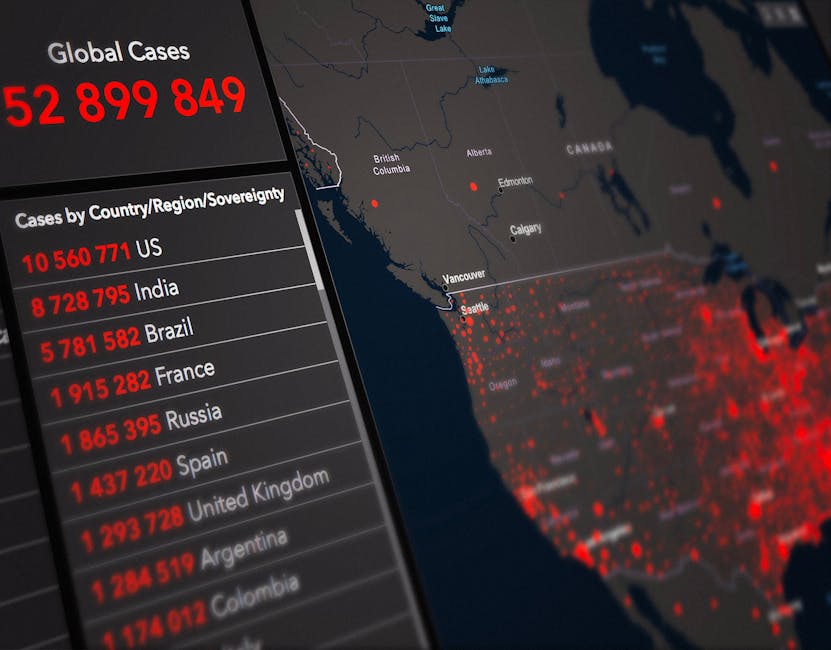
- Infectious disease outbreaks have increased by 60% over the last decade, posing a significant threat to global health security.
- New data shows that the world is less equipped to handle infectious diseases despite advances in medicine and surveillance.
- Emerging zoonotic pathogens, such as Ebola and hantavirus, are occurring with alarming regularity and stretching fragile health systems.
- Climate change, deforestation, and urbanization are accelerating the spillover of diseases from animals to humans.
- Underfunded public health infrastructures, especially in low- and middle-income countries, are exacerbating the crisis.
The frequency and severity of infectious disease outbreaks have surged dramatically over the past decade, with new data showing a 60% increase in major epidemics since 2012. According to the Global Preparedness Monitoring Board (GPMB), the world is now less equipped to handle these growing biological threats despite advances in medicine and surveillance. Outbreaks once considered rare—such as Ebola, hantavirus, and emerging zoonotic pathogens—are occurring with alarming regularity, stretching fragile health systems and exposing critical gaps in international response mechanisms. In 2024 alone, the Democratic Republic of the Congo and Uganda have reported multiple Ebola flare-ups, prompting urgent containment efforts and underscoring a troubling trend: diseases that were once episodic are now persistent threats to global health security.
Rising Threats in a Fragile Global System

The world’s diminishing resilience to infectious diseases is not simply a result of more pathogens emerging—it reflects deeper systemic weaknesses in preparedness, funding, and coordination. The GPMB’s 2024 report, published on Monday, emphasizes that climate change, deforestation, urbanization, and the illegal wildlife trade are accelerating the spillover of diseases from animals to humans. As ecosystems are disrupted, previously isolated viruses gain new pathways into human populations. Simultaneously, underfunded public health infrastructures, especially in low- and middle-income countries, struggle to detect and respond to outbreaks in their earliest stages. The report warns that without immediate investment in surveillance, laboratory capacity, and community health networks, the world risks facing more frequent and deadlier pandemics in the coming decades.
Current Outbreaks Strain African Health Systems

As of early 2024, health authorities in the Democratic Republic of the Congo (DRC) have confirmed over 50 cases of Ebola in North Kivu province, a region plagued by conflict and limited healthcare access. In neighboring Uganda, a separate outbreak has been identified in the western Kasese district, with suspected cases under investigation. Both nations have deployed rapid response teams, including vaccination units using the rVSV-ZEBOV vaccine, to contain transmission. However, logistical challenges—such as poor road networks, community mistrust, and active armed insurgencies—have hampered containment efforts. The World Health Organization (WHO) has classified the situation as a regional emergency, with a moderate risk of cross-border spread. These concurrent outbreaks highlight the persistent vulnerability of central and eastern Africa to viral hemorrhagic fevers despite previous experience with Ebola.
Why Outbreaks Are Becoming More Damaging

The increasing damage caused by infectious disease outbreaks stems not only from their frequency but also from their societal and economic ripple effects. The GPMB report notes that since the 2014–2016 West Africa Ebola epidemic, each major outbreak has disrupted healthcare delivery for non-communicable diseases, maternal care, and childhood immunizations. In the DRC, for example, measles and cholera outbreaks have surged in parallel with Ebola, overwhelming clinics. Moreover, the economic toll is mounting: the 2018–2020 Ebola outbreak in eastern DRC cost an estimated $500 million in response and lost productivity. Experts point to a “syndemic” effect—where multiple health crises interact and amplify one another—compounded by misinformation, political instability, and weak governance. These factors turn localized outbreaks into protracted public health emergencies.
Global Implications and At-Risk Populations

The resurgence of viruses like Ebola and hantavirus has global implications, particularly for countries with limited outbreak experience and porous borders. While Africa bears the immediate burden, the risk of international spread remains real. Air travel and global trade can carry pathogens across continents in hours, as seen during the 2014 Ebola crisis when cases appeared in the U.S. and Europe. Vulnerable populations—including displaced persons, refugees, and those in conflict zones—are at greatest risk due to overcrowded living conditions and lack of medical access. Additionally, climate change is expanding the habitats of disease-carrying vectors, potentially bringing hantavirus and other rodent-borne diseases into new regions. Without coordinated global action, localized outbreaks could evolve into transnational crises.
Expert Perspectives
Public health experts are divided on the best path forward. Dr. Ngozi Okonjo-Iweala, co-chair of the GPMB, stresses that “global health security is only as strong as its weakest link,” calling for a $10 billion annual fund to strengthen pandemic preparedness in vulnerable nations. In contrast, some epidemiologists argue that top-down approaches often fail to address local realities, advocating instead for community-led surveillance and education. Dr. Peter Piot, director of the London School of Hygiene & Tropical Medicine, warns that “we’re still reacting, not preparing,” emphasizing the need for early-warning systems integrated with climate and ecological data. Others caution that vaccine equity and supply chain resilience must be prioritized to prevent future inequities in outbreak response.
Looking ahead, the world faces critical questions: Can global health institutions adapt fast enough to outpace emerging pathogens? Will political will materialize to fund long-term prevention, or will the world remain in perpetual crisis response mode? With the next pandemic predicted to be a matter of “when, not if,” monitoring zoonotic hotspots, investing in primary healthcare, and building trust with at-risk communities will be essential. The current Ebola outbreaks in Africa are not isolated incidents—they are warning signs of a planet under growing microbial threat.
Source: The Guardian