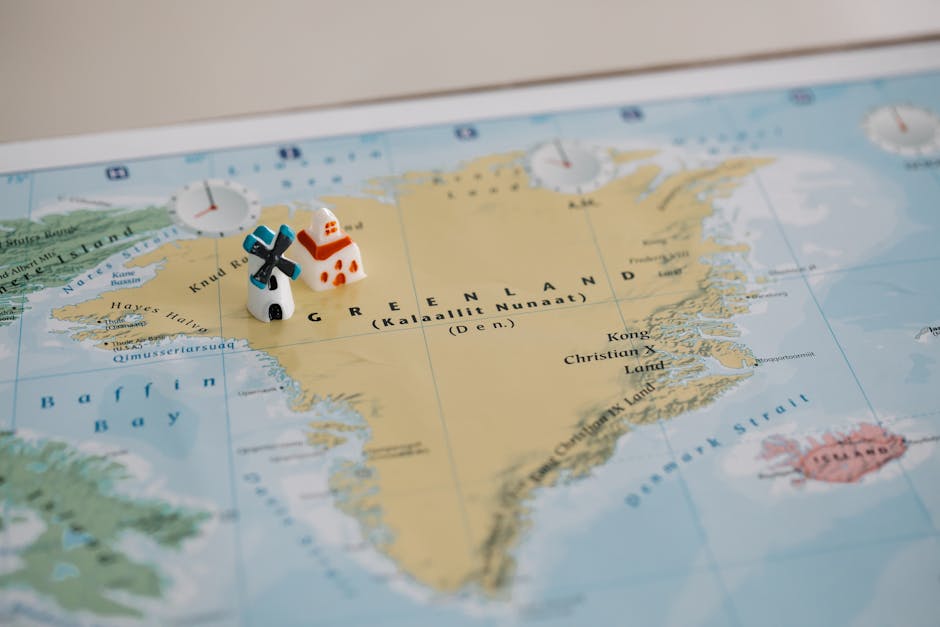
- The US is making significant demands in Greenland, potentially undermining the island’s self-governance.
- Washington seeks to embed itself in Greenland’s defense, infrastructure, and resource policies.
- US demands include expanded military access, joint control over infrastructure, and preferential mineral rights.
- Greenlandic officials worry that limited geopolitical leverage may force concessions compromising sovereignty.
- The US aims to counter growing Russian and Chinese influence in the Arctic through expanded partnerships.
Is the United States quietly attempting to redefine its relationship with Greenland in ways that could undermine the island’s self-governance? Behind closed diplomatic doors, a high-stakes negotiation is unfolding—one driven not by mutual development but by Washington’s strategic calculus in the Arctic. Following former President Donald Trump’s public musings about purchasing the island in 2019, the conversation has shifted from the absurd to the alarming: current U.S. demands suggest a long-term ambition to embed itself deeply in Greenland’s defense, infrastructure, and resource policies. While Danish and Greenlandic officials engage in tense consultations, many in Nuuk worry that their limited geopolitical leverage may force concessions that compromise sovereignty.
The Core of U.S. Demands

According to senior Greenlandic officials briefed on the talks, the United States is pushing for unprecedented involvement in Greenland’s strategic affairs, including expanded military access, joint control over critical infrastructure projects, and preferential rights to mineral resources—particularly rare earth elements vital for clean energy and defense technologies. While the U.S. frames this as a partnership to counter growing Russian and Chinese influence in the Arctic, the scope of the demands has alarmed leaders in Greenland’s self-rule government. They see the proposals as a de facto attempt to secure control without formal annexation. Though Greenland remains an autonomous territory within the Kingdom of Denmark, it has increasingly asserted its right to independent foreign and economic policy. The current U.S. approach, however, risks sidelining both Greenlandic and Danish decision-making in favor of American security interests.
Evidence of Strategic Pressure

Documents and diplomatic sources cited by Reuters indicate that U.S. negotiators have tied infrastructure funding—such as upgrades to airports and port facilities—to concessions on military use and data-sharing agreements. American officials argue that Greenland’s geographic position makes it essential for early missile warning systems and Arctic defense coordination. Thule Air Base, located in northwest Greenland, has been a key U.S. installation since the Cold War, but new proposals could expand its role significantly. Furthermore, U.S. agencies have increased diplomatic outreach to Greenlandic leaders, bypassing traditional channels through Copenhagen. This direct engagement, while welcomed by some as recognition of Greenland’s autonomy, is viewed by others as a tactic to divide Danish-Greenlandic unity. As the BBC reported, American envoys have stressed that Greenland’s development must align with broader NATO and U.S. Arctic strategies—language many interpret as a veiled ultimatum.
Counter-Perspectives and Internal Divisions

Not all Greenlandic leaders oppose deeper ties with the United States. Some, particularly those in resource-rich regions, see American investment as a path toward economic independence from Denmark. They argue that without outside capital, Greenland cannot develop its vast mineral reserves or modernize its infrastructure. Proponents of engagement point to the potential for job creation, technology transfer, and greater global visibility. However, critics warn that such benefits come at a steep cost: the erosion of democratic control and environmental safeguards. Indigenous rights advocates stress that any foreign involvement must respect Inuit land rights and free, prior, and informed consent under international law. Moreover, some analysts caution that allowing military expansion could turn Greenland into a geopolitical flashpoint, drawing it into great power conflicts it is ill-prepared to manage. The debate reflects a broader tension within Greenland: the desire for autonomy versus the risk of exchanging one overlord—Copenhagen—for another: Washington.
Real-World Consequences for Greenland

The outcome of these negotiations could reshape Greenland’s future in profound ways. If the U.S. secures broad access, it may accelerate infrastructure projects, but at the risk of sparking public backlash and political instability. In 2023, a previous government collapsed after mismanaging a rare earth mining deal with an Australian firm, underscoring public sensitivity to foreign exploitation. Any perception that the U.S. is imposing terms could fuel a nationalist backlash, strengthening pro-independence parties. On the global stage, the situation sets a troubling precedent: small, resource-rich territories may find themselves pressured by superpowers under the guise of partnership. Additionally, environmental groups warn that increased military and industrial activity could damage fragile Arctic ecosystems. The stakes are not just political—they are cultural and ecological, touching the core of Greenlandic identity and sustainability.
What This Means For You
While Greenland may seem distant, its fate reflects broader global trends: the scramble for Arctic resources, the reconfiguration of military alliances, and the challenges faced by autonomous regions in an era of great power competition. For citizens worldwide, this situation underscores how geopolitical strategies can impact local sovereignty and environmental stewardship. It also raises ethical questions about how democratic consent should factor into international negotiations involving indigenous populations. As climate change opens new shipping lanes and resource sites in the Arctic, similar pressures may emerge in Alaska, northern Canada, and Scandinavia.
What happens when a superpower leverages economic and military influence to shape the policies of a self-governing territory? And how much autonomy can a small nation truly exercise when a global power insists on a ‘strategic partnership’? These questions lie at the heart of the Greenland debate—and they may define the future of Arctic governance.
Source: The New York Times