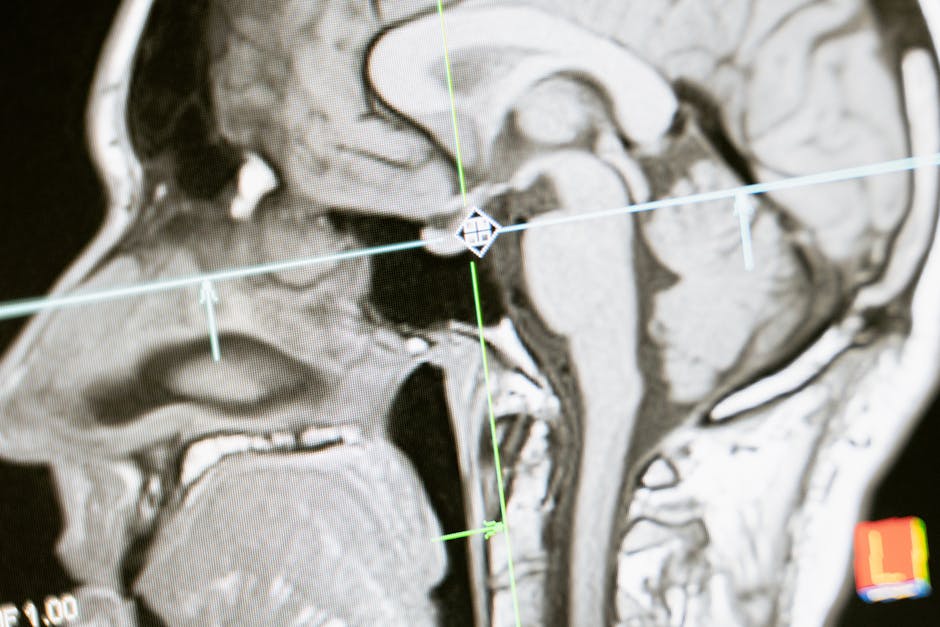
- By age 4, the brain has established a clear preference for processing language in the left hemisphere, a critical milestone in cognitive development.
- The brain’s foundational architecture for language is largely in place before formal education begins, with implications for early intervention in developmental disorders.
- The discovery suggests that language lateralization solidifies during the toddler years as children rapidly acquire vocabulary and syntax.
- Neuroimaging of 234 children revealed that 94% showed significant activation in the left hemisphere’s perisylvian regions by age 4.
- Language processing in the left hemisphere emerges earlier than previously confirmed, with minimal lateralization in infants under 12 months.
By age four, the human brain has already established a clear preference for processing language in the left hemisphere—a critical milestone in cognitive development that emerges earlier than previously confirmed. This lateralization, long known to be central to fluent language use, appears to solidify during the toddler years as children rapidly acquire vocabulary and syntax. The discovery, based on advanced neuroimaging of hundreds of children, suggests that the brain’s foundational architecture for language is largely in place well before formal education begins, with implications for early intervention in developmental disorders like autism and specific language impairment.
\n\n
Neuroimaging Confirms Early Brain Lateralization

\n
Using functional magnetic resonance imaging (fMRI), researchers tracked brain activity in 234 children aged 0 to 8 while they listened to stories, speech, and non-linguistic sounds. The results, published in Nature Neuroscience, revealed that by age four, 94% of participants showed significant activation in the left hemisphere’s perisylvian regions—particularly Broca’s and Wernicke’s areas—during language tasks. This lateralization was minimal in infants under 12 months but increased sharply between ages 2 and 4, coinciding with the so-called ‘naming explosion’ when vocabulary growth accelerates. By contrast, processing of non-linguistic auditory stimuli remained symmetrical across hemispheres, underscoring the specificity of the left brain’s language specialization. Longitudinal data further showed that children with stronger left-hemisphere dominance at age three had higher receptive and expressive language scores 12 months later, suggesting a predictive relationship between early neural organization and linguistic competence.
\n\n
Key Players in Language Development Research

\n
The study was led by neuroscientists at MIT’s McGovern Institute and Harvard Medical School, in collaboration with pediatric researchers at Boston Children’s Hospital. Dr. Gloria Ramos, the lead author, emphasized that while behavioral milestones in language are well-documented, this work provides the first large-scale neurobiological evidence of when and how the brain commits to lateralized processing. Meanwhile, the National Institute of Child Health and Human Development (NICHD) supported the project through its Early Brain and Biological Development initiative, which aims to map neural trajectories from infancy. Other contributors include teams from the University of California, San Diego, who developed the age-appropriate fMRI paradigms that made scanning cooperative toddlers feasible. Their protocol, which uses animated stories to maintain attention, has become a benchmark in developmental neuroscience and is now being adopted in longitudinal studies across Europe and Canada.
\n\n
Trade-Offs in Early Neural Specialization

\n
The early dominance of the left hemisphere offers clear advantages: it streamlines language acquisition by dedicating neural resources to syntax, phonology, and semantics, enabling faster word retrieval and grammatical accuracy. However, this specialization also creates vulnerability—damage to the left hemisphere in early childhood, such as from stroke or injury, is less likely to be compensated by the right side after age four, unlike in younger infants who retain greater neuroplasticity. On the other hand, atypical lateralization, such as bilateral or right-dominant language processing, is more common in children with developmental language disorder (DLD) and autism spectrum disorder (ASD), where language delays are prevalent. While some researchers argue that delayed or diffuse lateralization may reflect adaptive flexibility, clinical data suggest it often correlates with persistent communication challenges. Thus, while early left-hemisphere commitment supports efficient language learning, it may reduce the brain’s capacity to reorganize in the face of disruption.
\n\n
Why This Shift Happens Now

\n
The consolidation of language lateralization by age four coincides with major shifts in both brain structure and linguistic behavior. Myelination of neural pathways in the left temporal lobe accelerates between ages 2 and 4, increasing the speed and efficiency of language-related circuits. At the same time, children typically expand their vocabularies from a few hundred words to over 1,000 and begin forming multi-clause sentences—milestones that demand greater neural coordination. Environmental input also intensifies during this period, as caregivers engage in richer verbal interactions and children are exposed to structured language through preschool and media. These combined biological and experiential drivers appear to ‘lock in’ hemispheric dominance, a process that was once thought to occur gradually through adolescence. The new evidence suggests, instead, that the critical window for establishing language architecture closes much earlier than assumed.
\n\n
Where We Go From Here
\n
In the next 6 to 12 months, researchers plan to expand these findings into clinical applications. One scenario involves developing fMRI-based biomarkers to identify toddlers at risk for language disorders before symptoms appear. A second possibility is the refinement of early speech therapies that encourage left-hemisphere engagement in at-risk infants. A third trajectory involves educational policy, with neuroscientists advising early childhood programs to intensify language-rich interactions between ages 2 and 4, when the brain is most receptive to shaping its language network. While widespread neural screening remains impractical, behavioral proxies—such as vocalization patterns and response asymmetry to spoken words—may soon serve as accessible indicators of lateralization status. These steps could transform how we support language development in both typical and atypical populations.
\n\n
Bottom line — the brain’s commitment to left-hemisphere language processing by age four underscores a foundational period of cognitive development that shapes lifelong communication abilities, offering a critical window for early diagnosis and intervention in language-related disorders.
Source: MedicalXpress