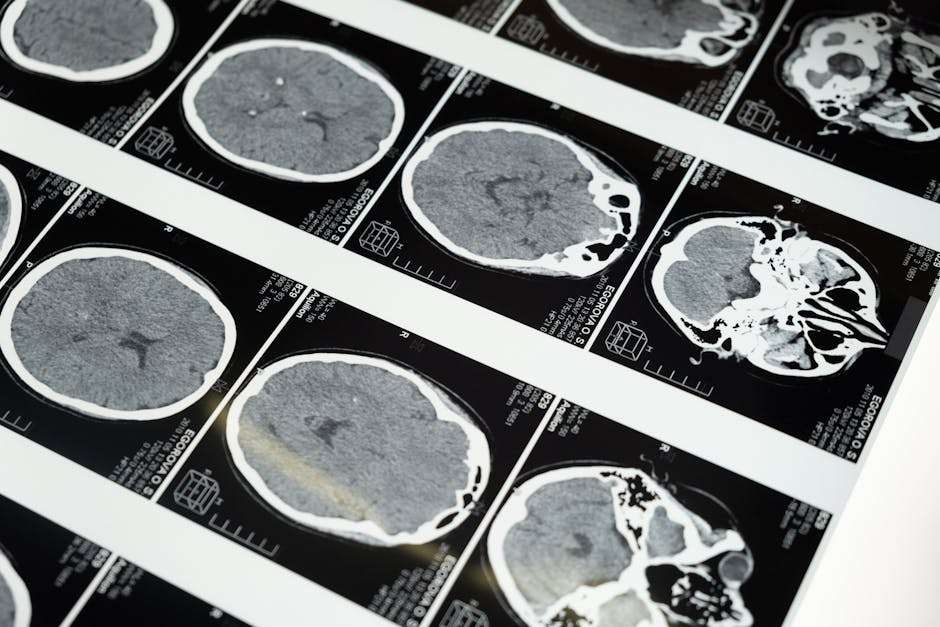
- Researchers have mapped 95% of the brain’s communication pathways by age 30 using over 45,000 MRI scans.
- The brain’s communication highways show a predictable trajectory from infancy to aging, with a significant increase in white matter volume in the first two years of life.
- By age 30, the brain reaches peak white matter integrity, marking a critical milestone in neurodevelopment.
- A gradual decline in white matter integrity begins at an average rate of 0.2% per year after age 30.
- The study provides a new frontier in diagnosing and monitoring neurological and psychiatric conditions, such as multiple sclerosis and schizophrenia.
For the first time, researchers have constructed detailed growth charts of the brain’s white matter, analogous to pediatric growth curves, enabling clinicians to assess deviations from typical neurodevelopment. These charts, based on over 45,000 MRI scans from more than 100 global studies, reveal how the brain’s communication highways mature, peak, and decline across the lifespan. By standardizing white matter development, the findings open a new frontier in diagnosing and monitoring neurological and psychiatric conditions such as multiple sclerosis, schizophrenia, and traumatic brain injury.
White Matter Trajectories Across the Lifespan

White matter, composed of myelinated axons that transmit signals between brain regions, shows a highly predictable trajectory from infancy through aging. According to the study published in Nature, white matter volume increases rapidly in the first two years of life, rising by nearly 1% per day during peak development. By age 30, the brain reaches peak white matter integrity, after which a gradual decline begins at an average rate of 0.2% per year. The data reveal that myelination follows a posterior-to-anterior pattern—sensory and motor regions mature first, followed by higher-order association areas involved in executive function and social cognition. These benchmarks were derived from diffusion tensor imaging (DTI) metrics, particularly fractional anisotropy (FA) and mean diffusivity (MD), which quantify the efficiency and coherence of neural pathways. The study identified a 95% maturation threshold for major tracts—including the corpus callosum, arcuate fasciculus, and corticospinal tract—by early adulthood, with individual variation clustering tightly around the normative curve.
Key Researchers and Institutions Behind the Breakthrough

The international consortium behind the brain charts, led by neuroscientists at the University of Edinburgh and the Allen Institute for Brain Science, aggregated data from 123 independent research groups across 28 countries. Key contributors include Dr. Sara Thomason, a developmental neuroimaging expert, and Dr. Tim Behrens of Oxford’s Centre for Functional MRI of the Brain, whose prior work on connectome mapping laid the foundation for the project. Collaborators standardized disparate MRI protocols using advanced harmonization algorithms, enabling cross-dataset comparability. The team leveraged machine learning models trained on age, sex, and genetic markers to refine the growth curves, with validation against longitudinal cohorts such as the UK Biobank and the Adolescent Brain Cognitive Development (ABCD) Study. Their work builds on earlier efforts like the Pediatric Imaging, Neurocognition, and Genetics (PING) study but scales significantly in both sample size and analytical precision.
Clinical Benefits and Ethical Trade-offs

The ability to detect subtle deviations in white matter development offers transformative potential for early intervention in neurodevelopmental disorders. For example, children later diagnosed with autism spectrum disorder (ASD) often exhibit accelerated white matter growth in the first year of life—a pattern now identifiable using the new charts. Similarly, patients with early-stage Alzheimer’s disease show premature declines in fornix and cingulum bundle integrity, detectable years before cognitive symptoms emerge. However, the technology raises ethical concerns around overdiagnosis, stigmatization, and data privacy. Widespread use of brain scans in pediatric settings could lead to unnecessary interventions for children with atypical but non-pathological trajectories. Additionally, disparities in MRI access may exacerbate inequities in neurological care, particularly in low-resource settings. Balancing early detection with clinical utility remains a central challenge.
Why This Breakthrough Is Happening Now

This milestone arrives due to the confluence of three enabling factors: the exponential growth of open neuroimaging repositories, advances in computational harmonization, and the maturation of artificial intelligence in medical imaging. Only a decade ago, combining MRI data across institutions was nearly impossible due to scanner variability and proprietary formats. Today, platforms like the OpenNeuro database and the Human Connectome Project provide standardized, anonymized datasets at scale. Moreover, deep learning models can now correct for technical noise and batch effects, allowing accurate pooling of data. The timing also reflects increased recognition that brain health must be monitored longitudinally, much like cardiovascular or metabolic health. With rising global burdens of dementia and mental illness, the demand for objective biomarkers has never been greater.
Where We Go From Here
In the next 6 to 12 months, three scenarios are likely: first, integration of white matter charts into clinical MRI reporting systems, particularly in pediatric neurology centers in high-income countries; second, targeted trials using the charts to stratify patients in drug development for diseases like multiple sclerosis; and third, expansion of reference data to include underrepresented populations, including diverse ethnic groups and individuals with rare genetic syndromes. Researchers are also exploring dynamic models that incorporate functional connectivity and metabolic data for a more holistic view of brain health. Ultimately, these growth charts may become as routine in neurological assessments as blood pressure readings are in primary care.
Bottom line — these white matter growth charts represent a foundational tool for precision neurology, enabling early detection of brain disorders and personalized monitoring of neural health across the human lifespan.
Source: Nature