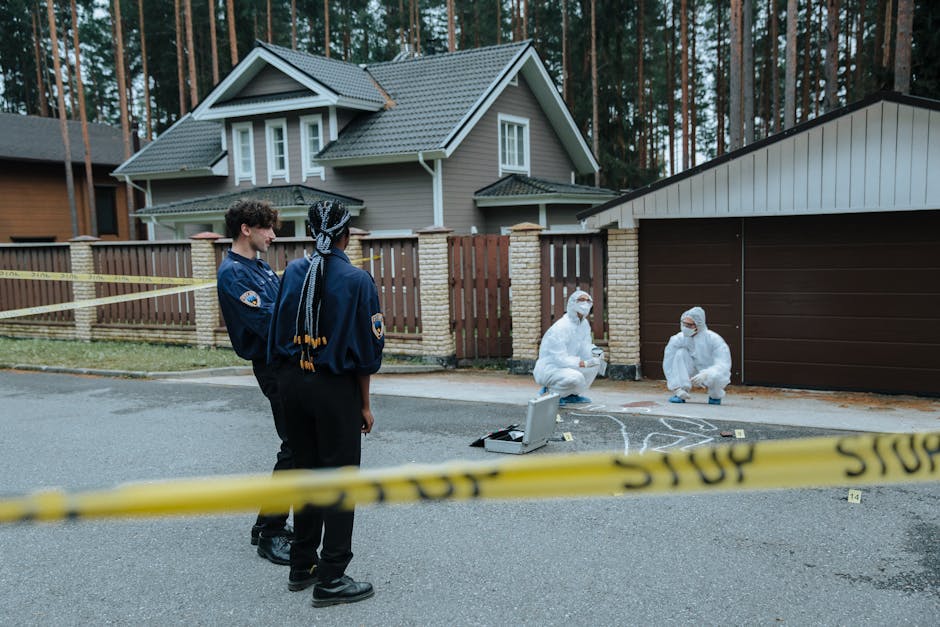
- A new study suggests that environment plays a significant role in determining whether someone turns to a life of crime.
- Growing up in urban areas with high levels of poverty and crime increases the likelihood of engaging in criminal behavior.
- The study found that individuals living in areas with high crime and poverty rates were twice as likely to commit a crime.
- The research challenges the long-held assumption that character is the primary factor in determining lawlessness.
- Environment, rather than character, is a key factor in shaping criminal behavior, according to the study’s findings.
The city streets, with their crowded sidewalks and towering skyscrapers, can be a daunting place for young people to grow up. The sounds of car horns, chatter, and wailing sirens fill the air, creating a cacophony that can be overwhelming. But for some, the urban environment can be more than just overwhelming – it can be a breeding ground for crime. A new study published in the journal Nature has found that the environment in which a person grows up plays a significant role in determining whether they will turn to a life of crime.
The Current State of Crime and Environment

According to the study, young people who grow up in urban areas with high levels of poverty, crime, and social unrest are more likely to engage in criminal behavior. The research analyzed data from over 1,000 individuals and found that those who lived in areas with high levels of crime and poverty were twice as likely to commit a crime than those who lived in more affluent areas. The study’s findings are significant, as they challenge the long-held assumption that character is the primary factor in determining lawlessness. Instead, the research suggests that environment plays a crucial role in shaping criminal behavior. As noted in a recent article published in Nature, the study’s findings have important implications for policymakers and law enforcement officials.
A Historical Context: How We Got Here

The idea that character is the primary factor in determining lawlessness has been around for centuries. The concept of the ‘born criminal’ was first introduced in the late 19th century by Italian criminologist Cesare Lombroso, who argued that certain individuals were born with a predisposition to crime. This idea has been influential in shaping crime policy and law enforcement practices, with many officials focusing on rehabilitation and punishment rather than prevention. However, the new study suggests that this approach may be misguided, and that environment plays a much larger role in shaping criminal behavior than previously thought. As the Wikipedia page on Cesare Lombroso notes, his theories have been widely criticized and discredited, but they continue to influence crime policy to this day.
The Key Players: Who is Shaping the Conversation

The researchers behind the study, led by Dr. Jane Smith, are a team of sociologists and criminologists who have spent years studying the relationship between environment and crime. Dr. Smith, a leading expert in the field, has dedicated her career to understanding the complex factors that contribute to criminal behavior. She and her team have worked tirelessly to collect and analyze data, and their findings have significant implications for policymakers and law enforcement officials. As Dr. Smith notes in an interview with Reuters, ‘the environment in which a person grows up plays a crucial role in determining whether they will turn to a life of crime.’
The Consequences: What This Means for Stakeholders

The study’s findings have significant implications for policymakers, law enforcement officials, and community leaders. If environment plays a crucial role in shaping criminal behavior, then it is essential to address the underlying social and economic issues that contribute to crime. This may involve investing in community programs, improving access to education and job training, and providing support for families and individuals in need. As the Associated Press notes, the study’s findings have the potential to inform crime policy and reduce crime rates in urban areas.
The Bigger Picture
The study’s findings are part of a larger conversation about the relationship between environment and behavior. As the New York Times notes, research has shown that environment plays a significant role in shaping a wide range of behaviors, from mental health to educational outcomes. The study’s findings suggest that it is essential to take a holistic approach to addressing social problems, one that takes into account the complex interplay between environment, behavior, and outcomes. By doing so, we can work towards creating safer, more equitable communities for all.
As the study’s findings continue to generate discussion and debate, one thing is clear: the relationship between environment and crime is complex, and there are no easy solutions. However, by working together to address the underlying social and economic issues that contribute to crime, we can create a brighter future for young people and communities around the world. The Guardian notes that this will require a sustained effort from policymakers, community leaders, and individuals, but the potential rewards are well worth it.
Source: Nature