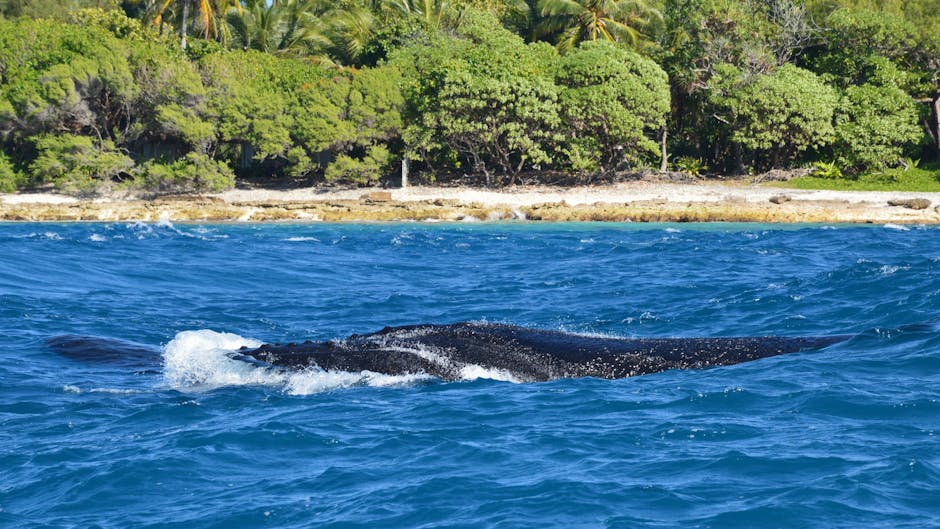
- A young humpback whale, named Timmy, was rescued from entanglement in Sweden but later died from complications in Denmark.
- The whale’s severe injuries, including deep lacerations, likely led to systemic infection and impaired mobility.
- Rescue efforts, involving marine biologists and divers, were successful in disentangling the whale initially.
- The incident highlights the risks and challenges of entanglement for marine animals in fishing gear.
- A preliminary necropsy found that Timmy was unable to feed properly due to the severe tail injuries.
It began as a glimmer of hope beneath steel-gray skies: a massive humpback whale, barnacled and breathing heavily, circling near the marina of Tjärnö on Sweden’s rugged west coast. Dubbed ‘Timmy’ by locals, the young whale had become entangled in abandoned fishing gear, its tail wrapped in thick, constricting lines that cut into flesh with every stroke. For days, a coalition of marine biologists, volunteer divers, and coast guard personnel worked in frigid waters to free the animal, capturing the moment on grainy but powerful video. When the final rope snapped and Timmy surged forward into open water, cheers erupted. But that victory was fleeting. Three weeks later, the same whale washed ashore near Skallingen, Denmark—a lifeless silhouette against the wind-scoured beach, a grim epilogue to a story the world had watched with bated breath.
Final Discovery and Cause of Death

On the morning of May 17, Danish authorities reported that a decomposing humpback whale carcass had been found along the Wadden Sea coastline. After a preliminary examination by marine biologists from Aarhus University and cross-referencing with photo-identification databases, the whale was confirmed to be Timmy. Despite the successful disentanglement, signs suggest the damage had been too severe. Initial necropsy results indicate that the deep lacerations on the tail fluke led to systemic infection and impaired mobility, ultimately preventing the whale from feeding properly. Although Timmy managed to travel over 400 kilometers southward after release—evidence of resilience—the body showed signs of emaciation and sepsis. The Danish Nature Agency stated that while the rescue was executed with expert precision, sublethal trauma from entanglement often has delayed, fatal consequences in marine mammals. The full pathology report is expected within weeks.
The Unseen Crisis of Marine Entanglement

Timmy’s fate reflects a broader, often invisible crisis in the world’s oceans: the relentless threat of marine debris, particularly ‘ghost gear’—abandoned, lost, or discarded fishing equipment. According to a 2023 report by the Global Ghost Gear Initiative, an estimated 640,000 tons of fishing gear are left in the ocean annually, responsible for the entanglement of over 136,000 seals and whales each year. Humpback whales, known for their acrobatic feeding behaviors and long migrations, are especially vulnerable as they traverse busy shipping lanes and dense fishing zones. In the North Sea and Skagerrak Strait, where Timmy was first spotted, increased commercial fishing activity over the past decade has raised the risk of entanglement. Though regulations exist to recover lost gear, enforcement remains inconsistent, and retrieval operations are often hampered by cost and weather. Timmy’s journey from entanglement to death underscores how a single strand of rope can unravel an animal’s chance at survival.
The People Behind the Rescue

The effort to save Timmy was led by the Swedish Cetacean Society in coordination with the Nordic Marine Mammal Center and local diving teams. Marine biologist Dr. Lena Malmström, who oversaw the operation, described the disentanglement as one of the most delicate she has performed: “We had to approach with inflatable boats and use custom-cutting poles to avoid stressing the whale further. One wrong move could have caused panic or injury.” Volunteers worked in shifts, monitoring Timmy’s movements and health via drone and acoustic tracking for ten days post-release. Though heartened by initial signs of recovery, the team remained cautious. “We knew the infection risk was high,” Malmström said in an interview with The Guardian. “But we also knew that not trying was not an option. This was about more than one whale—it was about what we value in our relationship with the sea.”
Impact on Conservation and Policy

Timmy’s death has reignited calls for stricter regulations on fishing gear and improved marine monitoring systems in Scandinavian waters. Conservation groups such as Oceanz Nordic and GhostNet Scandinavia are urging regional governments to mandate the use of biodegradable ropes and GPS tracking on commercial nets. In Denmark, Parliament has announced a preliminary review of marine wildlife response protocols, with potential funding for rapid-response disentanglement units. The incident has also drawn attention to the growing presence of humpbacks in northern European coastal zones—a shift likely linked to changing prey distributions due to warming seas. Scientists warn that as whales adapt to new habitats, human-wildlife conflicts may increase unless proactive measures are taken. Timmy’s story, while tragic, may become a catalyst for systemic change in how Europe manages its marine ecosystems.
The Bigger Picture
Timmy’s brief moment in the global spotlight reveals a deeper truth: individual animals have become symbols in the fight for ocean health. From the orca Luna in Canada to Springer the orca’s reunion with her pod, public empathy for marine mammals often drives policy and awareness. Yet behind each viral rescue lies a network of unseen threats—plastic pollution, ship strikes, noise contamination, and warming waters. The death of one whale may seem minor against such vast challenges, but Timmy’s journey from entanglement to death serves as a microcosm of the Anthropocene ocean: fragile, interconnected, and in need of urgent stewardship. As climate change reshapes marine habitats, the line between conservation success and failure grows thinner.
What comes next is not just better technology or more rescue teams, but a cultural shift in how coastal communities coexist with marine life. Timmy’s body will be studied for contaminants, microplastics, and disease markers, contributing to a growing database on whale health in the North Atlantic. Meanwhile, educators and activists are turning his story into a teaching tool, reminding the public that every piece of discarded netting carries a cost. Though Timmy did not survive, his legacy may yet ripple outward—through policy reforms, scientific insights, and a renewed commitment to protecting the silent giants beneath the waves.
Source: Al Jazeera